The real advantage in a residential interior design project is not to accumulate resources, but to refine decisions. As a whole, the full renovation of this apartment in the Sarrià neighborhood of Barcelona is an exercise in precision: opening up without losing intimacy, gaining light and views without excess, and building a contemporary interior supported by a neutral palette —oak, sands, grays— and black as a detail.
If you’re looking for ideas for a full renovation in Barcelona or want to see more architecture and interior design projects by the Coblonal team, visit our website and follow us on our social networks to get inspired by new spaces, details, and real solutions.
Contemporary-Style Apartment in Sarrià
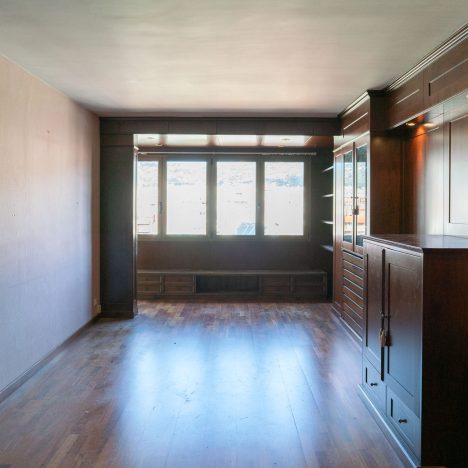
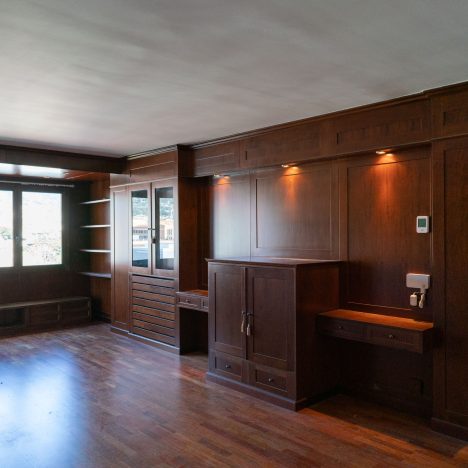
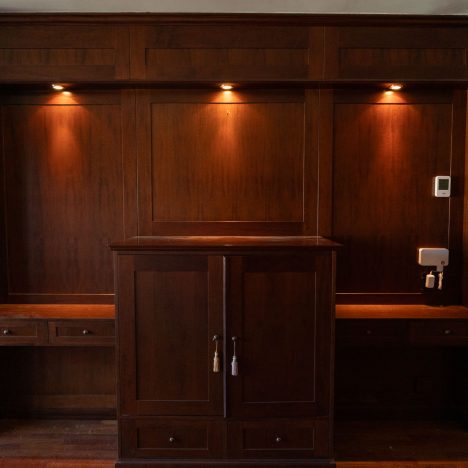
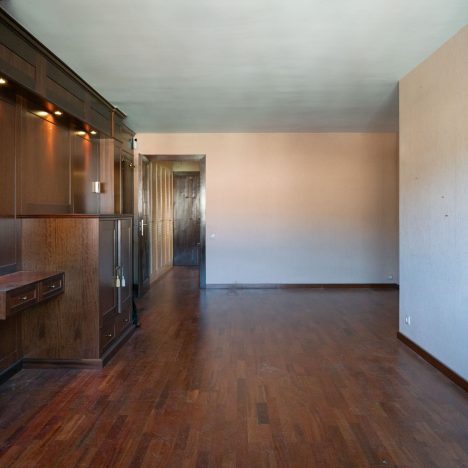
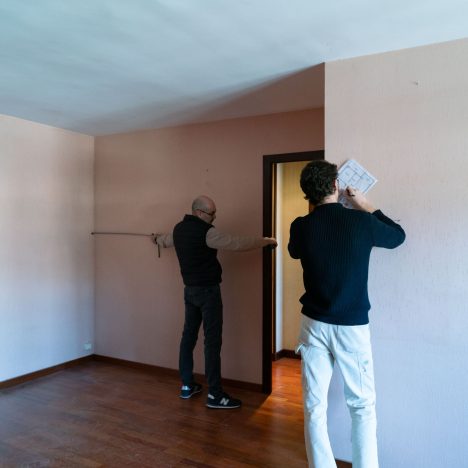
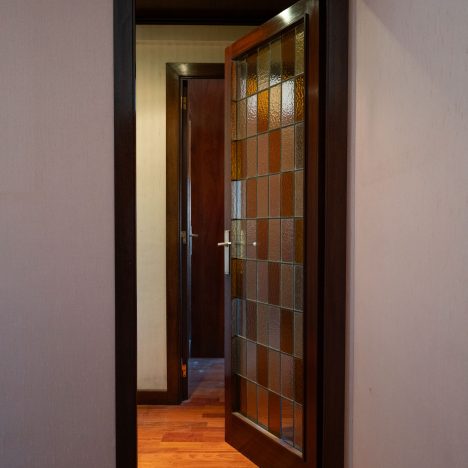
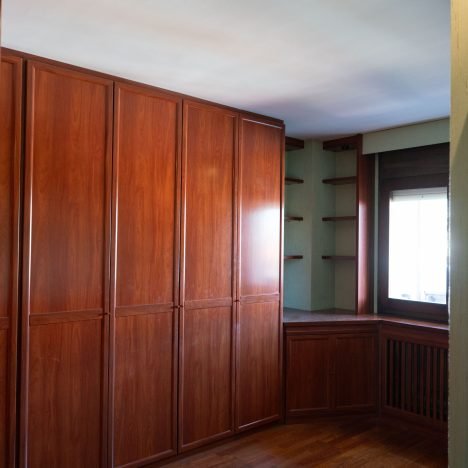
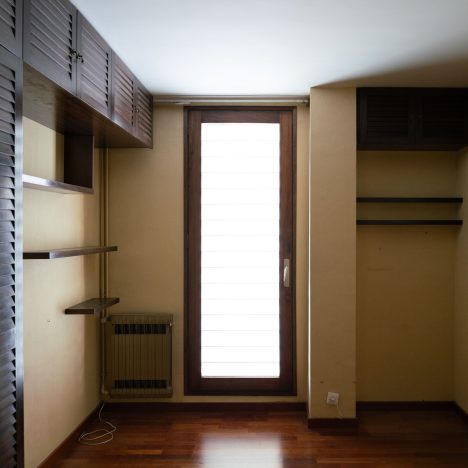
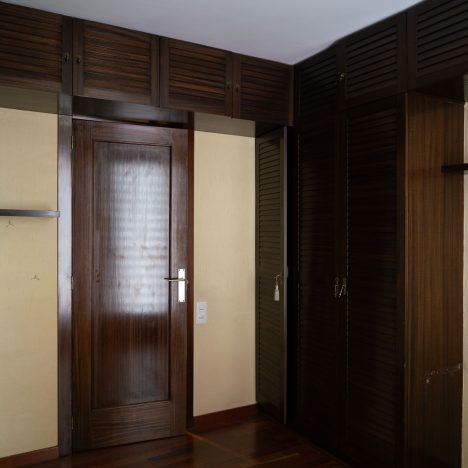
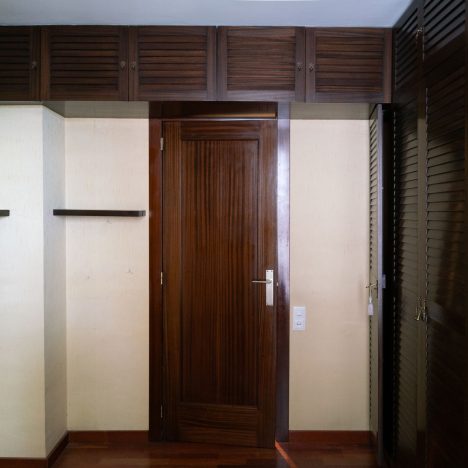
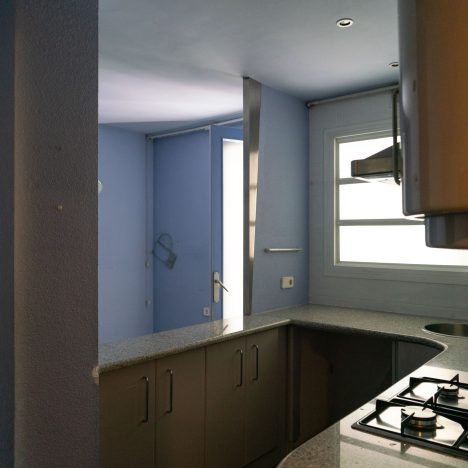
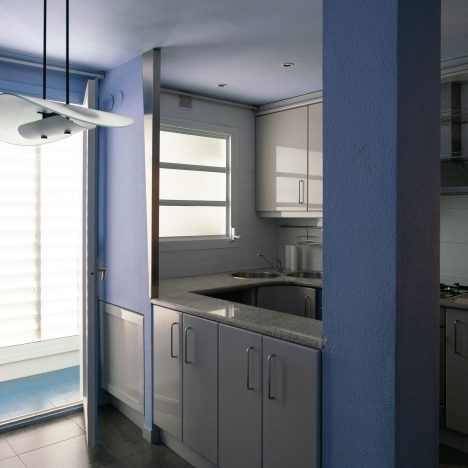
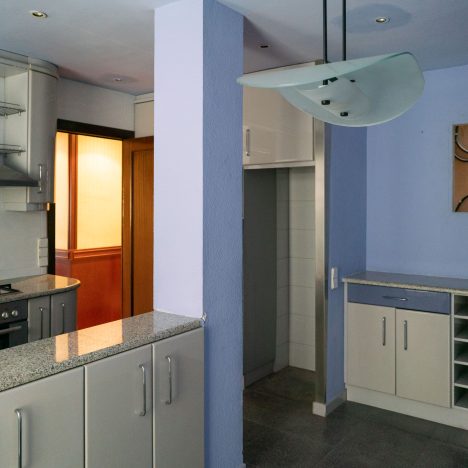
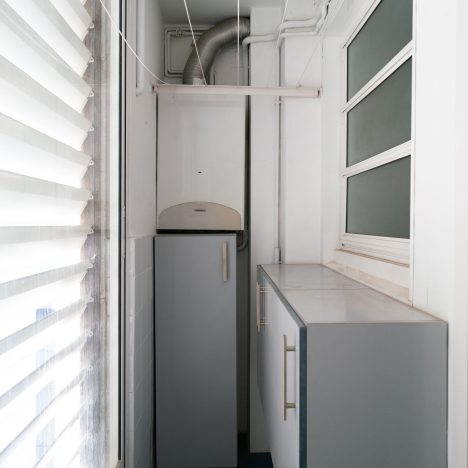
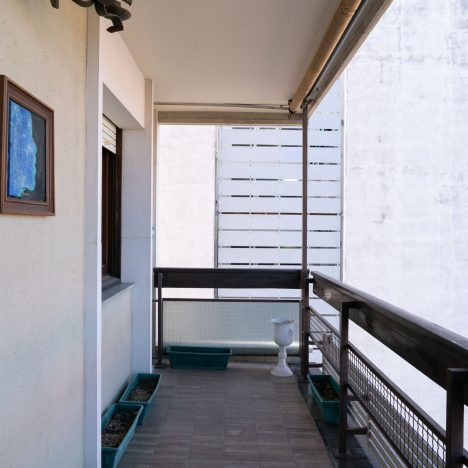
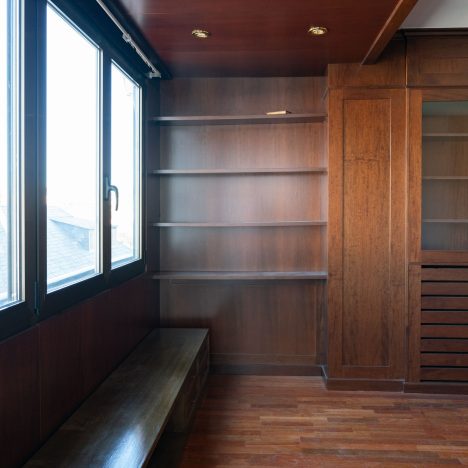
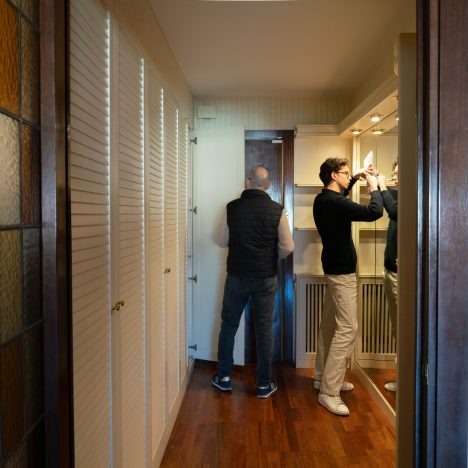
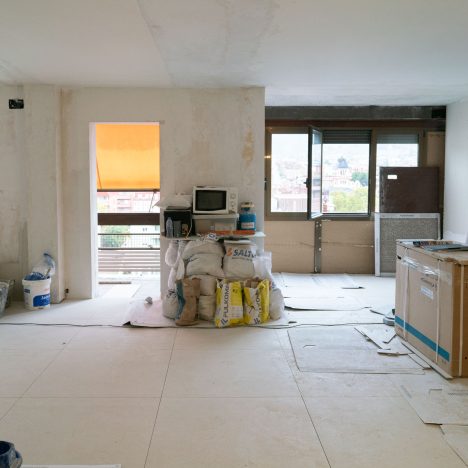
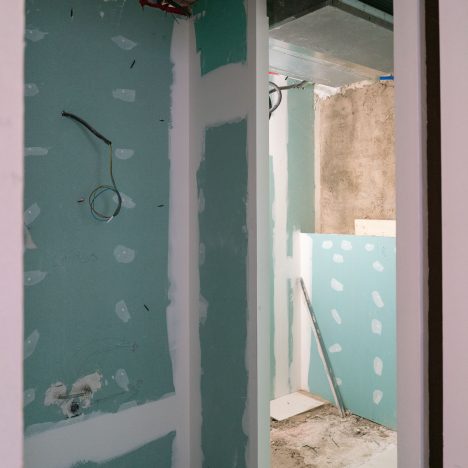
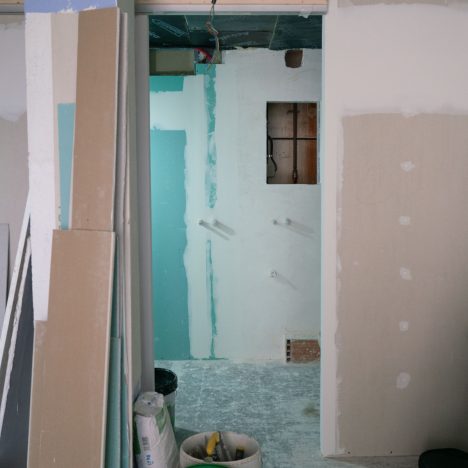
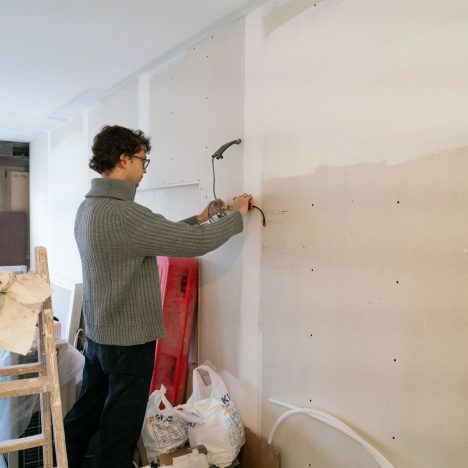
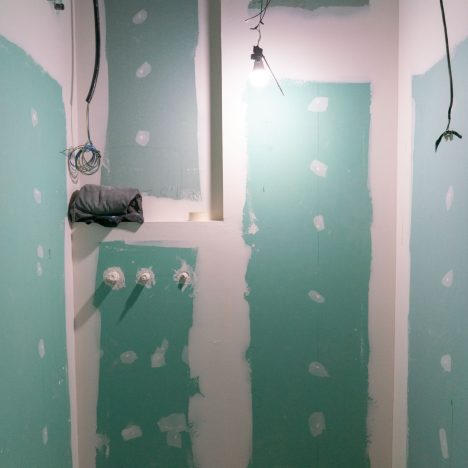
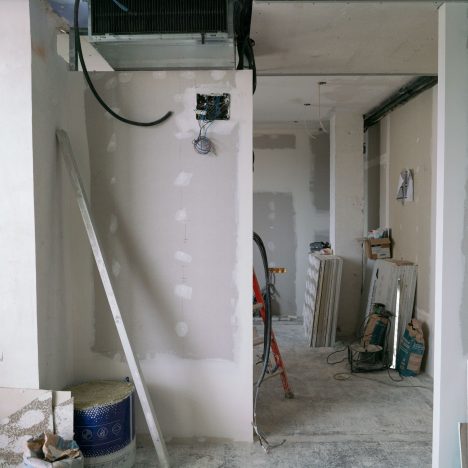
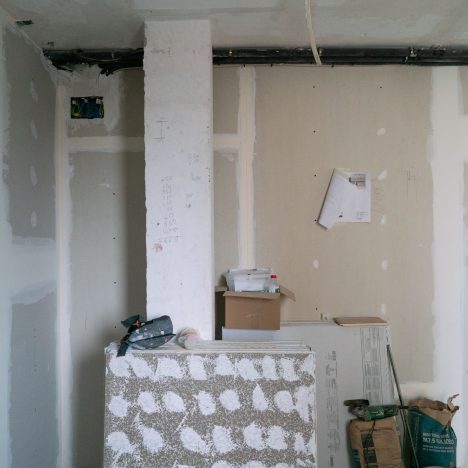
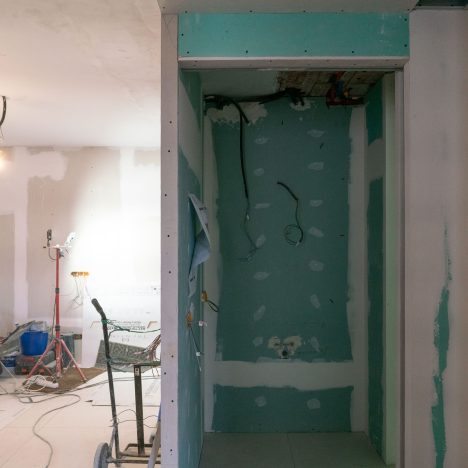
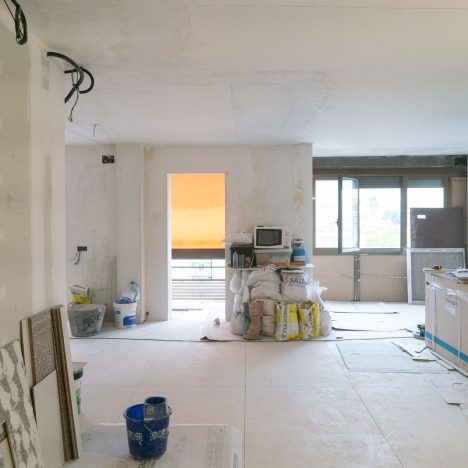
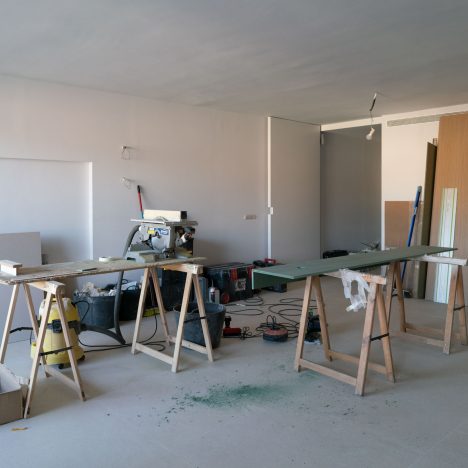
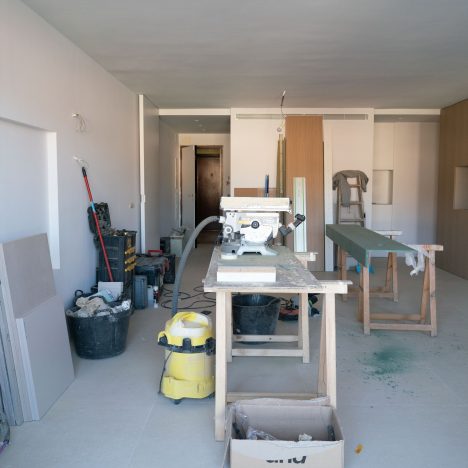
Coblonal, a Barcelona-based interior design studio, carried out the full renovation of a 90 m² apartment in the Sarrià neighborhood (Barcelona). The starting point was a home with a classic layout: 3 bedrooms, 1 bathroom, and 1 kitchen with a laundry area, plus 1 balcony. A distribution where the living room and the kitchen were very separate, and the latter —conceived as a closed space with little light— barely connected with the exterior.
The challenge: to completely rethink the layout and adapt the home to a new way of living, more comfortable, more fluid, and more open.
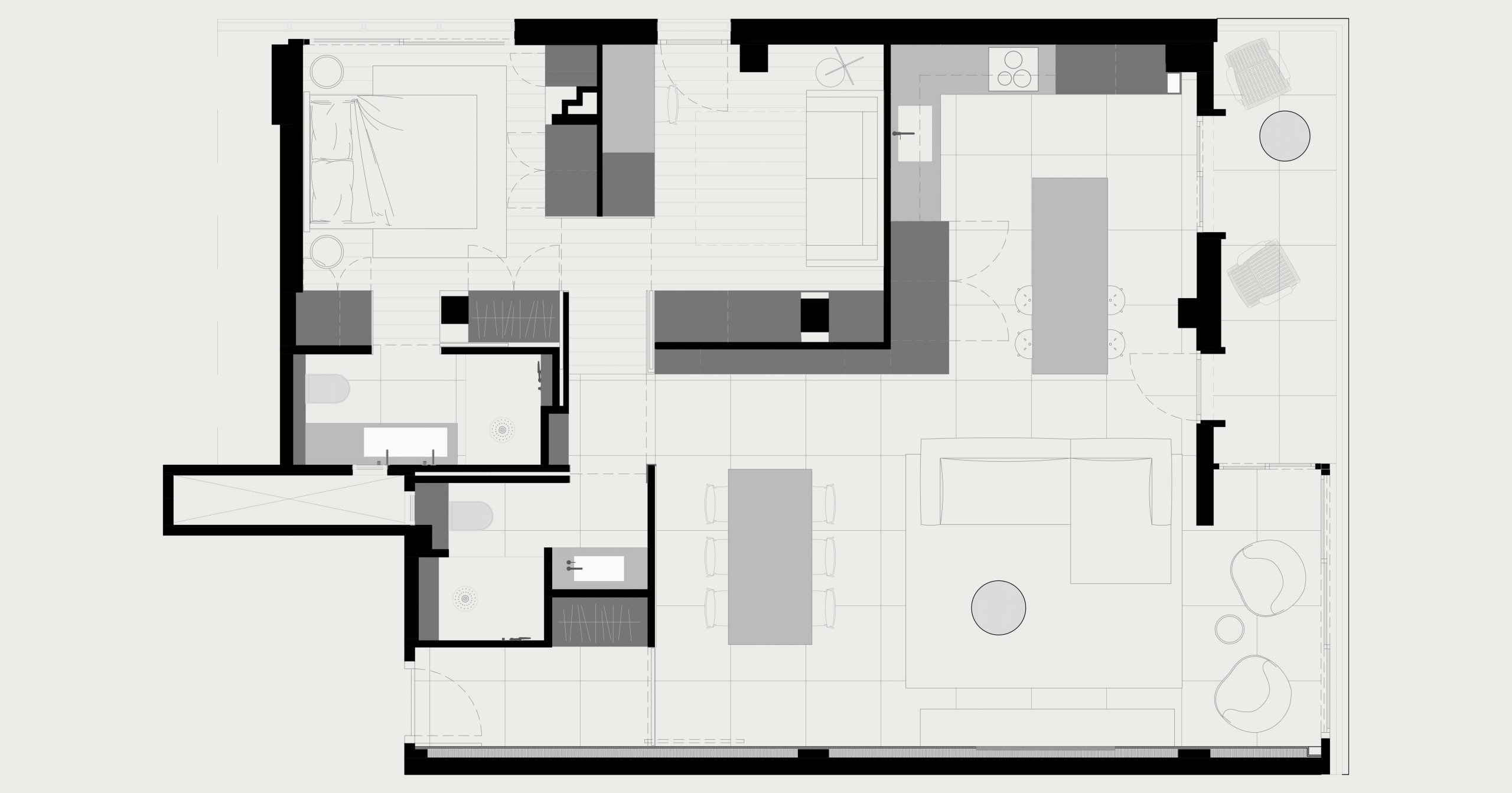
After the intervention, the apartment is organized into an entrance hall, a social area open to the balcony with kitchen–dining–living room and 1 full bathroom. The balcony is understood as a natural extension of the daytime area. The night area: 2 double bedrooms and 1 en-suite bathroom.
The project language is clear: contemporary style, clean lines, an elegant, neutral, and serene aesthetic, with oak wood, large-format porcelain tiles in a sand color, and black details as a contrasting accent.
From a Compartmentalized Apartment to a Fluid Home
The change in layout was the decision that triggered everything. Before, the kitchen and living room turned their backs on each other: unintuitive circulation and a daytime area that didn’t take advantage of either natural light or views.
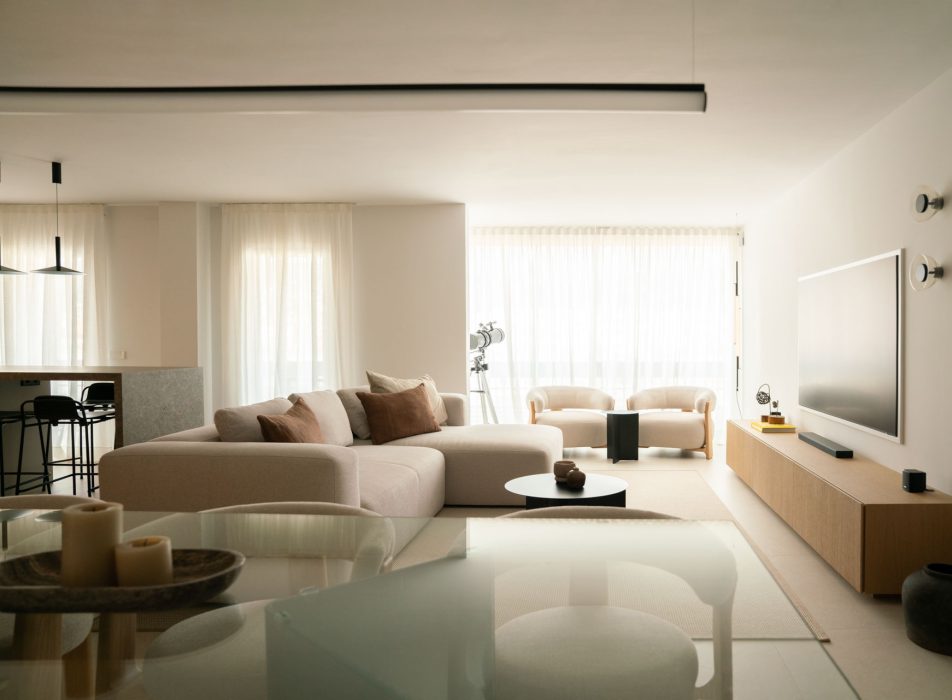
By unifying the kitchen and dining room and reorganizing the floor plan, we optimized what truly matters: more light comes in, visual connections open up, and circulation flows improve.
The kitchen goes from being a “separate space” to occupying one of the best locations in the apartment, with direct access to the balcony and the views, and an immediate relationship with the living room.
Entrance Hall: A Flexible Space with a Large-Scale Door
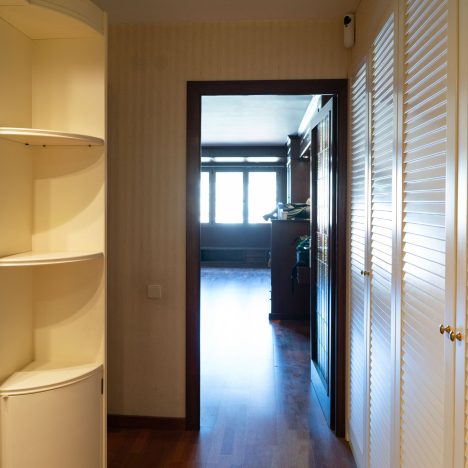
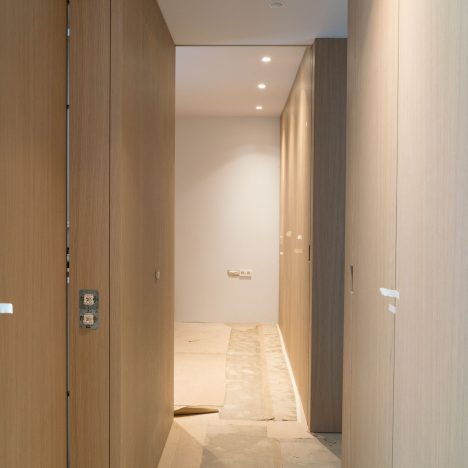
The entrance hall is conceived as a transitional space that organizes access and allows the entry area to be separated from the open social space (kitchen–living room–dining room) when more privacy is needed. In a full apartment renovation in Barcelona, having an entrance hall improves order and reduces noise toward the daytime area.
The protagonist piece is a large pivot door that allows the home to be zoned:
-
Open: the apartment feels larger and more continuous.
-
Closed: the entrance hall becomes independent to ensure privacy and better acoustic comfort. For example, when there are guests or when you want to isolate the daytime area from entrance noise.
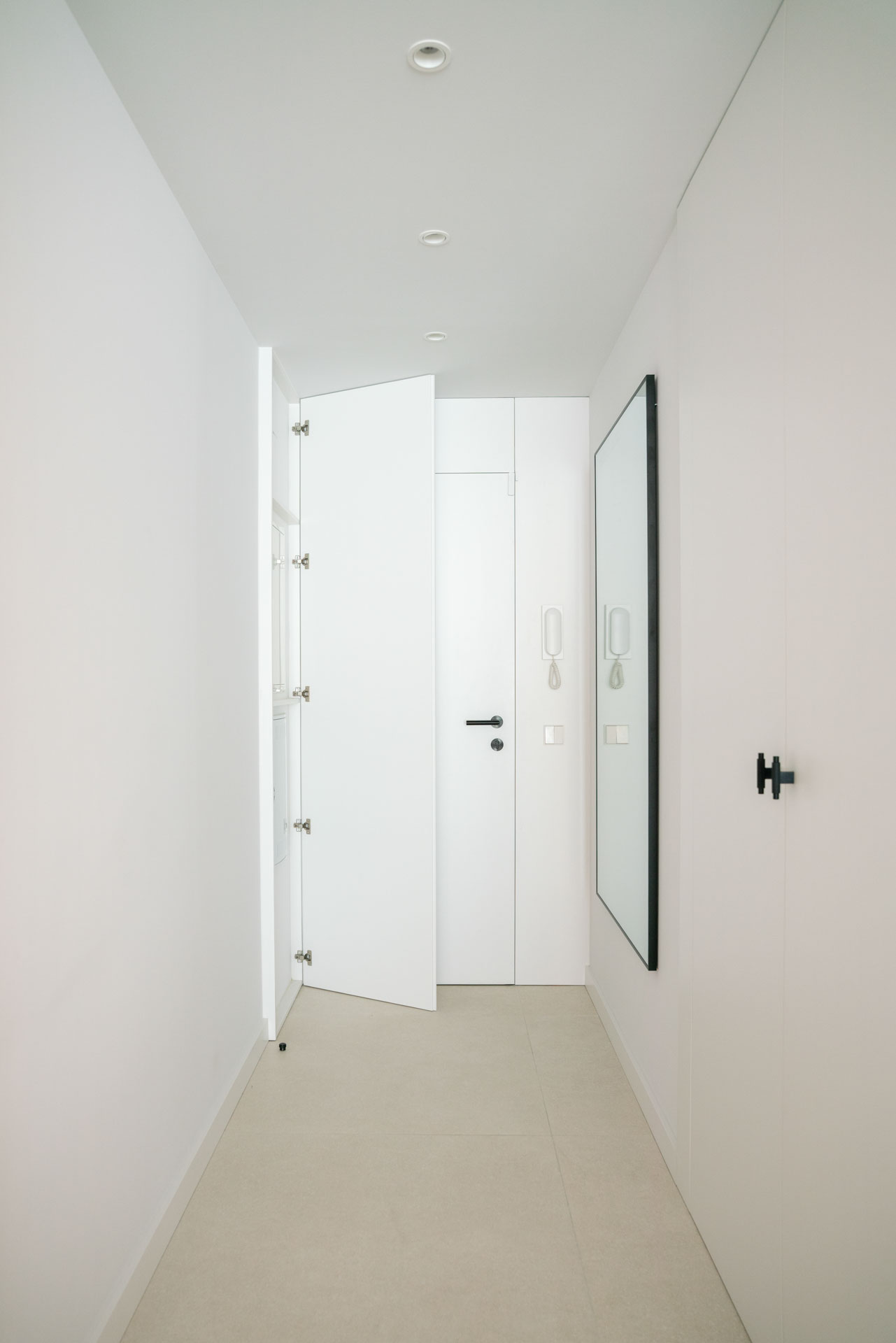
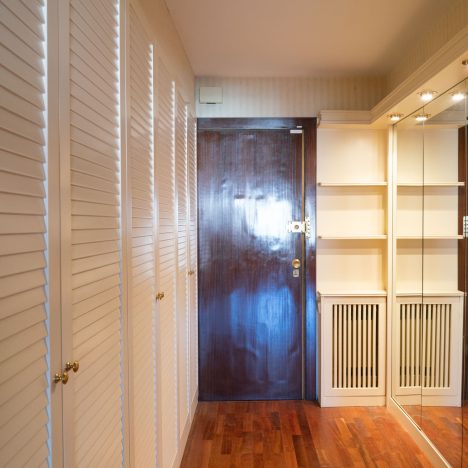
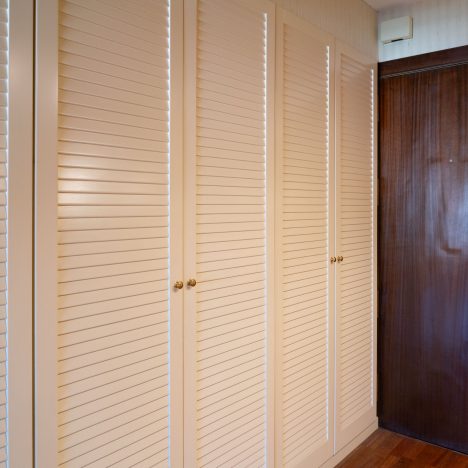
The entrance hall aesthetic is resolved with a white and neutral palette so that the access feels bright, clean, and organized. That’s why the entry wardrobe, the walls, and the door itself maintain the same white finish.
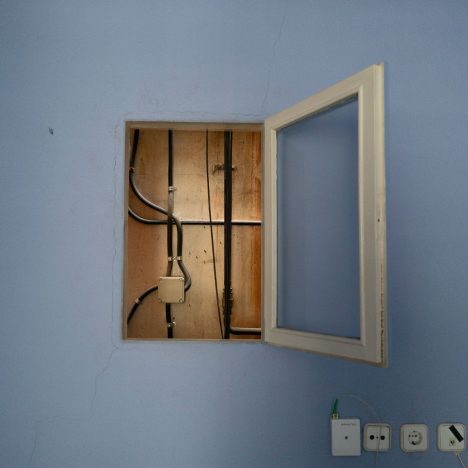
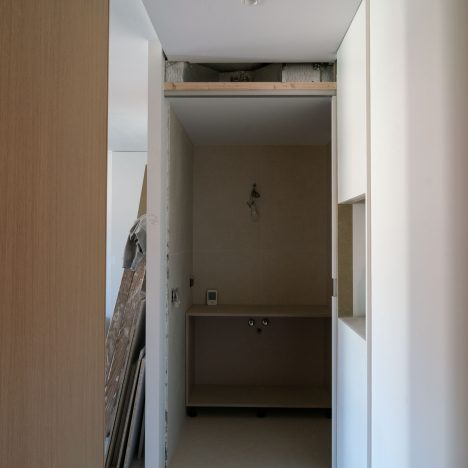
This custom-made cabinet concentrates the most technical part of the home and frees up the rest of the spaces: inside, all the home’s telecommunications are organized (electrical panel, Wi-Fi, etc.).
The entrance hall also includes a mirror and a two-door cabinet designed for daily use and for when guests arrive.
Open Day Area: Dining Room, Living Room, and Integrated Kitchen
Dining Room: Modernizing the Buffet Cabinet
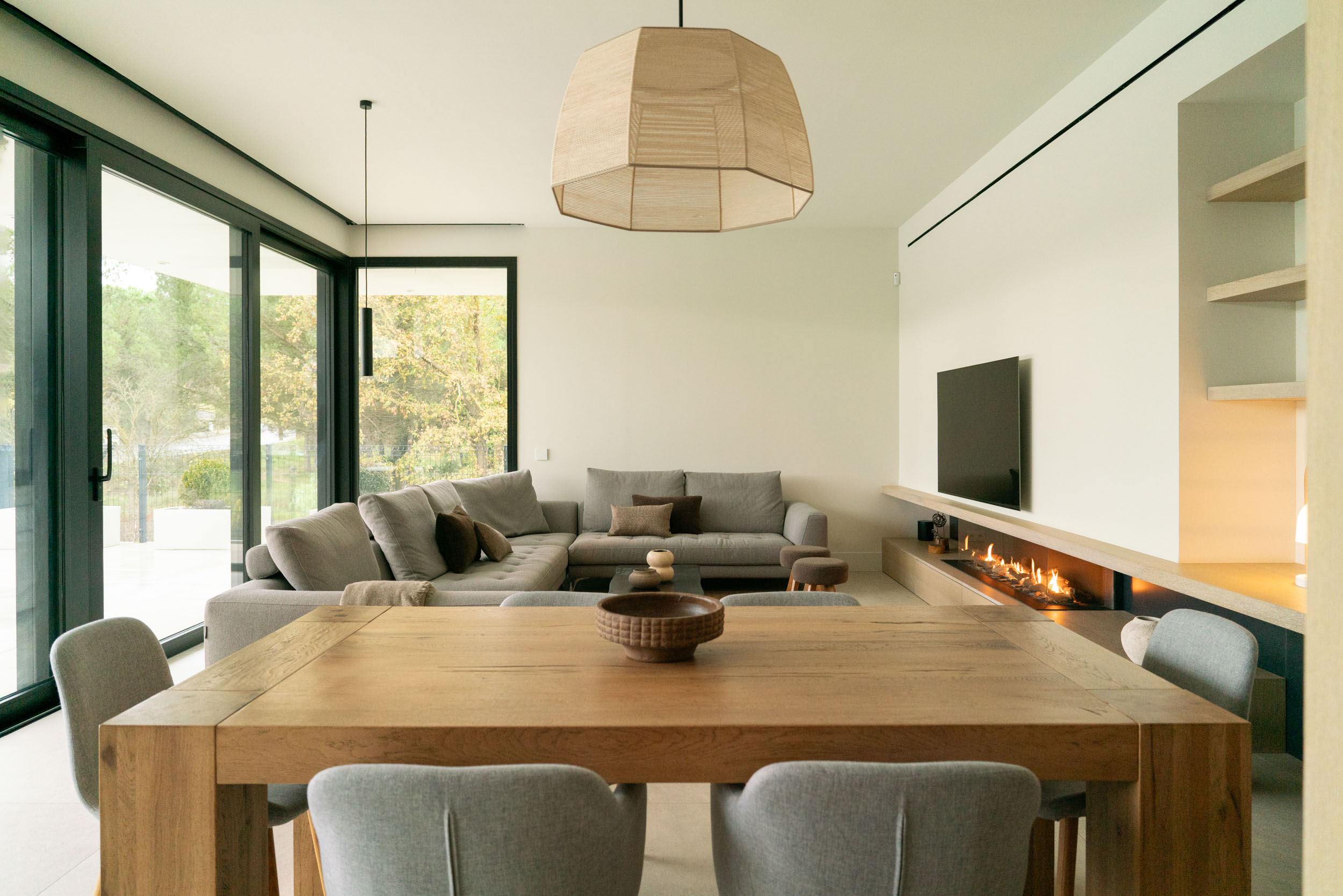
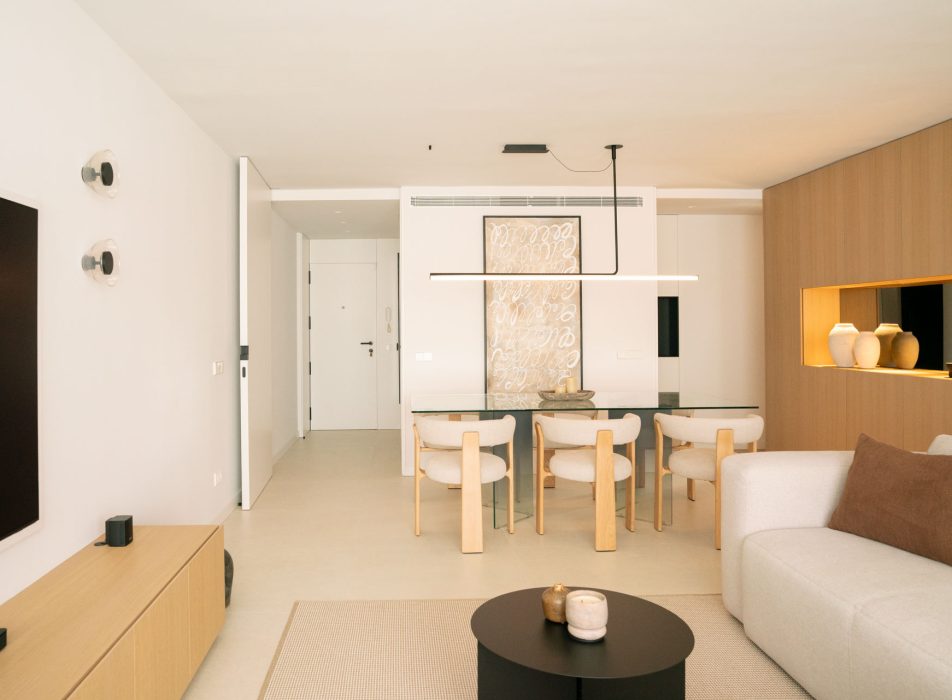
The social area has a clearly unified reading. The flooring throughout this area is large-format sand-colored porcelain, which brings calm and continuity.
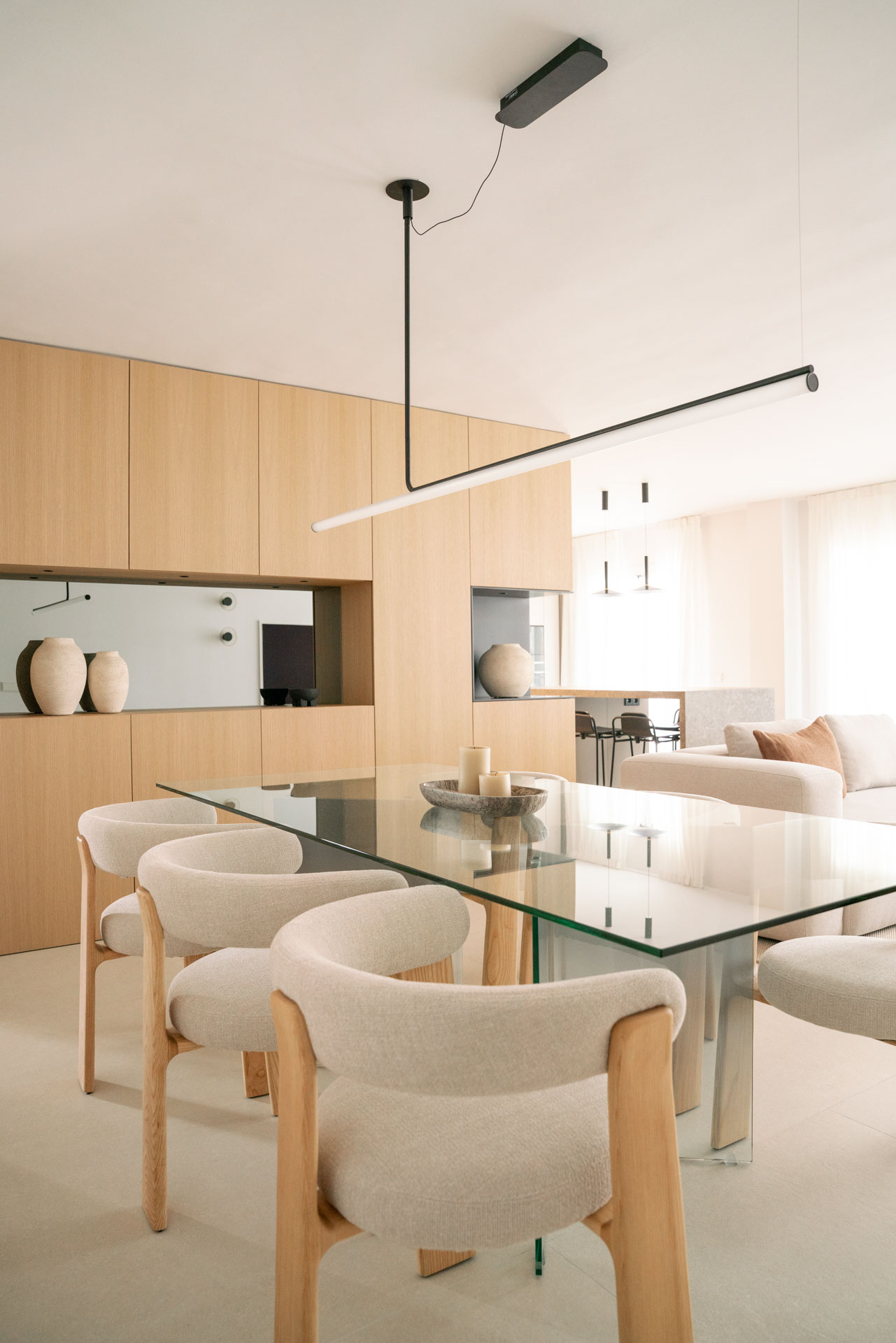
Upon leaving the entrance hall, the dining room appears directly, equipped with a rectangular smoked glass table for 6 diners. The lighting, consistent with the sober character of the apartment, comes from a suspended lamp by Marset, model Ambrosia: a light tube with black framing that highlights the clean lines of the project. Behind it, a painting in sand tones accompanies the set and adds warmth without breaking the neutrality.
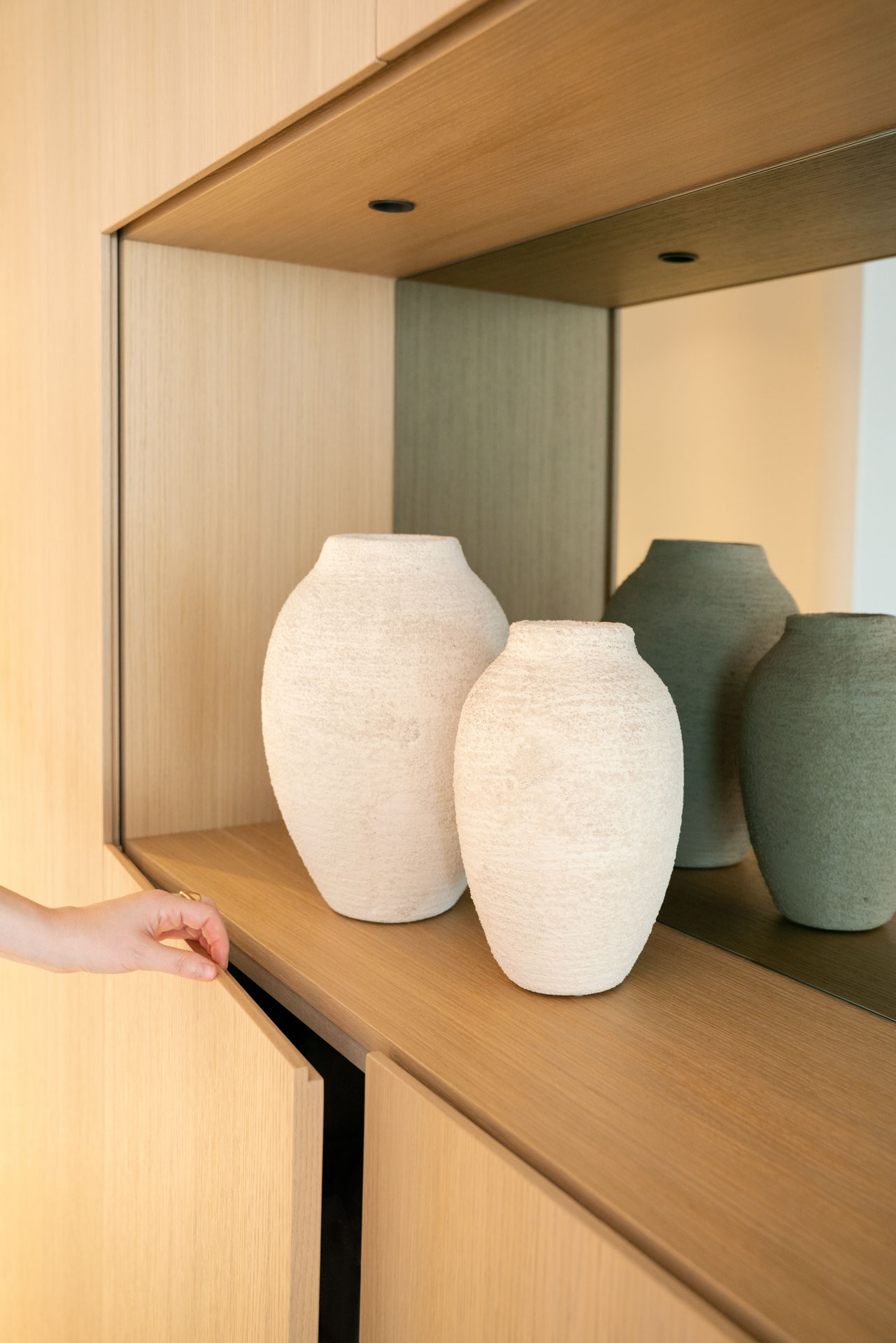
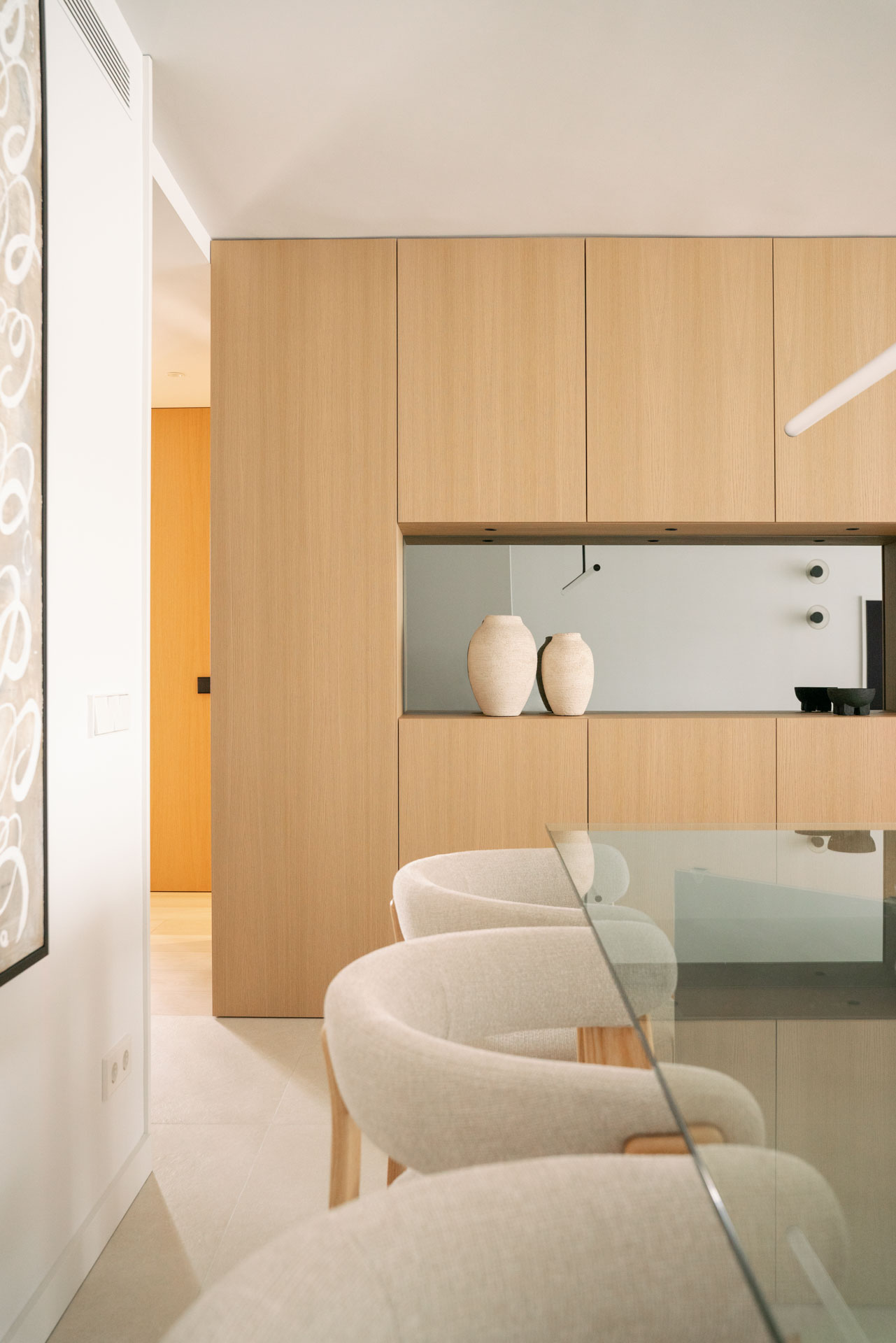
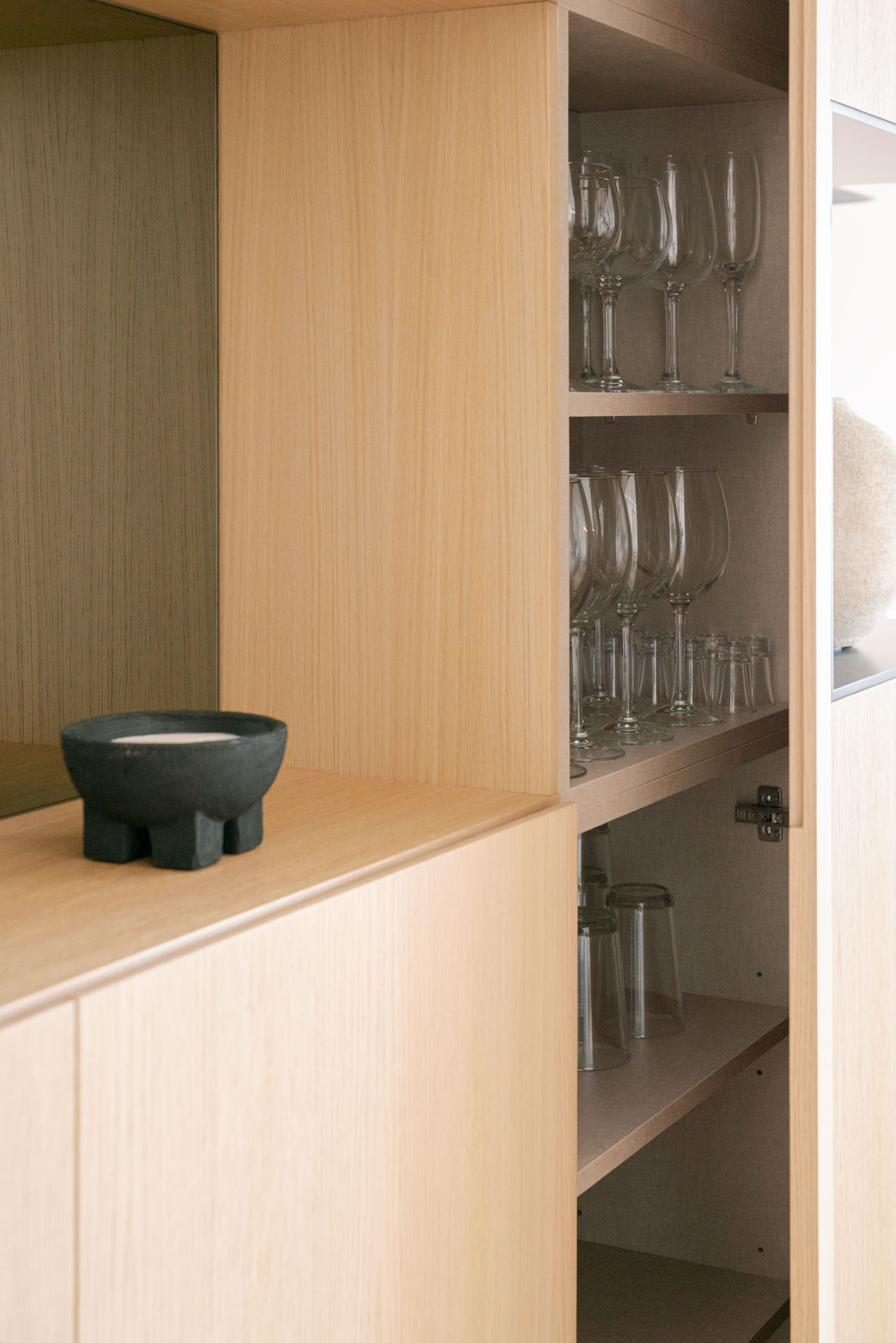
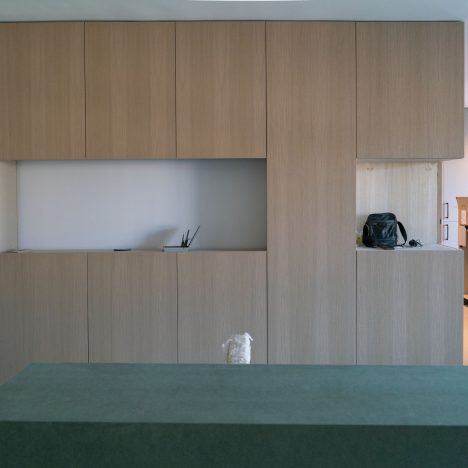
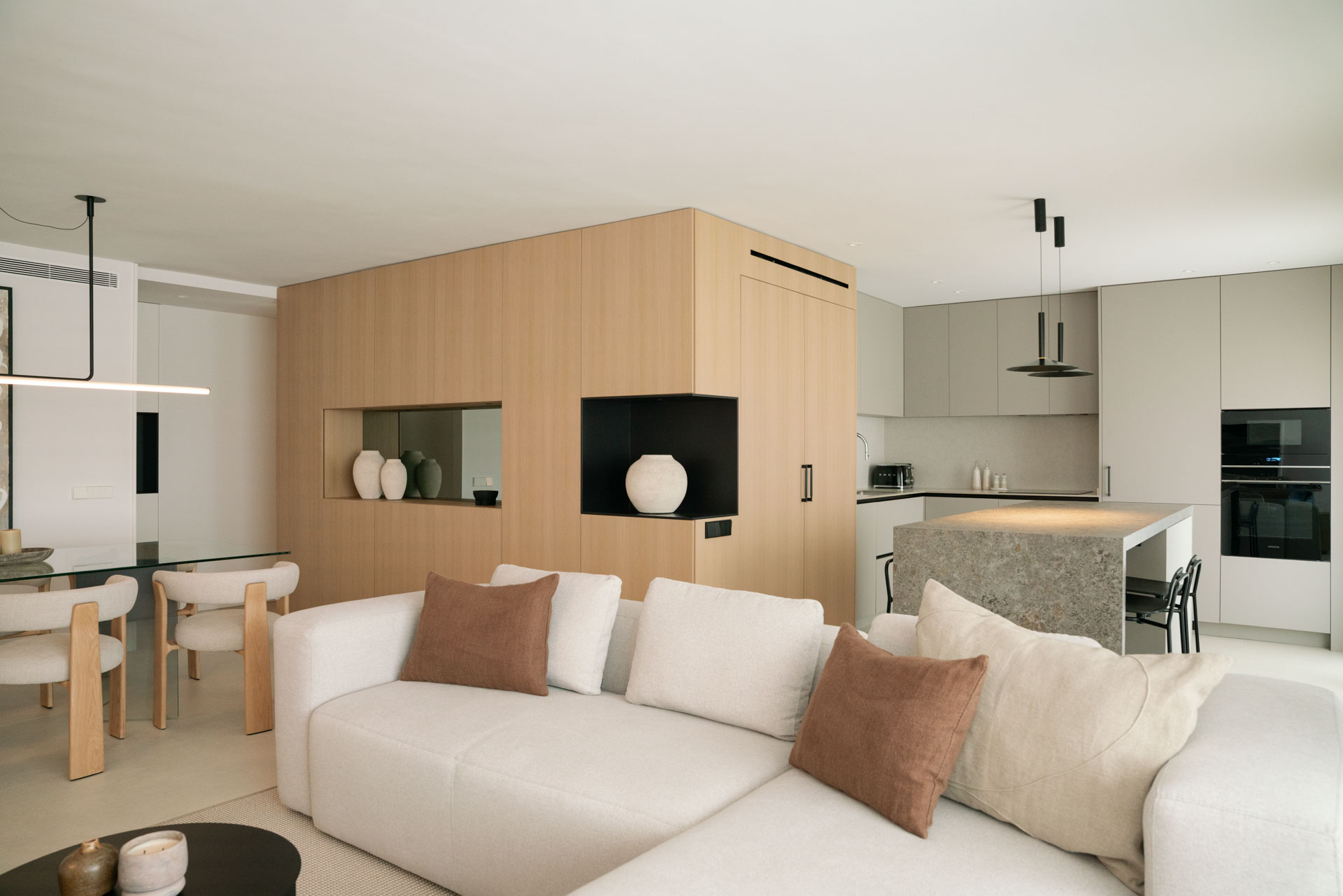
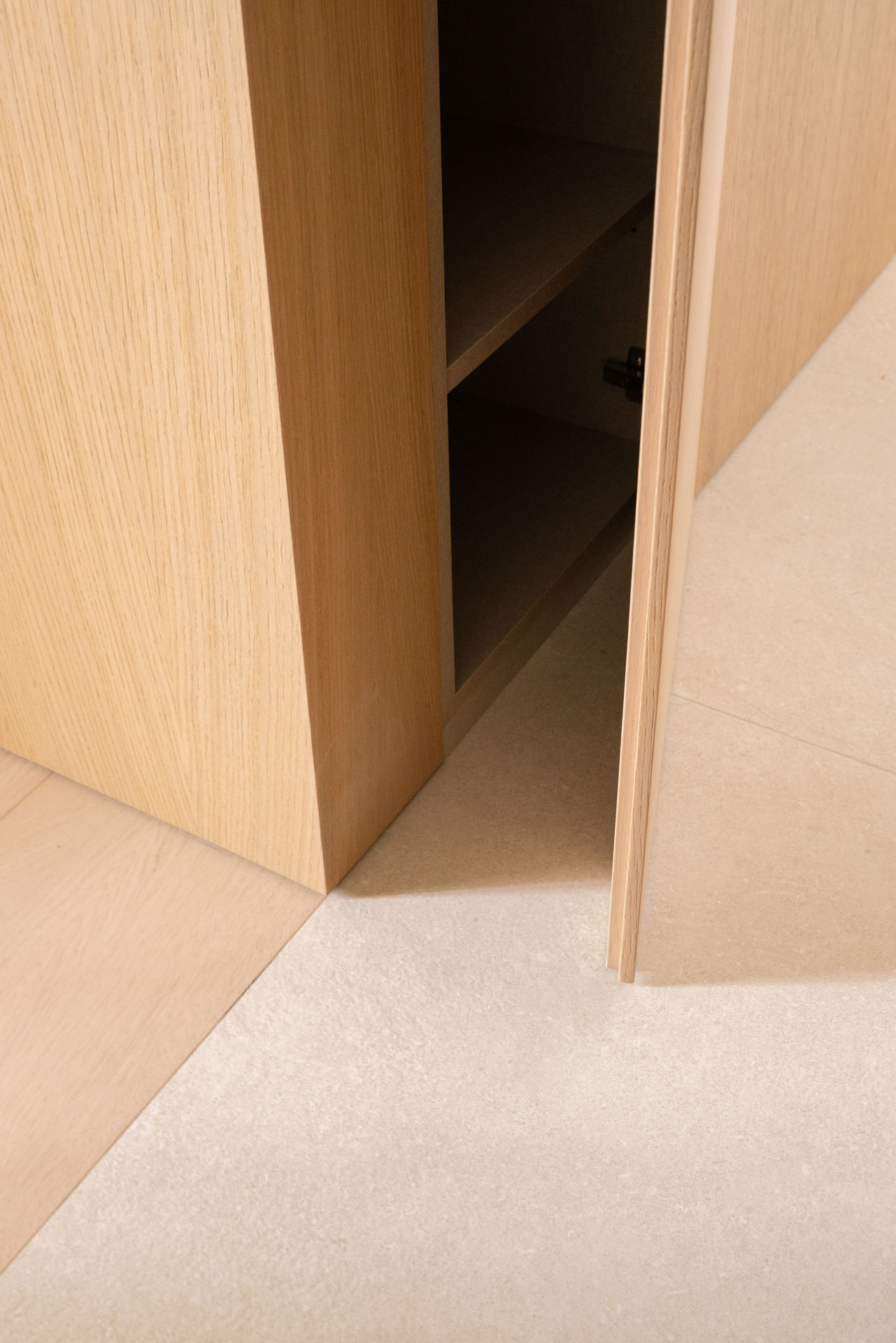
The element that structures and gives meaning to the daytime area is a piece of furniture that acts as a connection point between the three social zones. In the dining room it works as a buffet. It materializes as a light-toned oak wood volume that visually gathers the space. It is essentially a storage point for tableware.
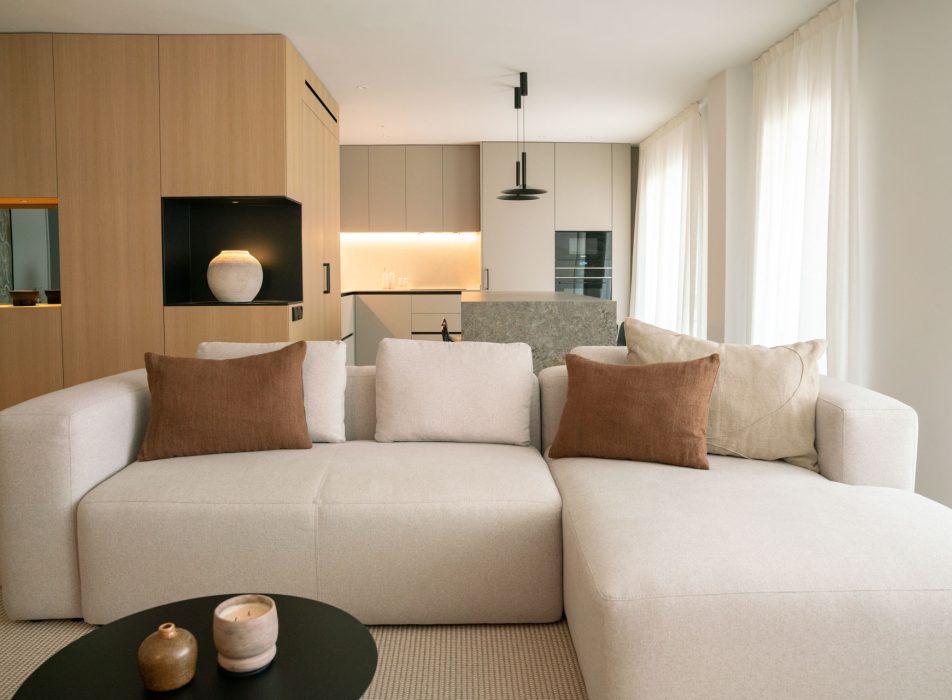
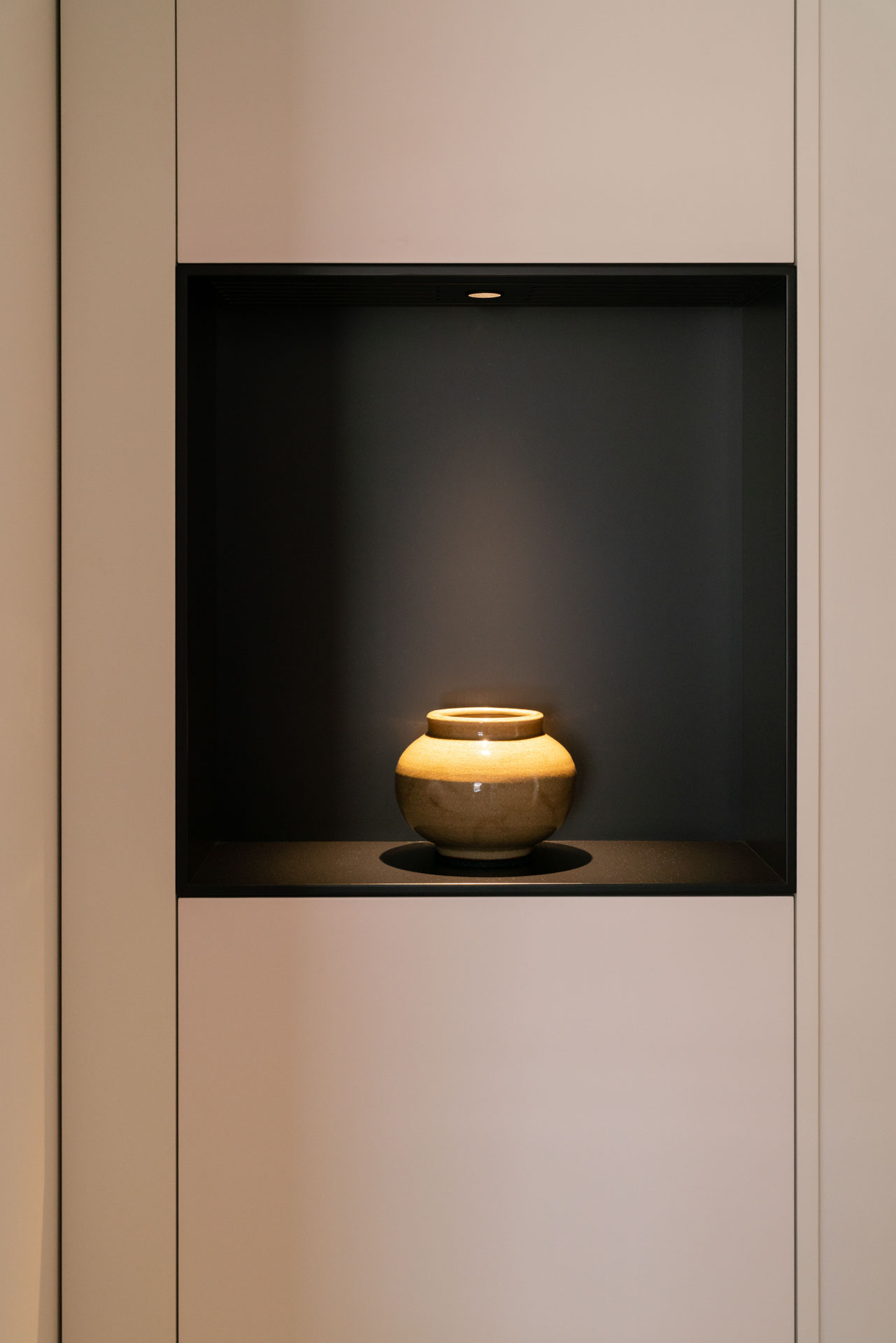
Within the same volume, a niche appears with a smoked mirror front and integrated lighting that adds depth to the composition.
Living Room: Black Details and Multi-Level Lighting
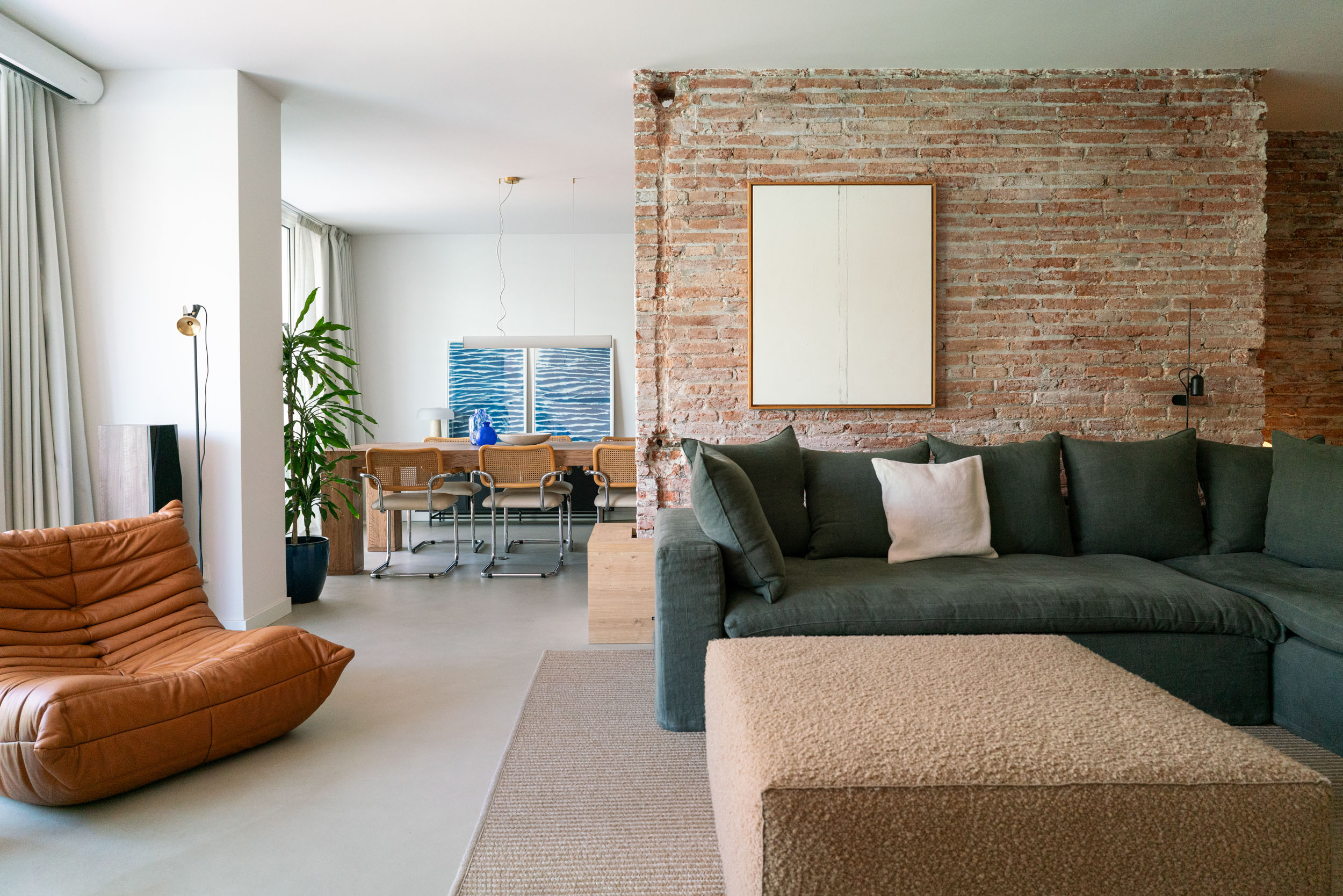
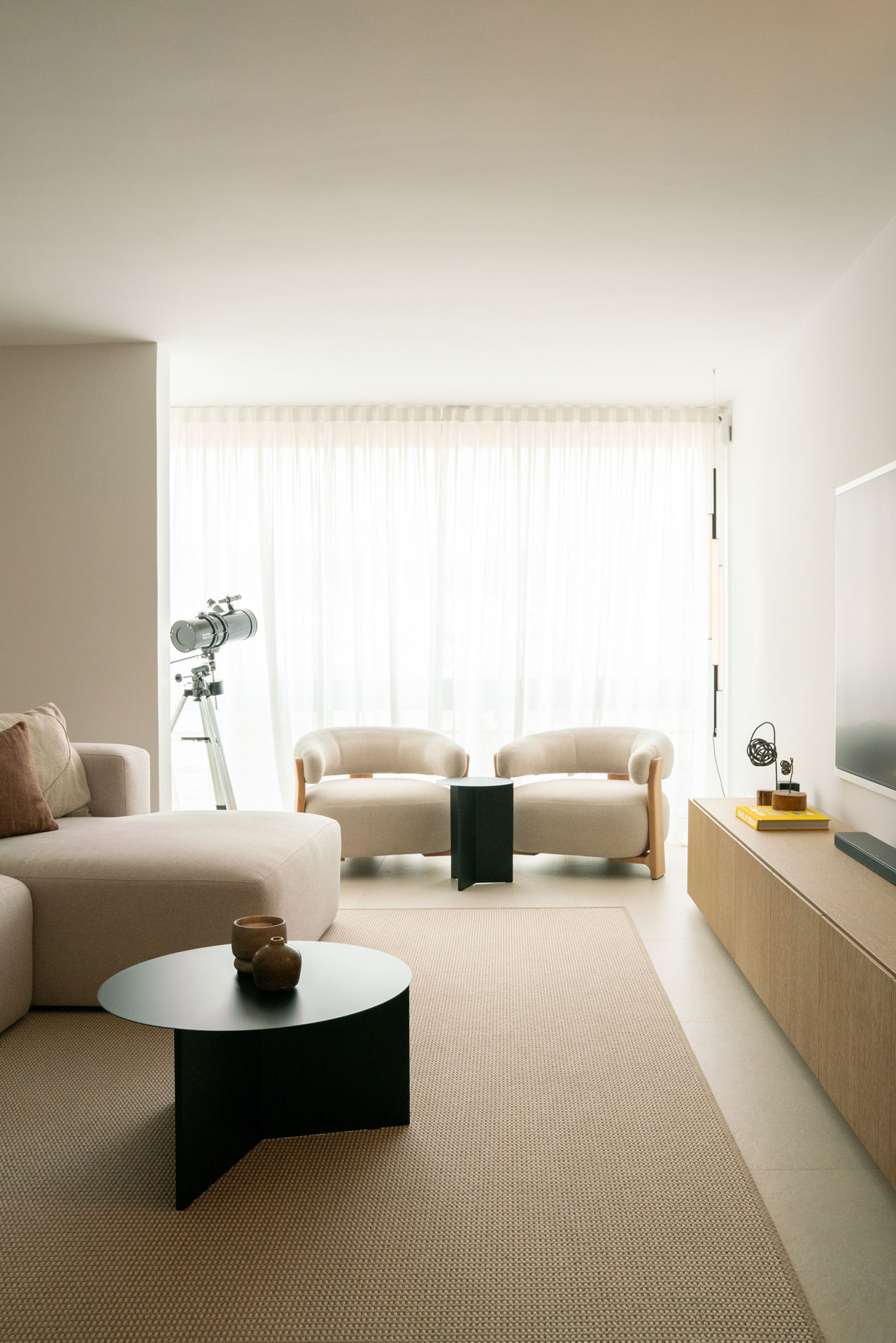
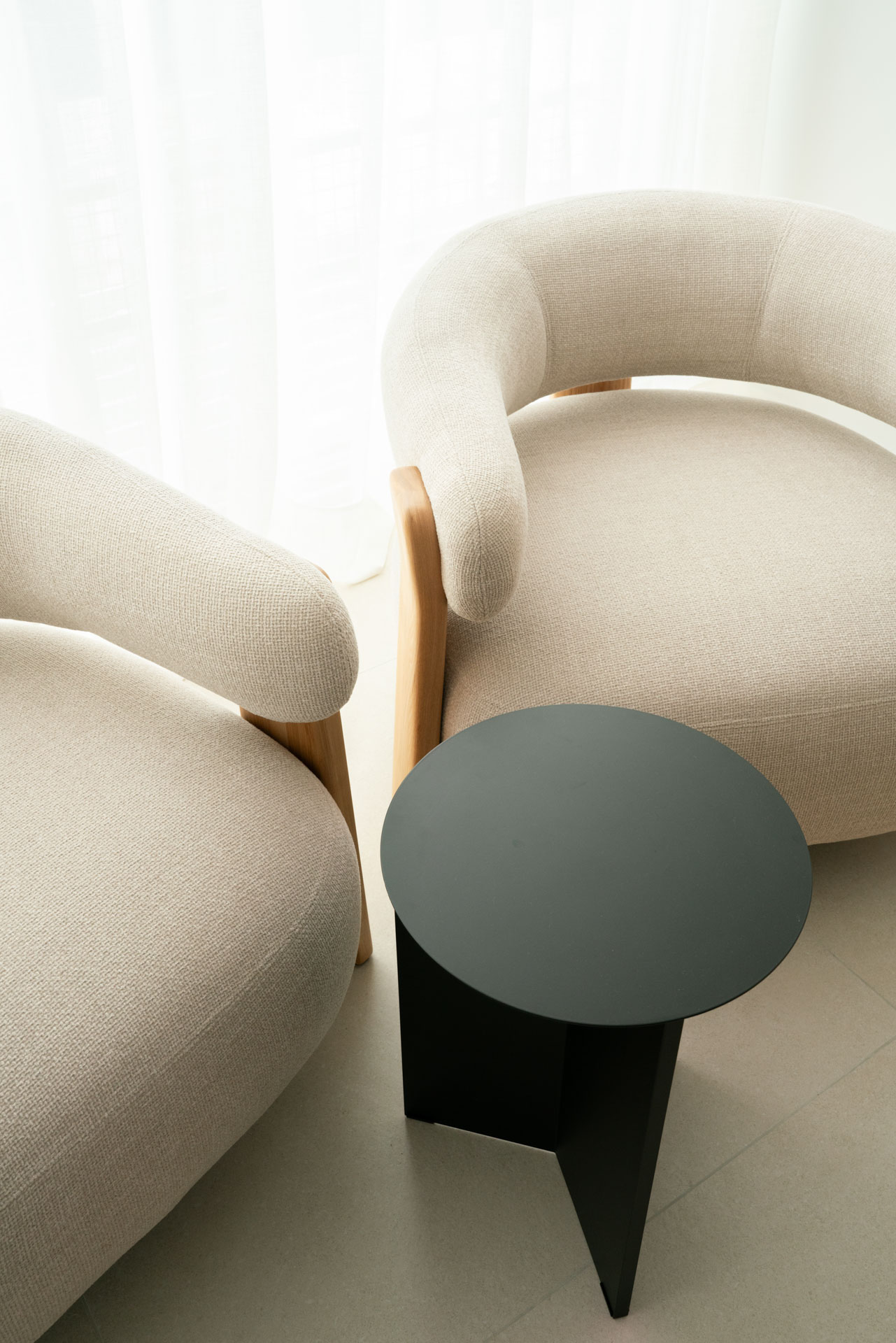
Adjacent to the dining room, the living room is organized with a 3-seater L-shaped sofa in sand tones, maintaining the neutral aesthetic. It is completed with two armchairs from the same collection as the dining chairs and a set of black-finished metal coffee tables by Hay, model Slit Table Round, introducing the contrast that “structures” the project.
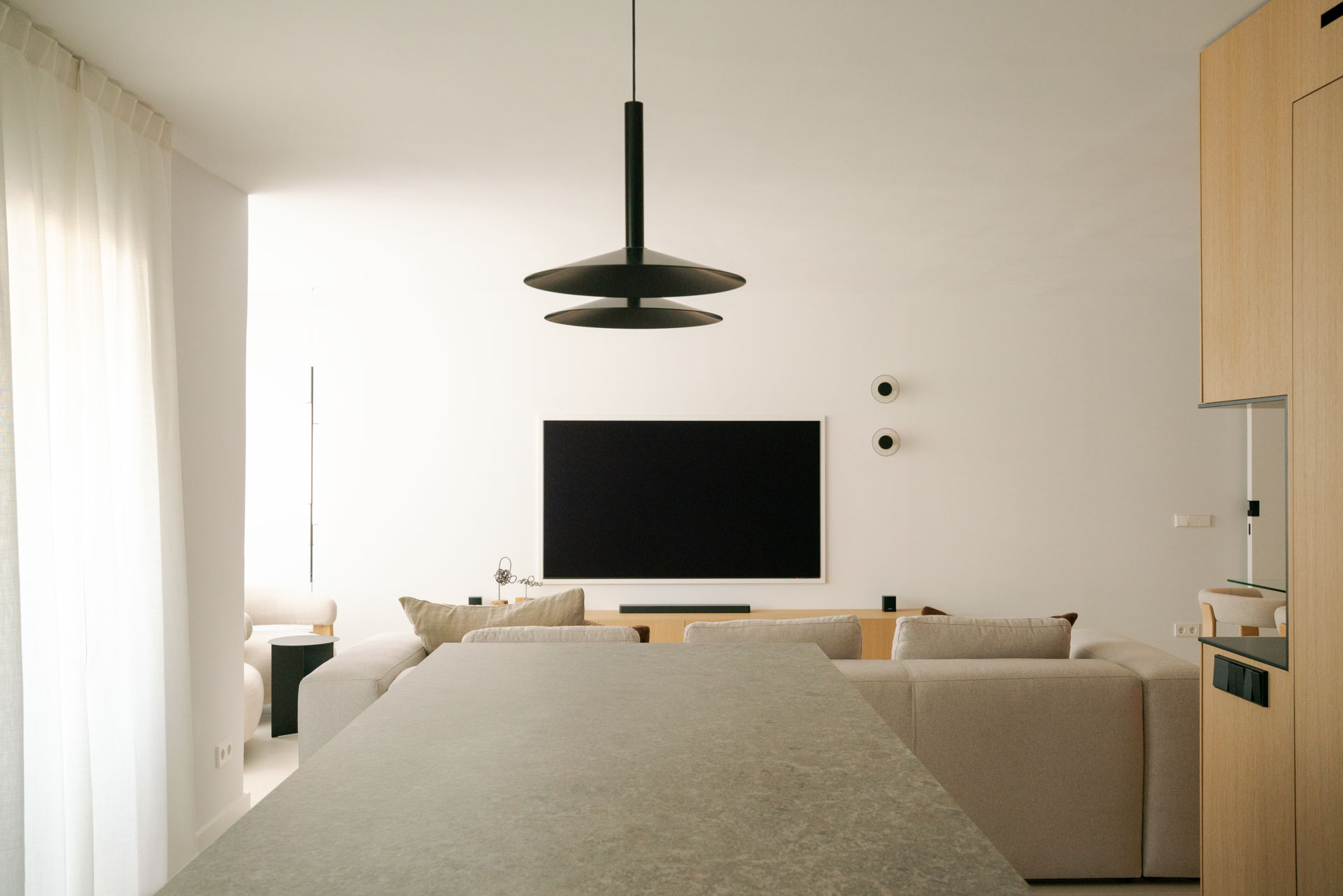
In front of the sofa, a custom-made low oak cabinet is backlit from below, visually lifting the piece. On the wall, the TV is integrated into a built-in niche with a perimeter frame lacquered in the same color as the wall. The goal is clear: for the wall to be read as a single plane and for the TV to sit flush, without protruding.
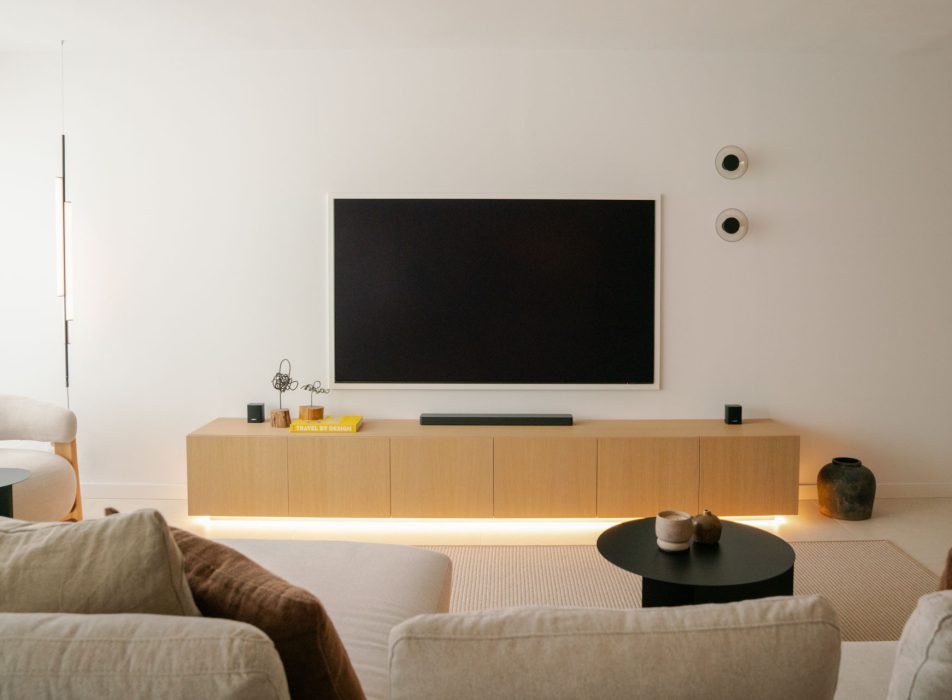
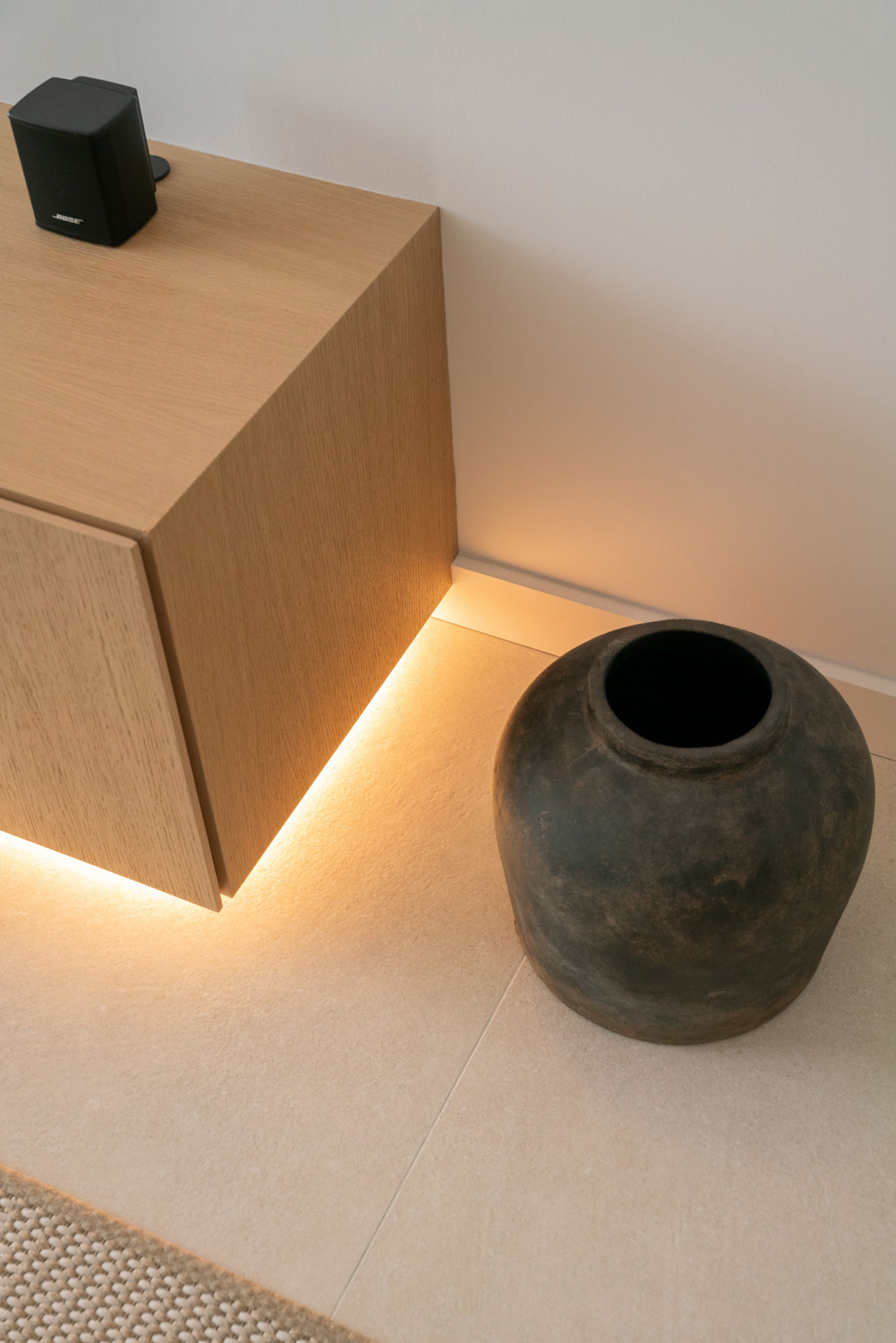
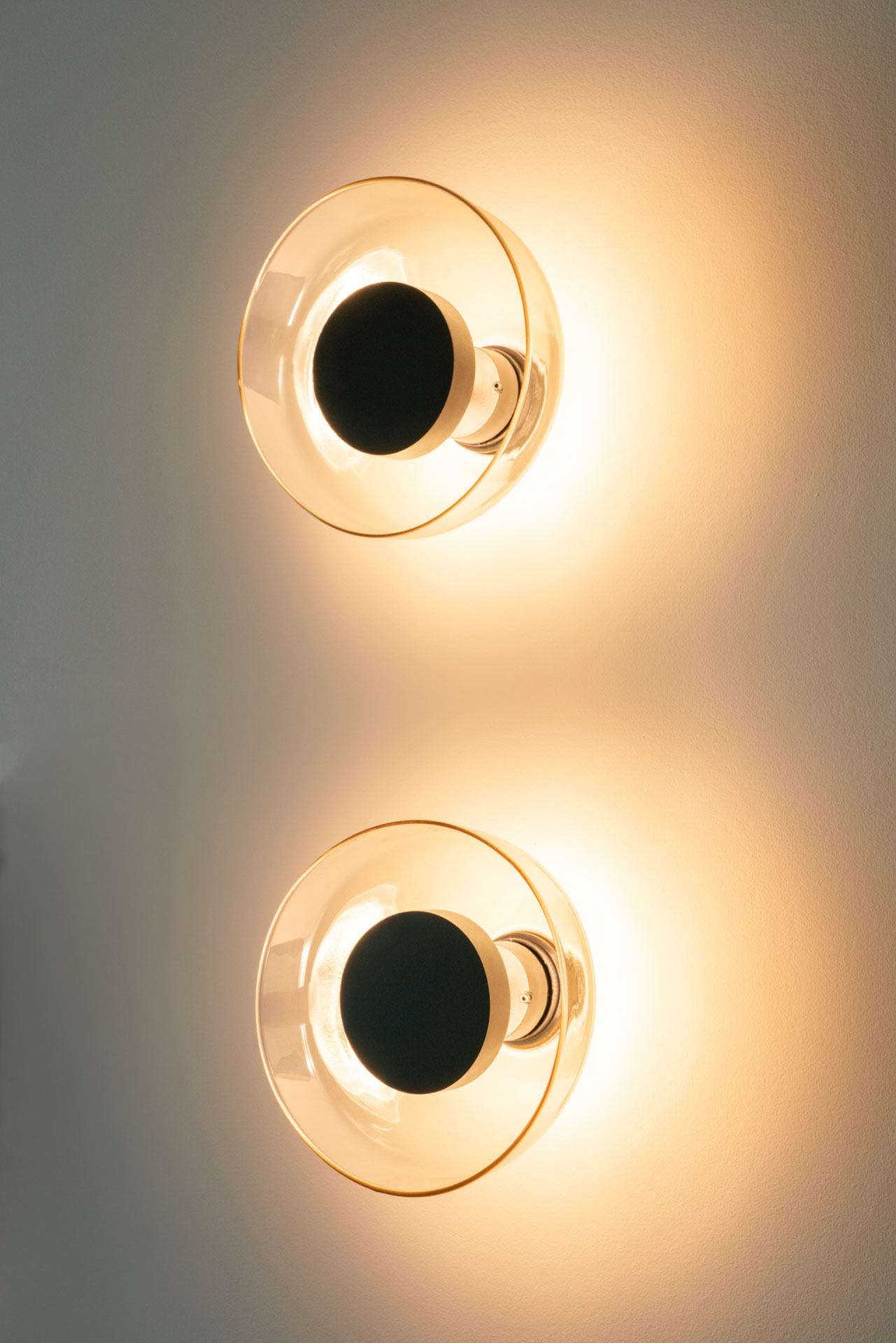
There is no technical lighting or recessed spotlights on the ceiling. The light is built in layers and at different heights: the LED strip under the cabinet, two wall sconces next to the TV, and a suspended lamp from the same collection as the dining one. The sconces are also by Marset, model Aura, and provide indirect lighting.
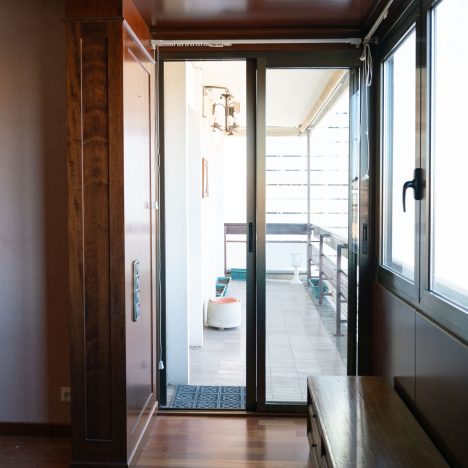
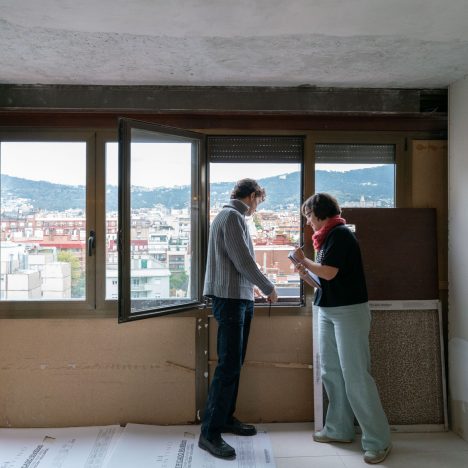
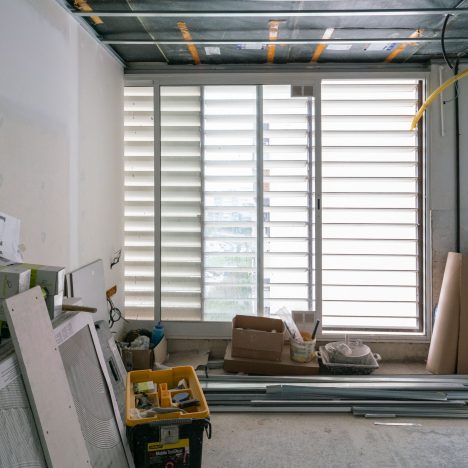
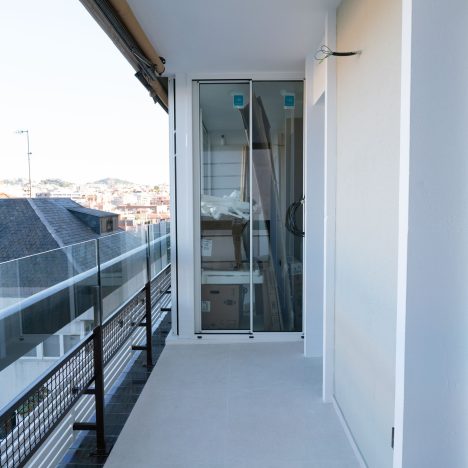
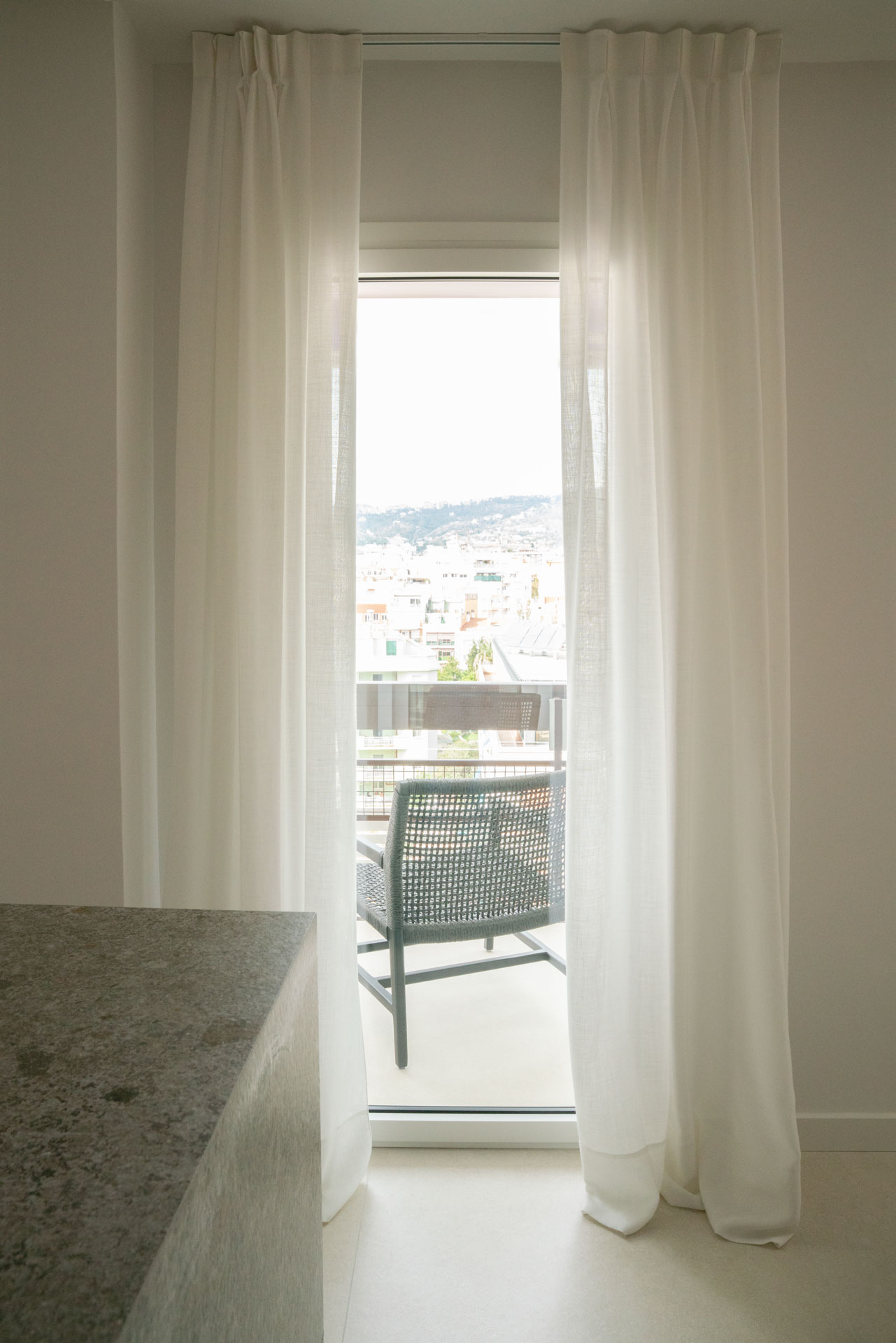
In the balcony enclosure, we renewed all the aluminum carpentry and added space for two armchairs. To enhance natural light and improve views, we opted for slim aluminum profiles: less visible frame and more glazed surface.
Kitchen: Monomaterial Island, More Light and Better Views
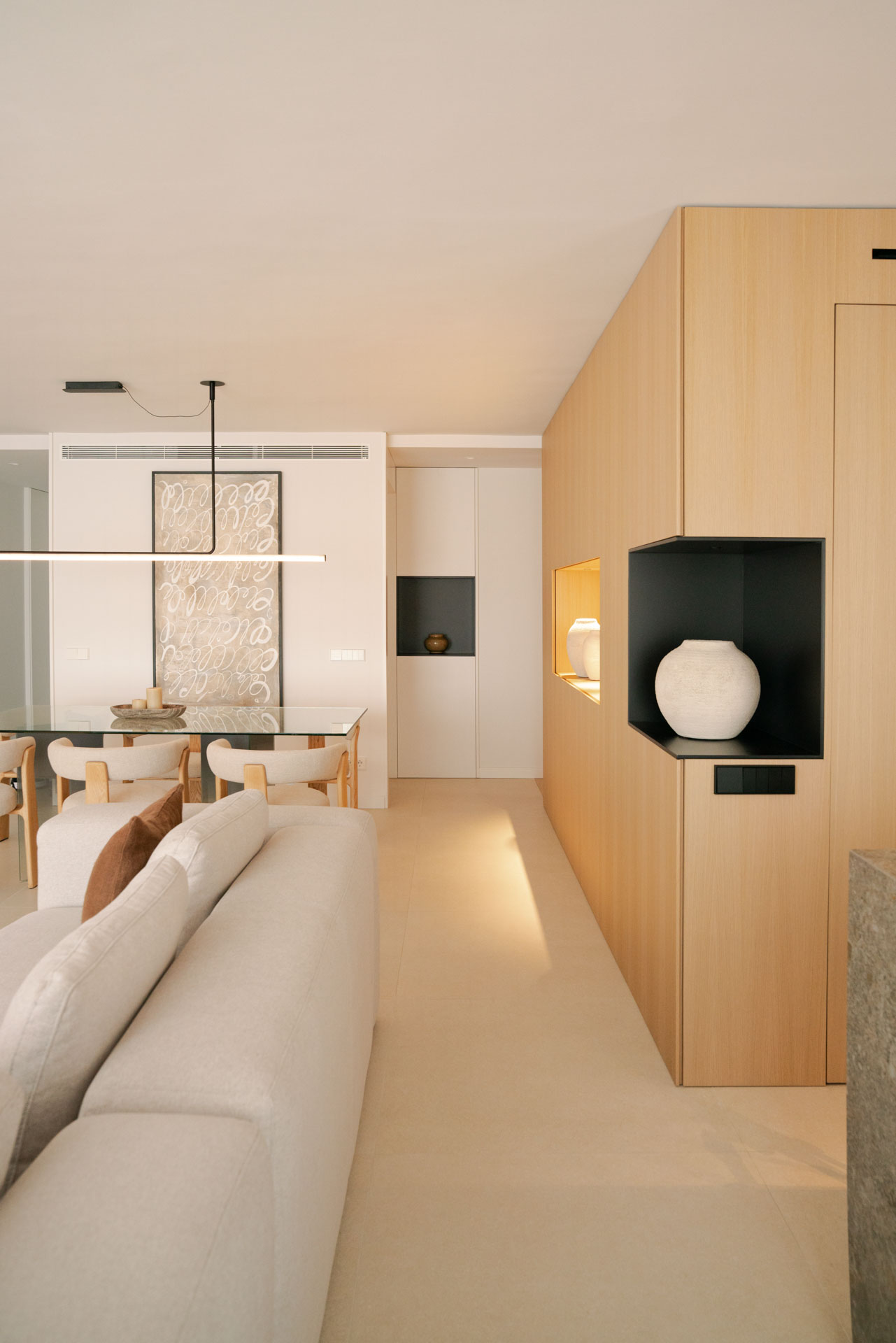
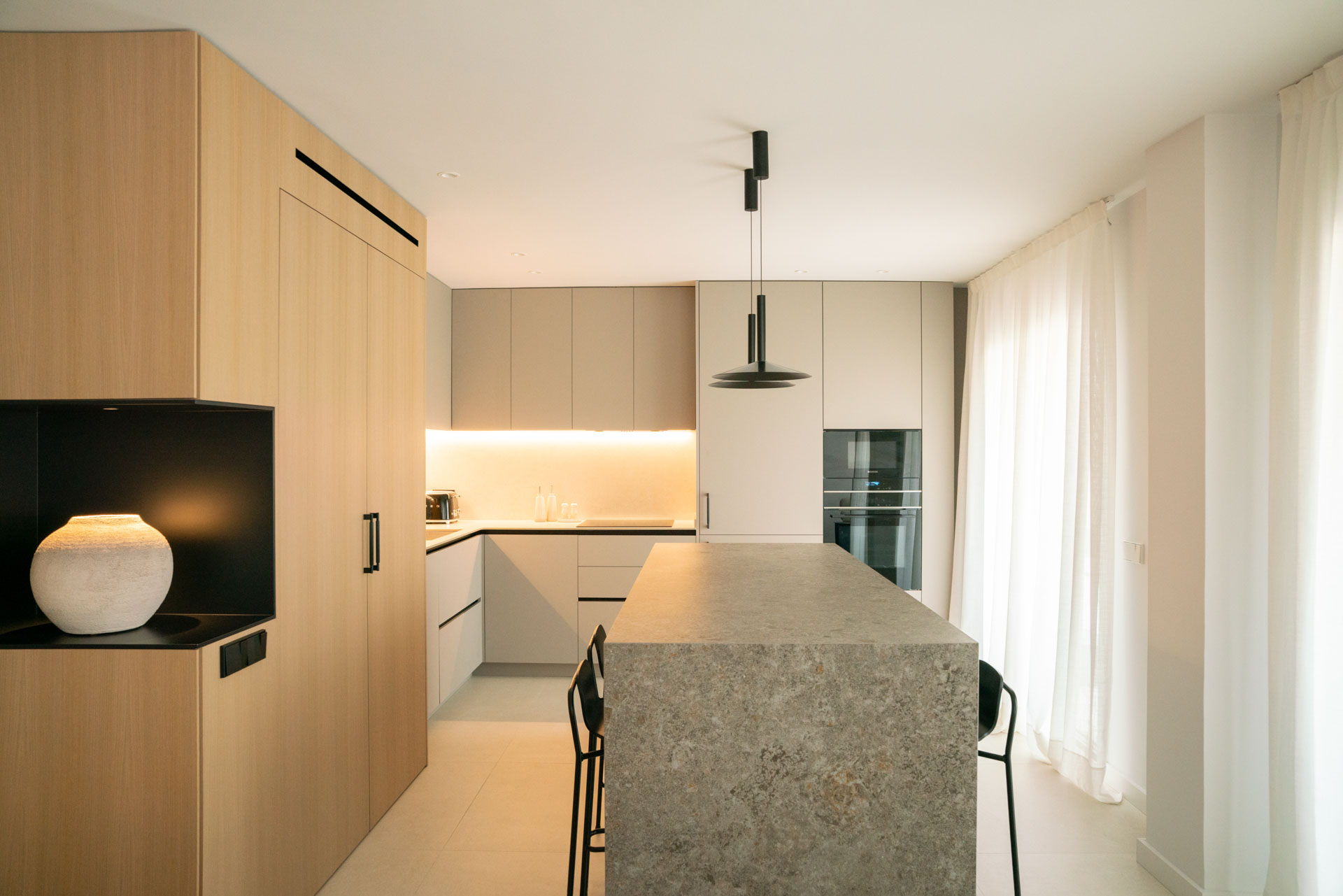
The kitchen emerges from the oak volume. In the last module, a double-sided niche appears, finished in black and lit inside. This gesture improves the spatial reading and allows a more complete view of the dining room, reinforcing the feeling of spaciousness.
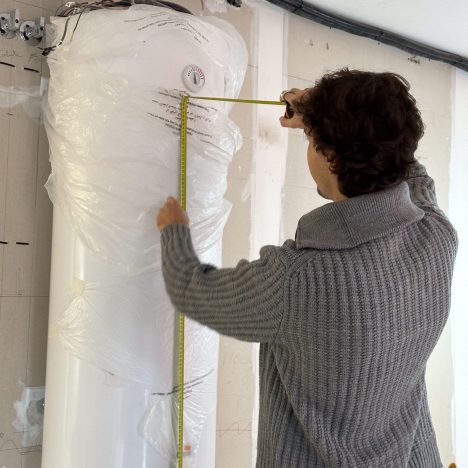
Within that same volume, two essential technical elements are hidden: two pocket doors that solve the laundry area. Inside: washing machine and dryer, storage, space for the electric water heater, and for dirty clothes. Essentially, a laundry divided into two modules.
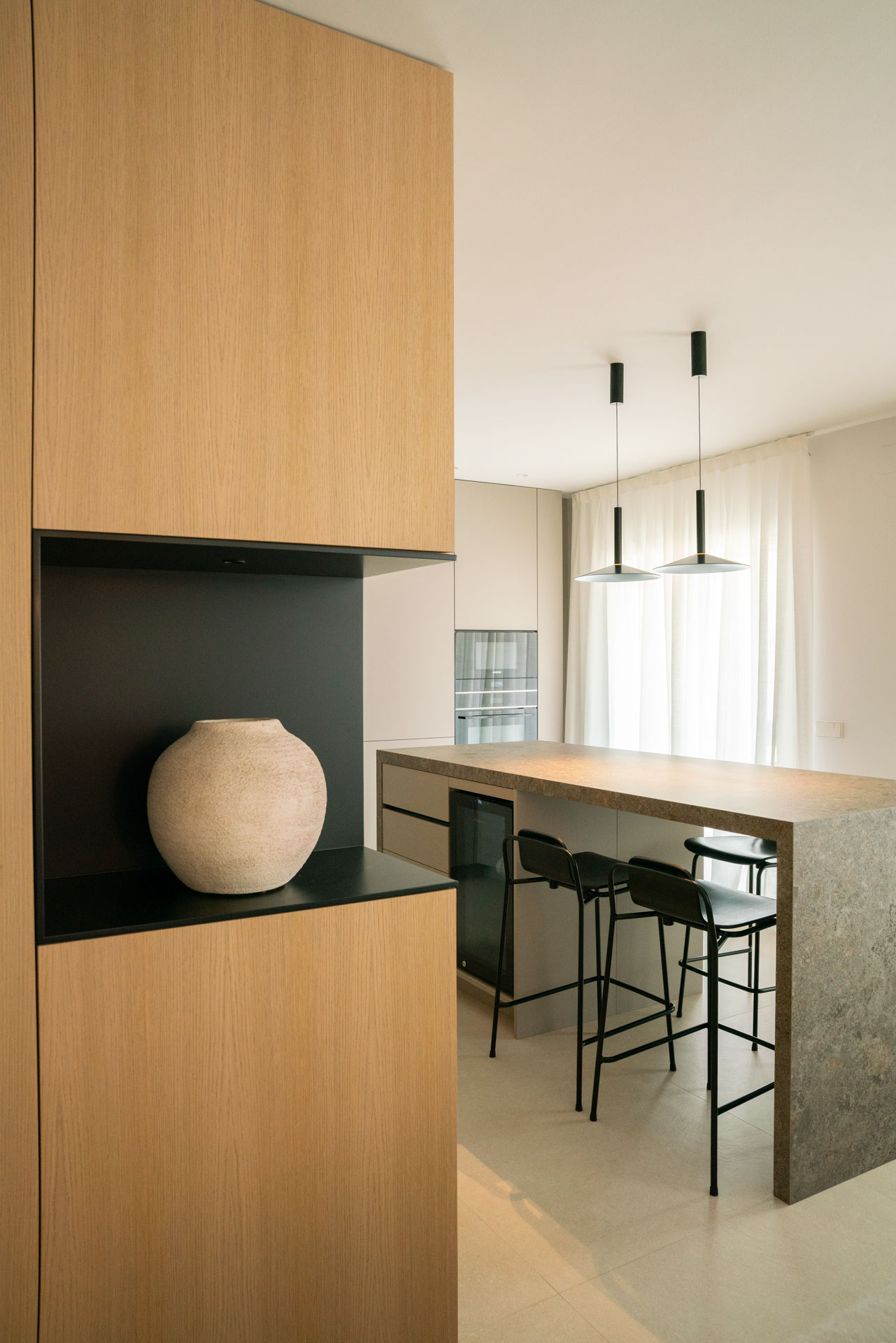
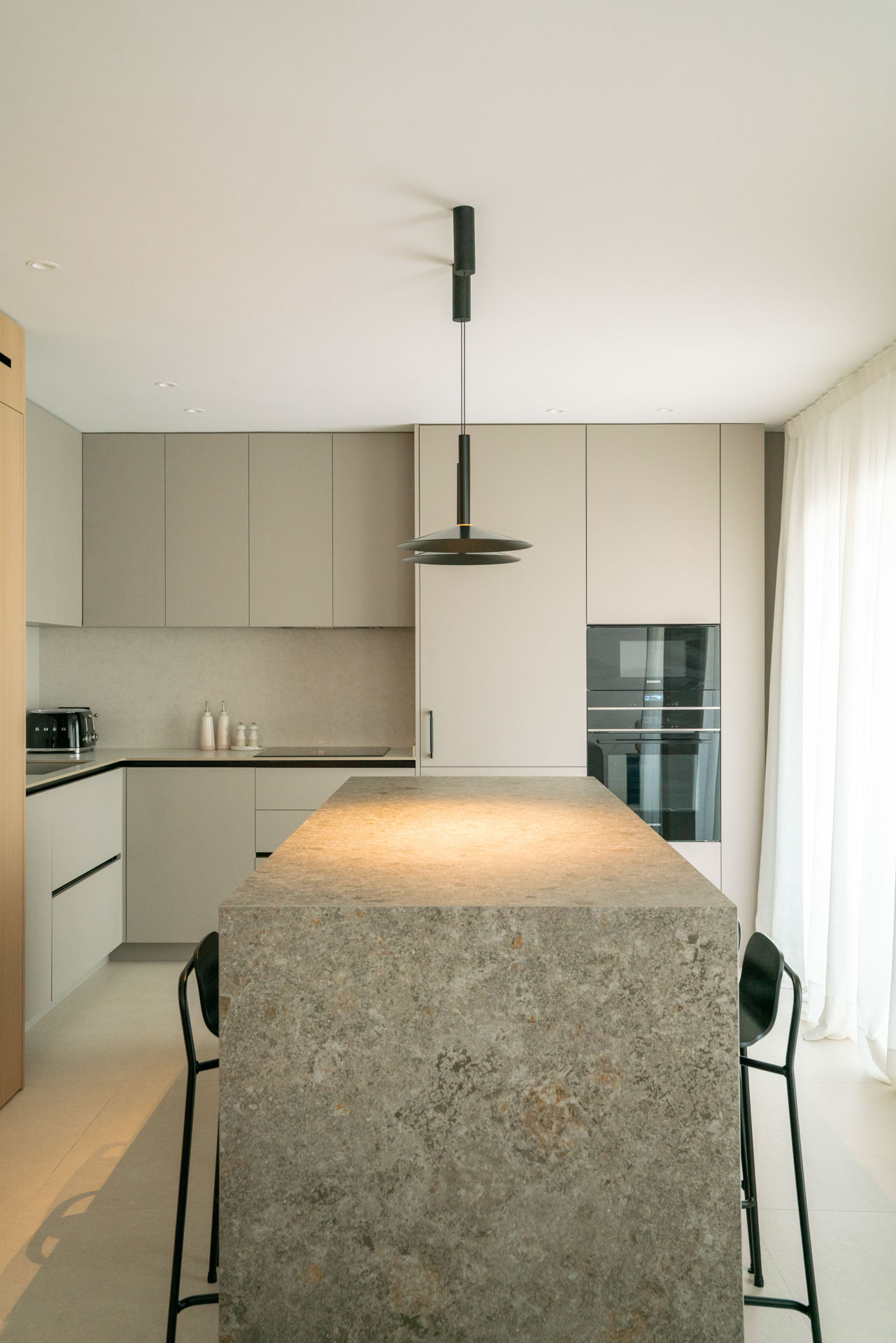
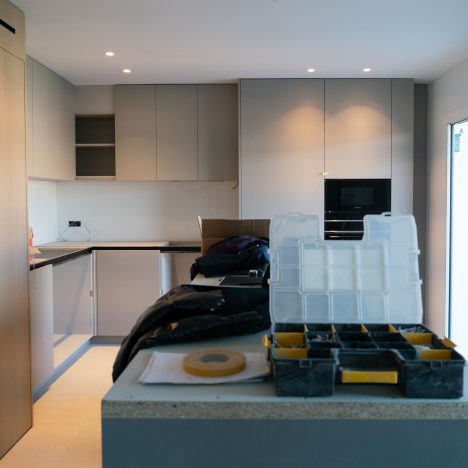
Where the wood ends, the kitchen itself begins: gray tones with black handles, marking the change in material to differentiate it from the rest of the home. The intention is to achieve a uniform volume using the same chromatic range, without protruding elements, to give prominence to the island.
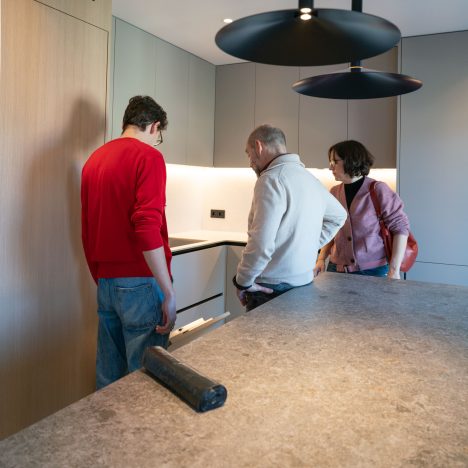
The kitchen island is made of mitered porcelain so it reads as a single continuous volume. It includes space for 4 stools by Normann Copenhagen, model Studio, with black metal structure and black-finished wooden seat. It also integrates a wine fridge and extra storage.
This piece is placed next to the balcony to encourage social life and take advantage of the views, and it is visually aligned with the living room TV. It is also lit with two suspended black metal lamps by Marset, model Milana 32.
Day Area Bathroom: The Theory of the Unexpected Red
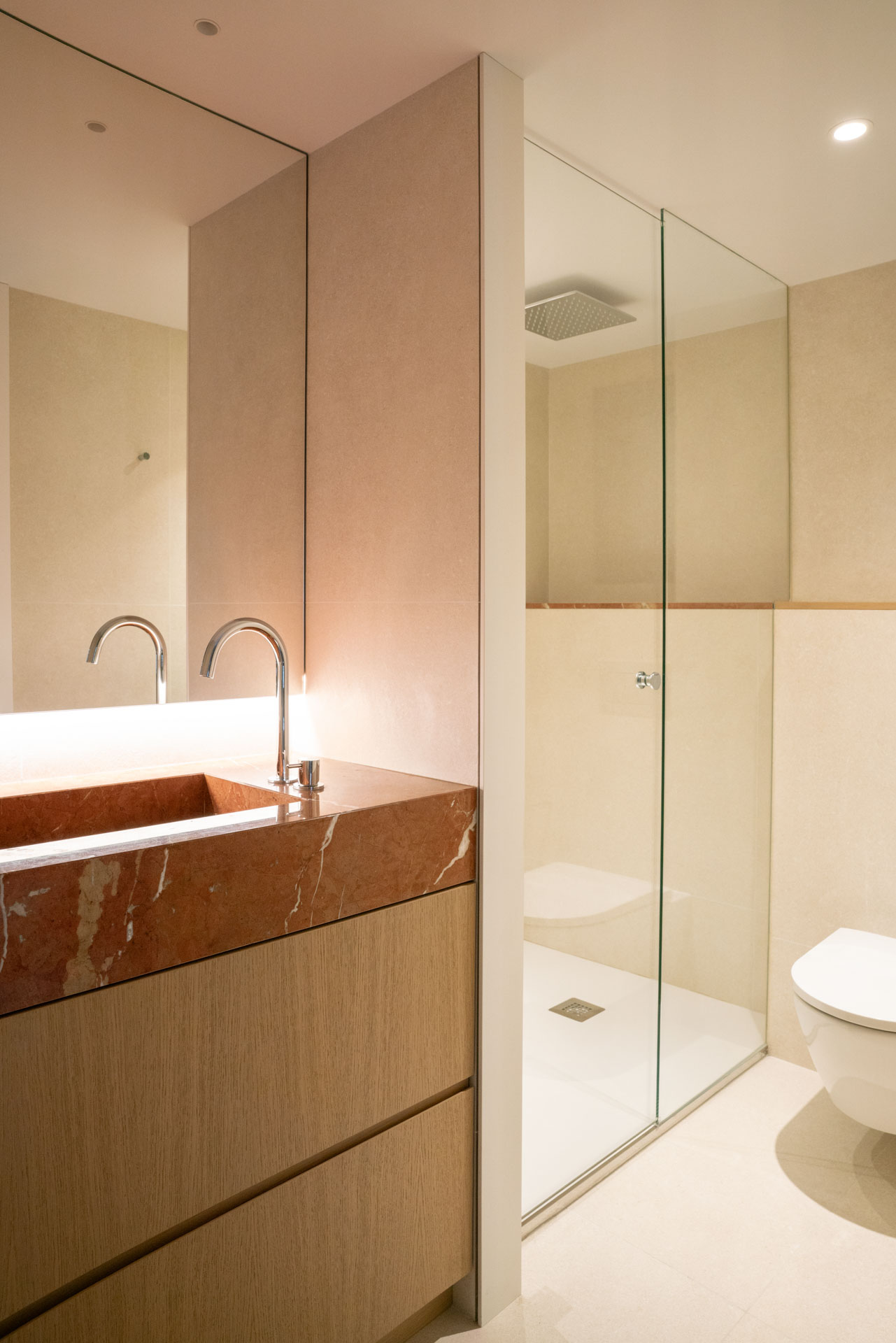
Sometimes, a neutral space doesn’t need “more things,” but rather a well-placed accent. This is what the theory of the unexpected red proposes: introducing a touch of red can transform the perception of a space and turn it into its focal point. And that is exactly what we applied at this point in the project.
Next to the day area, behind the dining room, there is a bathroom that can also serve the guest bedroom. It is a space defined by a protagonist piece: a natural marble sink in “Alicante red,” with warm, earthy tones.
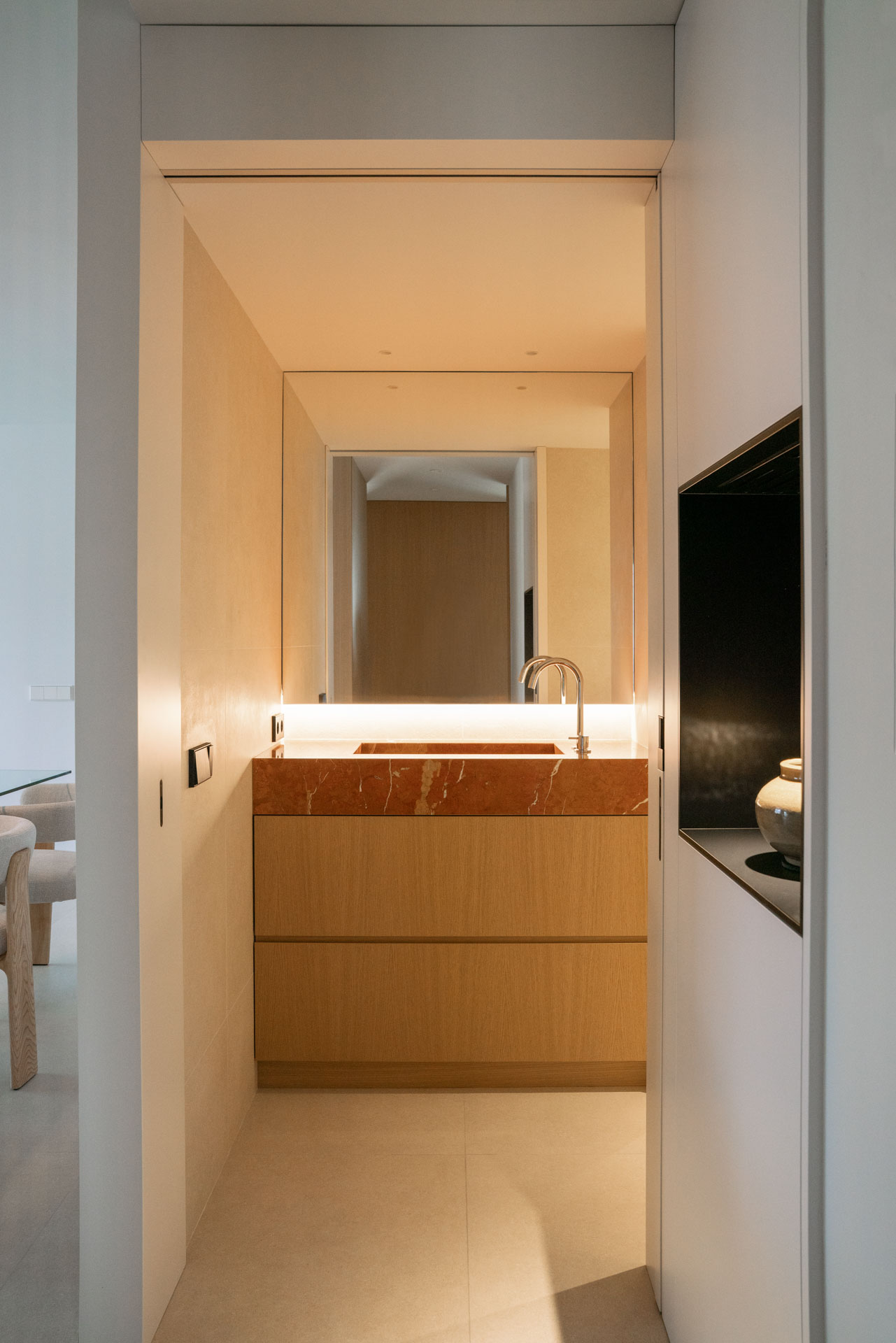
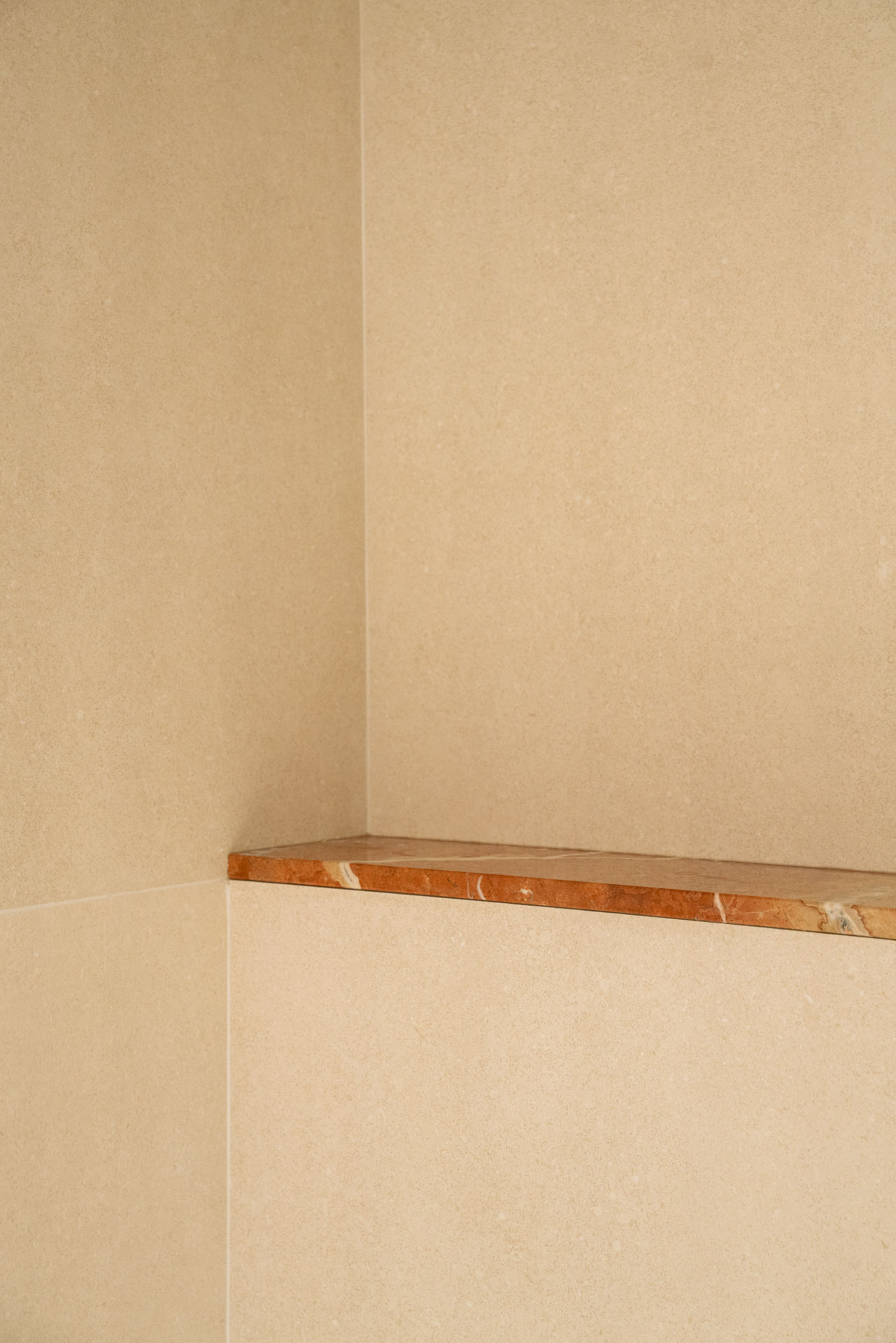
Floors and wall coverings maintain absolute continuity: the entire bathroom uses the same porcelain as the day area floor (sand color). The point of color and character is provided by the marble, following a contemporary interior design logic.
Upon entering, a custom-designed vanity with two drawers appears, on which the marble sink rests. The space is closed by a white lacquered sliding door.
The bathroom includes a large shower with a niche finished in the same “Alicante red” marble to maintain the aesthetic dialogue. The faucets are stainless steel, and the custom mirror is backlit.
Night Area: A Flexible Private Core
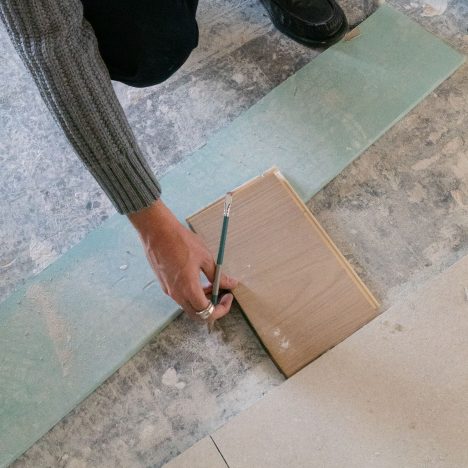
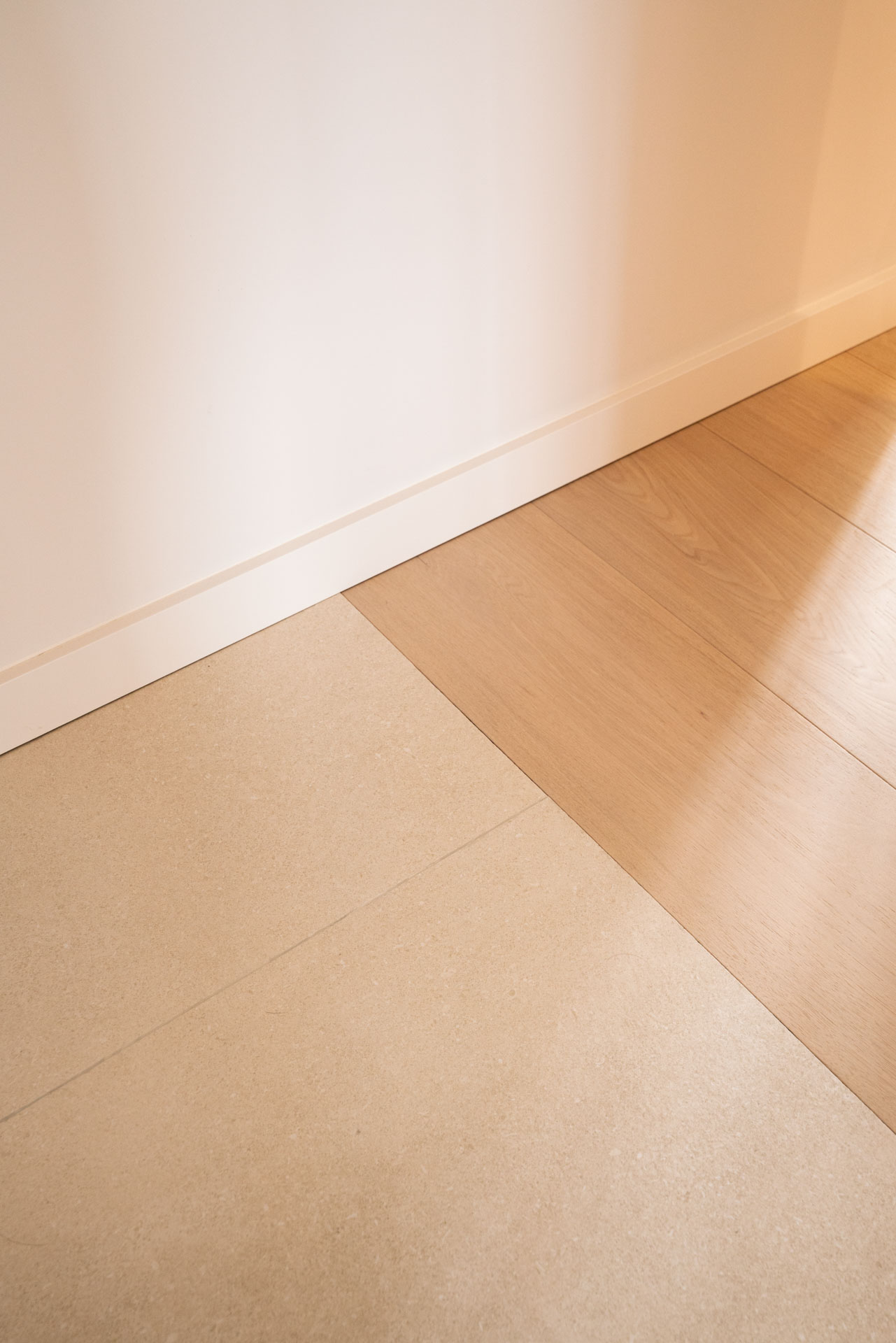
The transition to the private area is emphasized with a clear gesture: a change in flooring to parquet. The piece of furniture that functioned as a buffet literally acts as a threshold, and from there the path becomes more introspective.
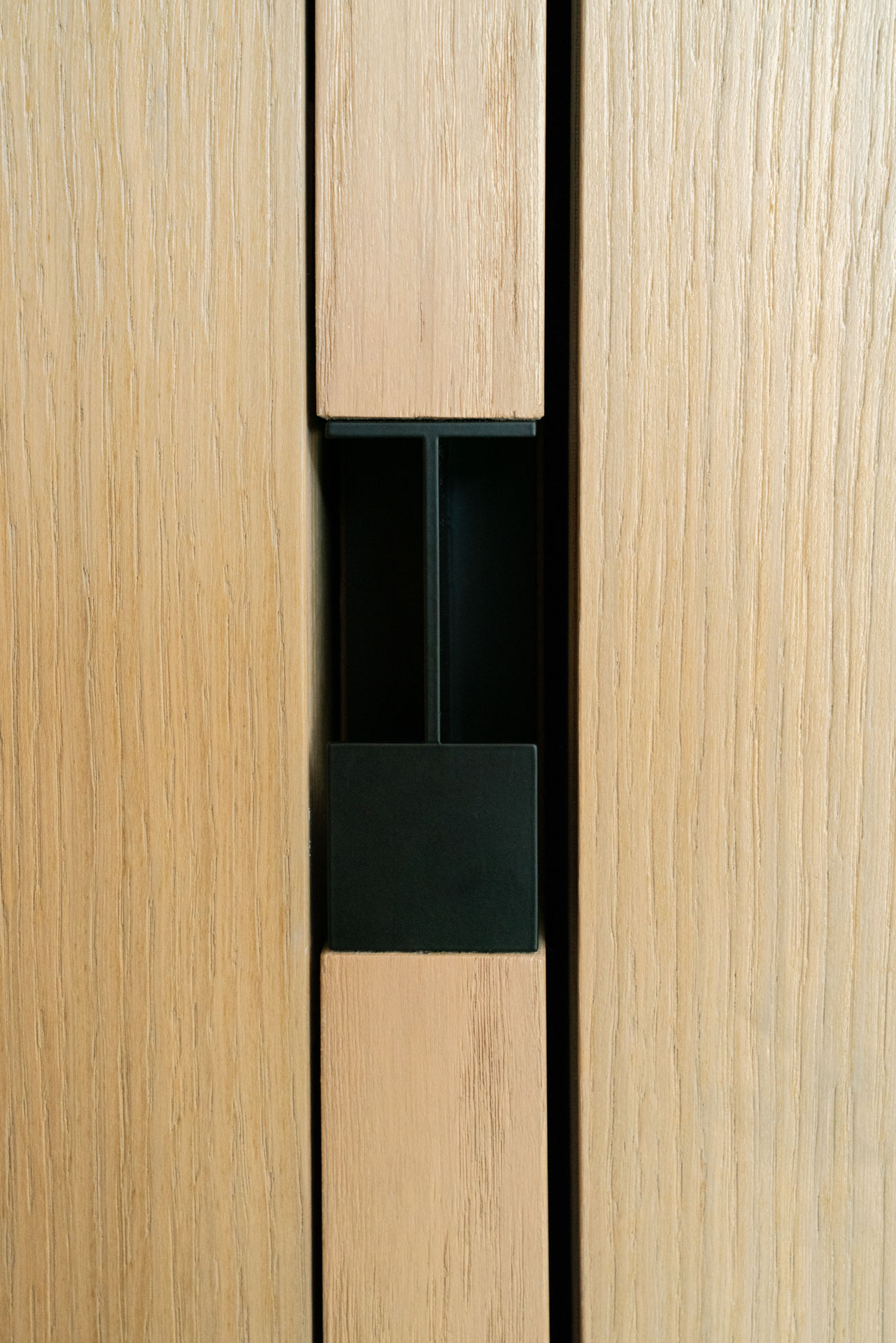
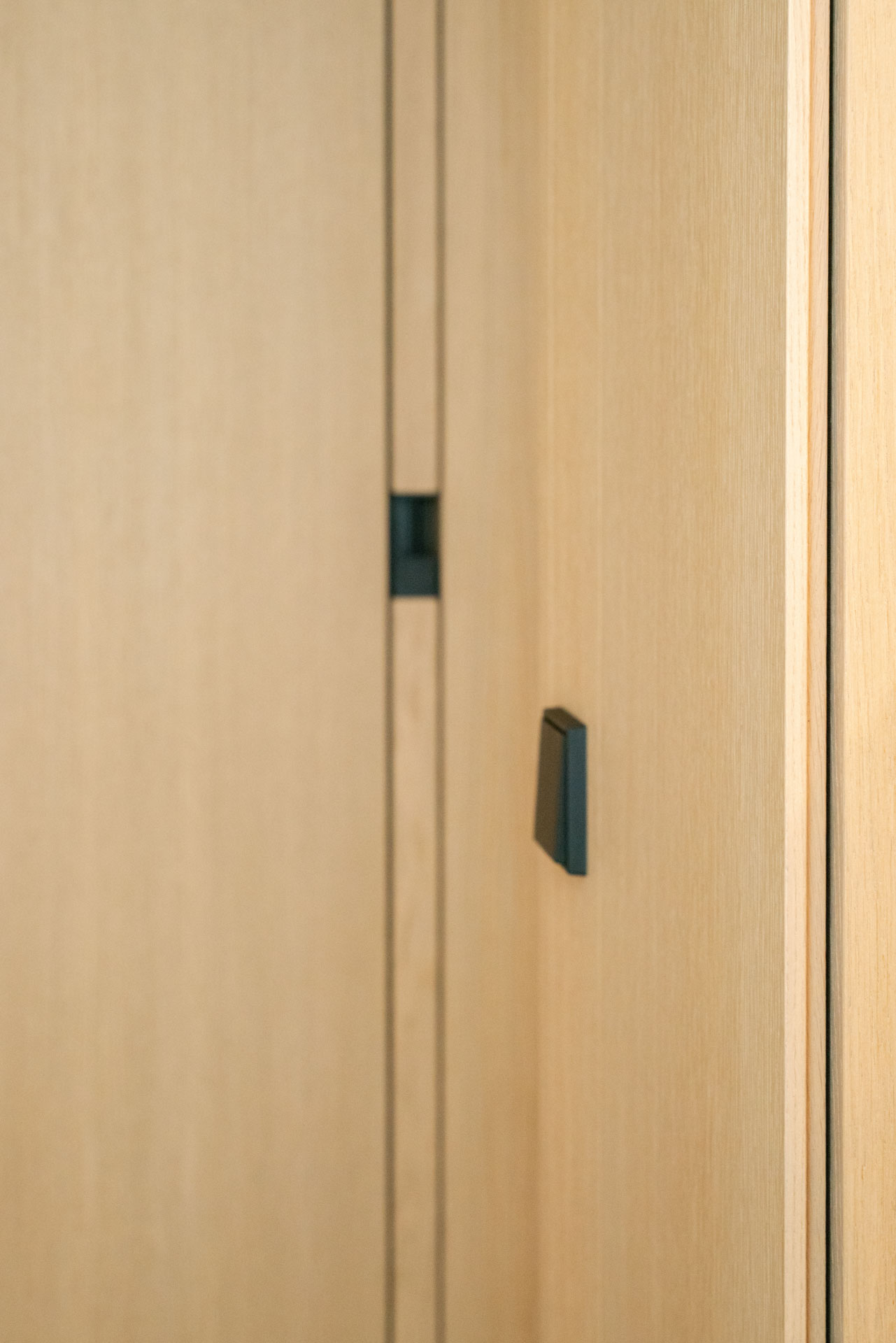
Hallway: Oak Wood Transition
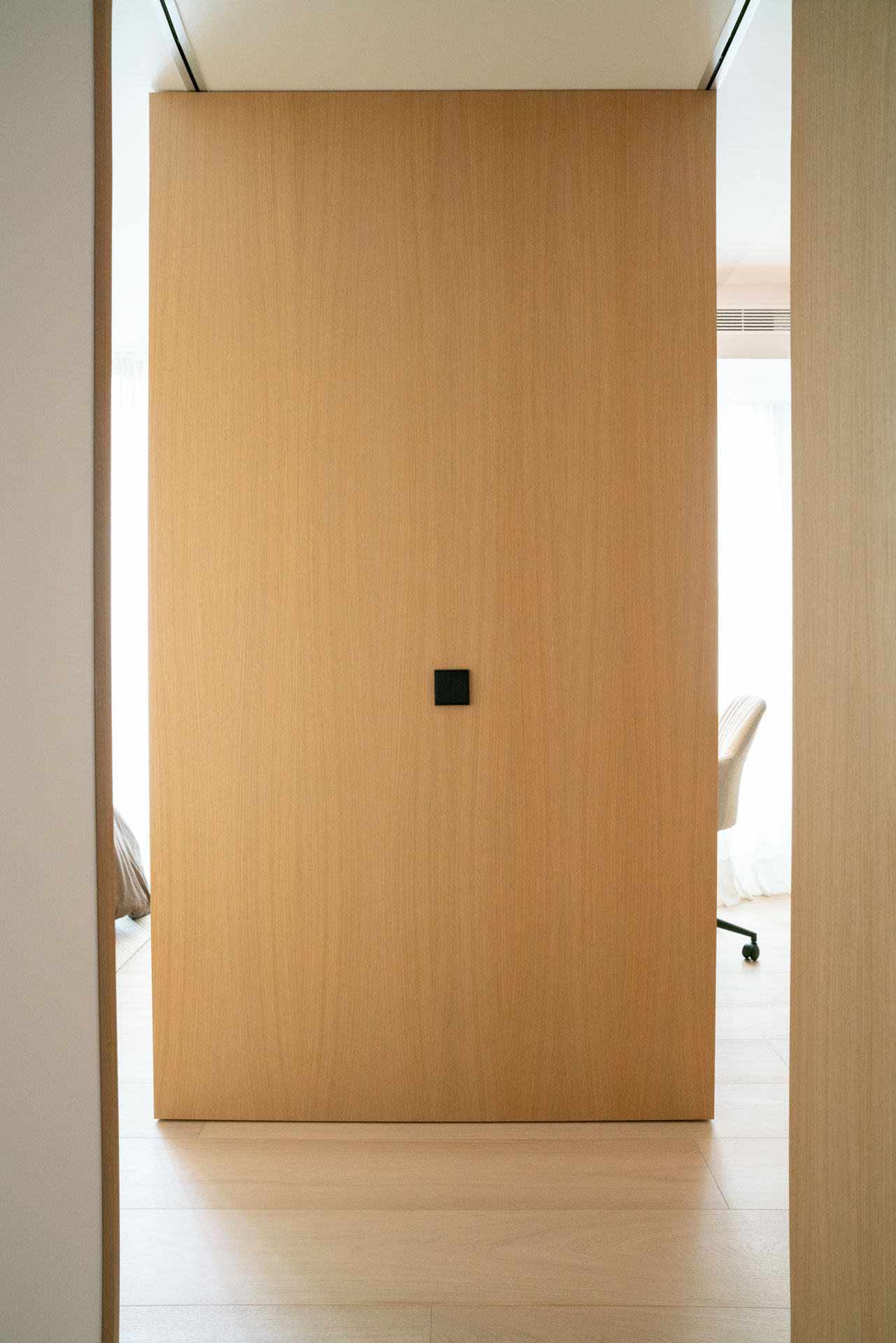
The night hallway houses the bedroom doors and maintains the same oak wood finish, reinforcing the feeling of continuity and warmth.
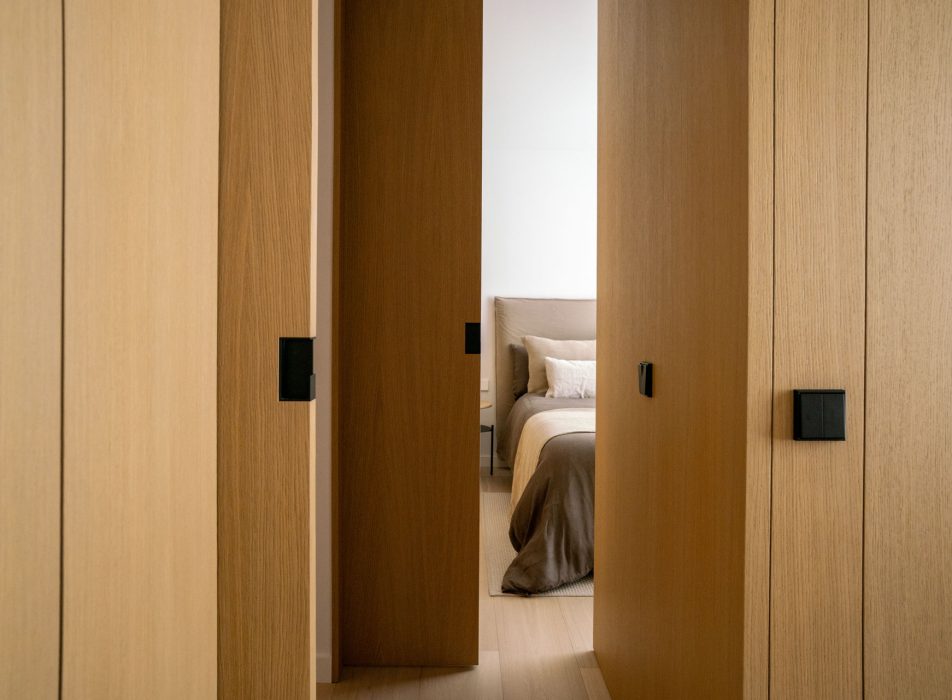
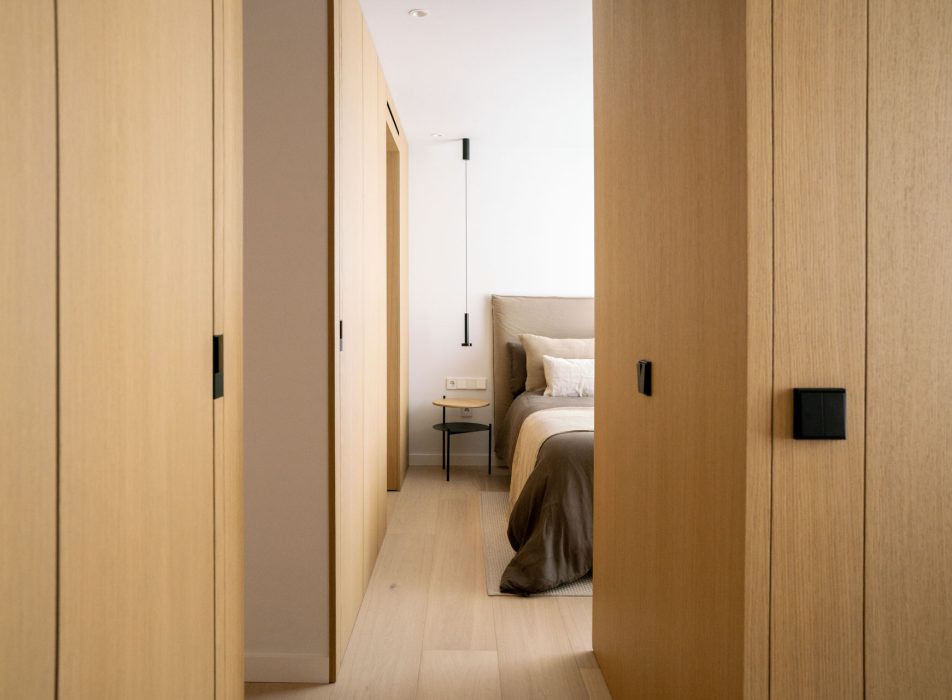
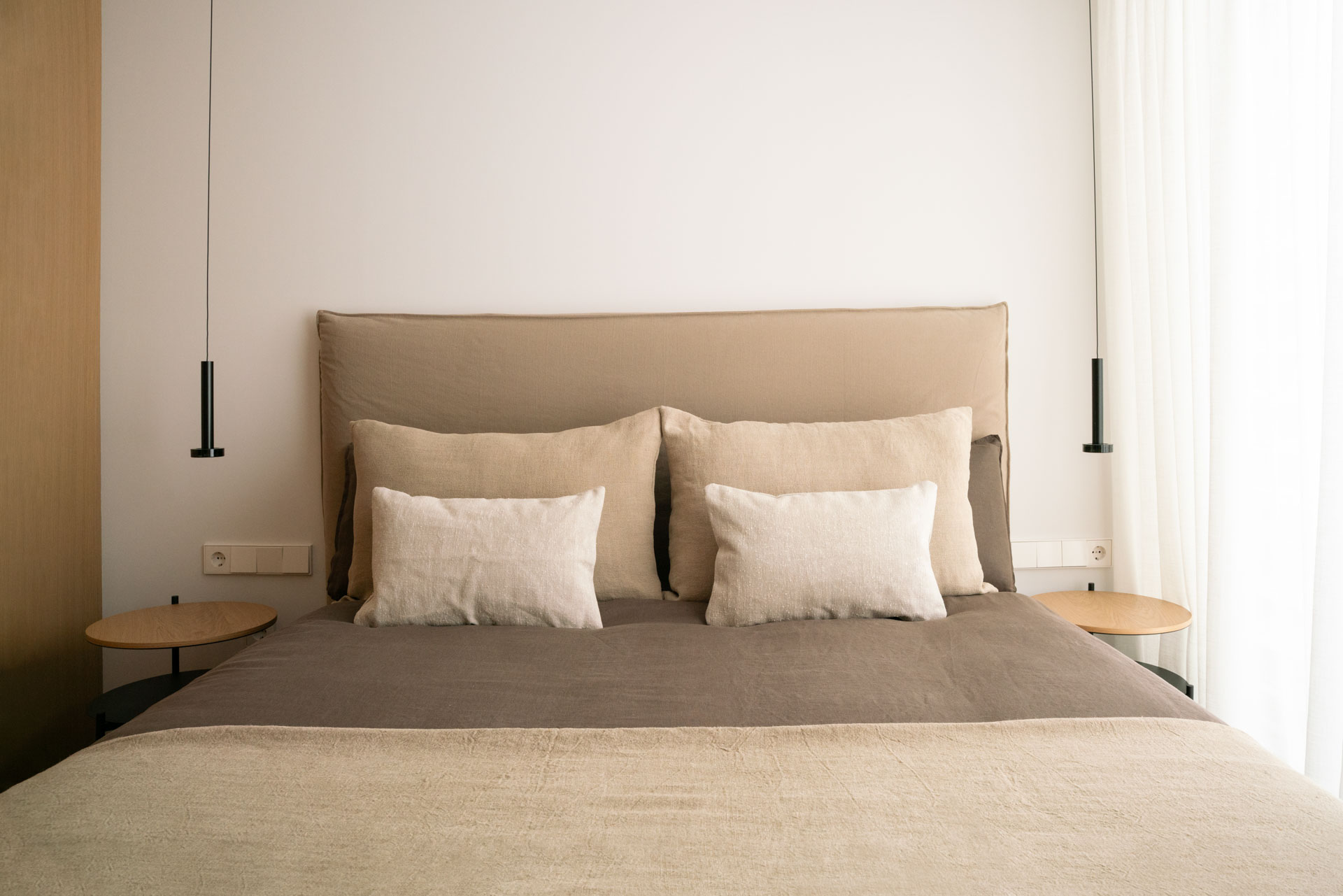
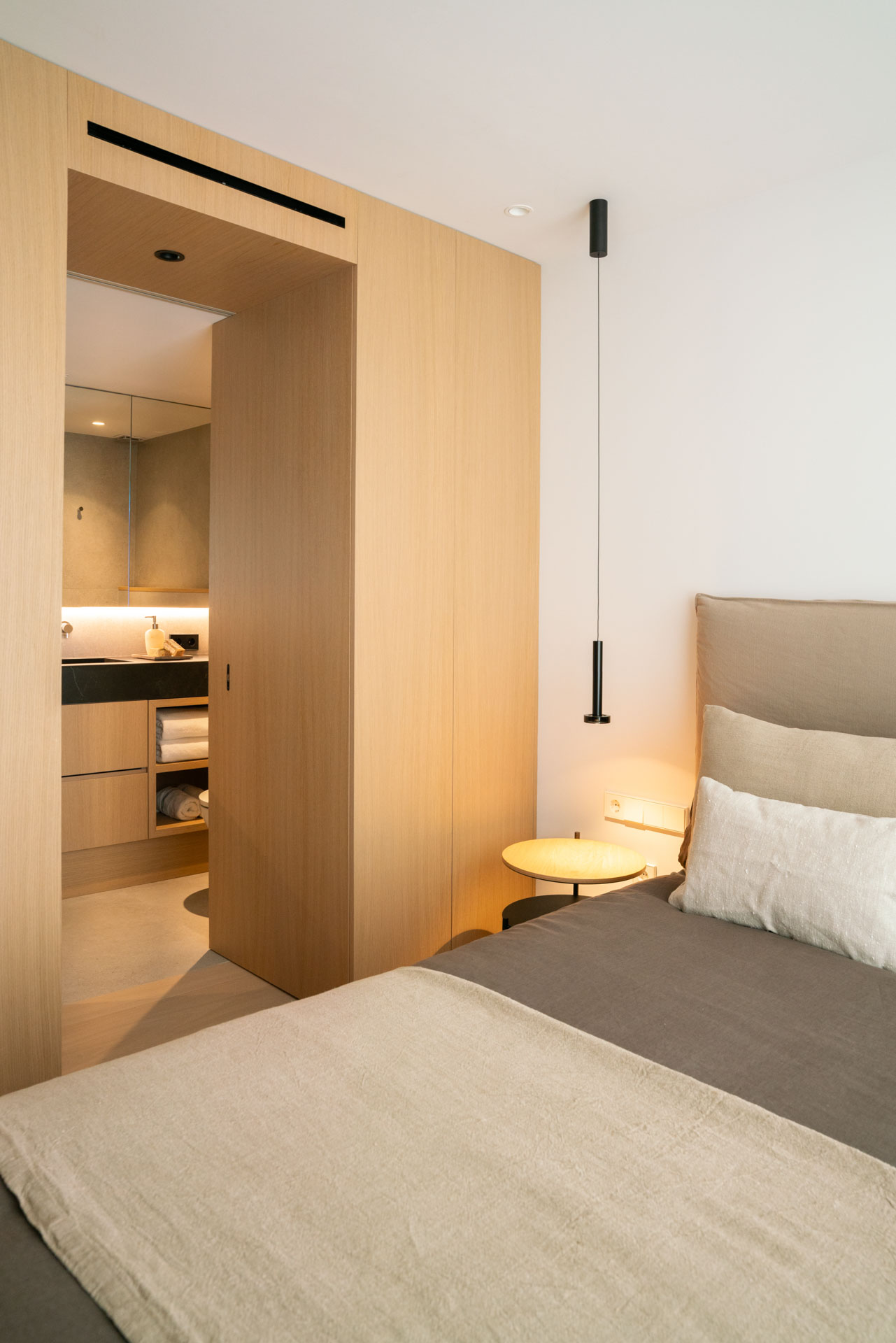
Bedroom/Suite: Access to the Bathroom Through the Walk-In Closet
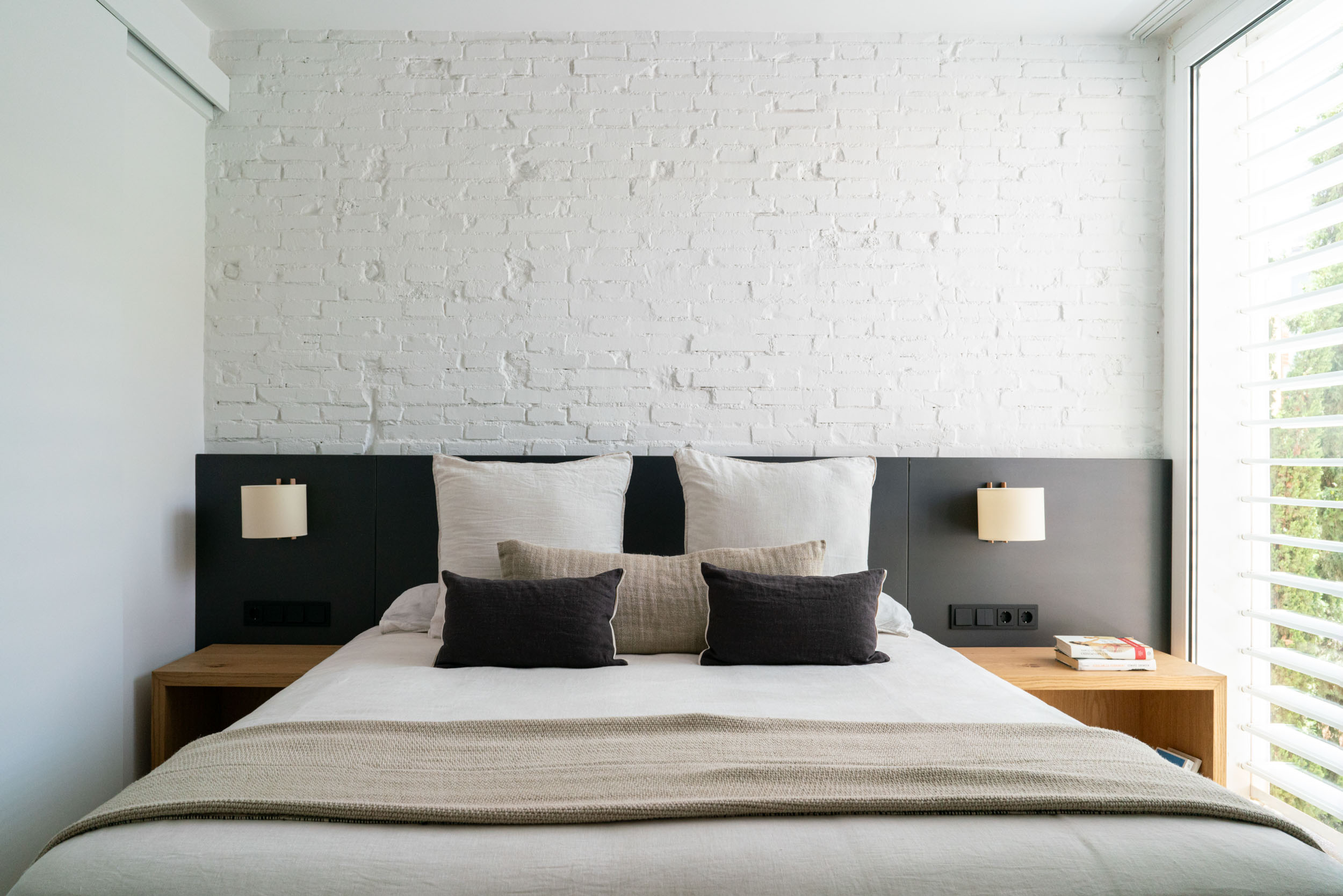
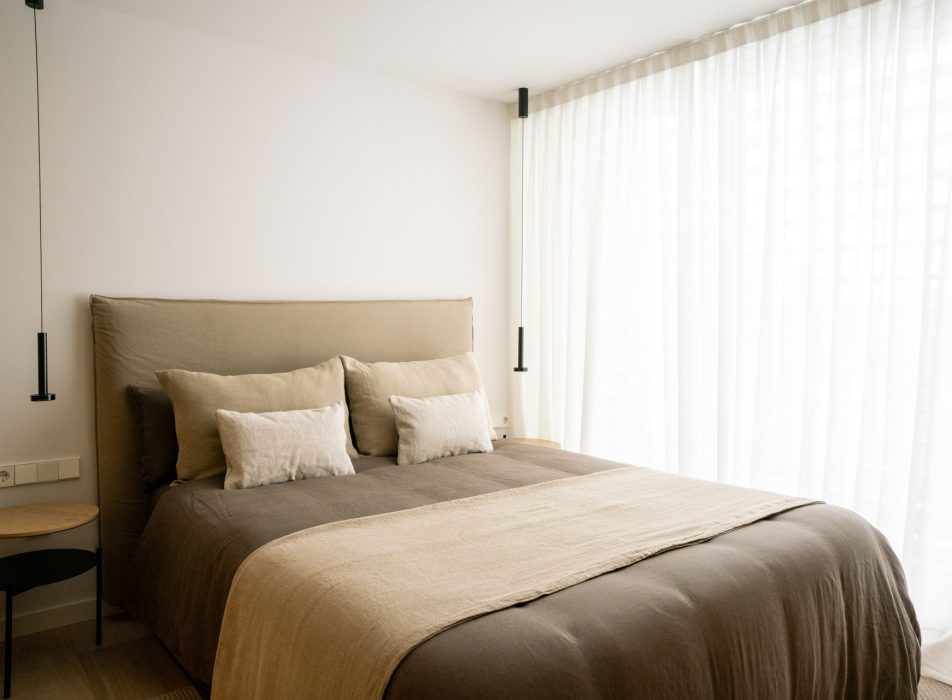
This room is conceived as a rest space: it includes the bed, storage areas, and direct access to the en-suite bathroom, resolving circulation naturally and without interruptions.
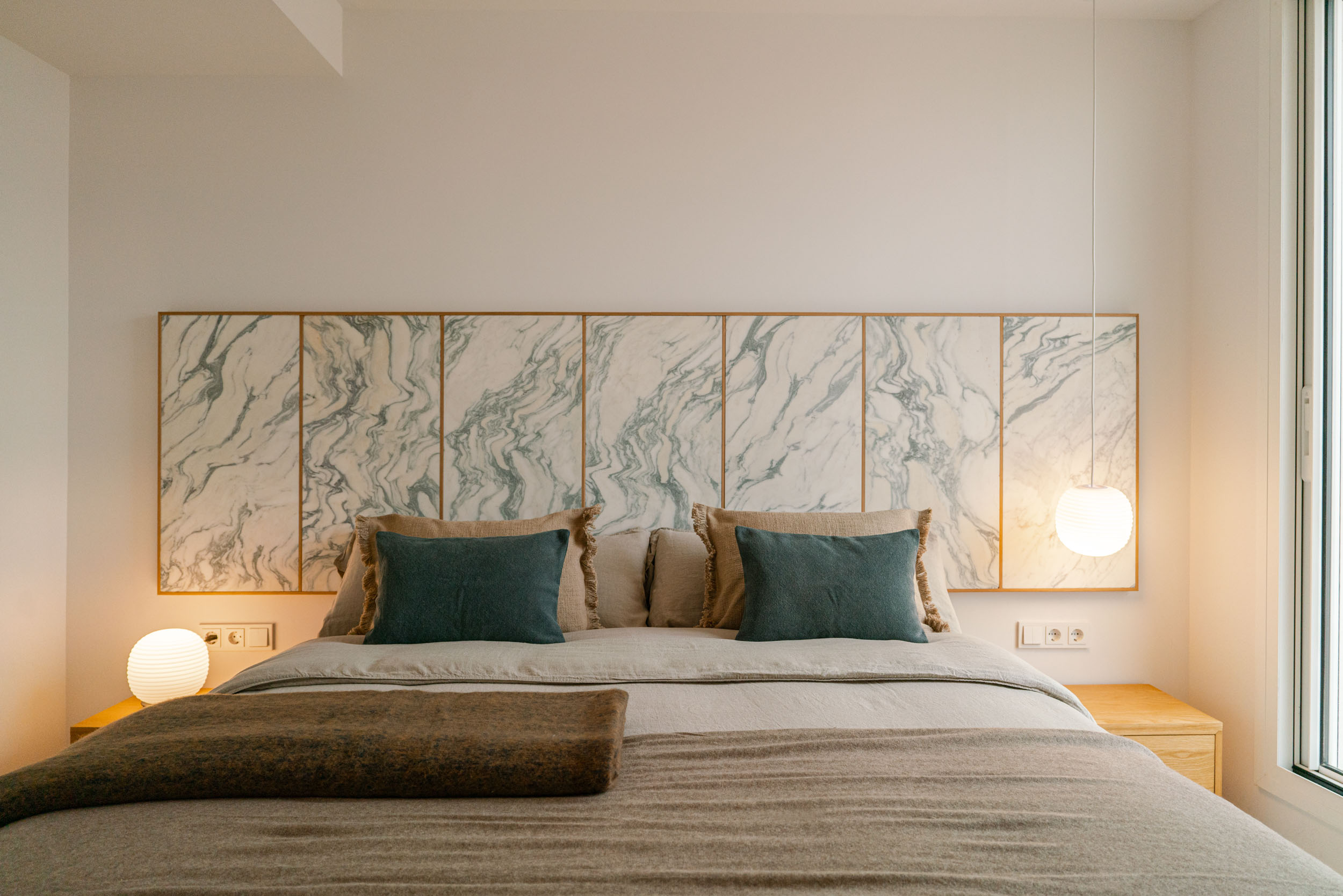
On either side of the bed, two suspended lamps by Marset, model Milana 8, in glass finish, provide warm, focused lighting. They are paired with two bedside tables combining black and oak wood, reinforcing the project’s neutral palette.
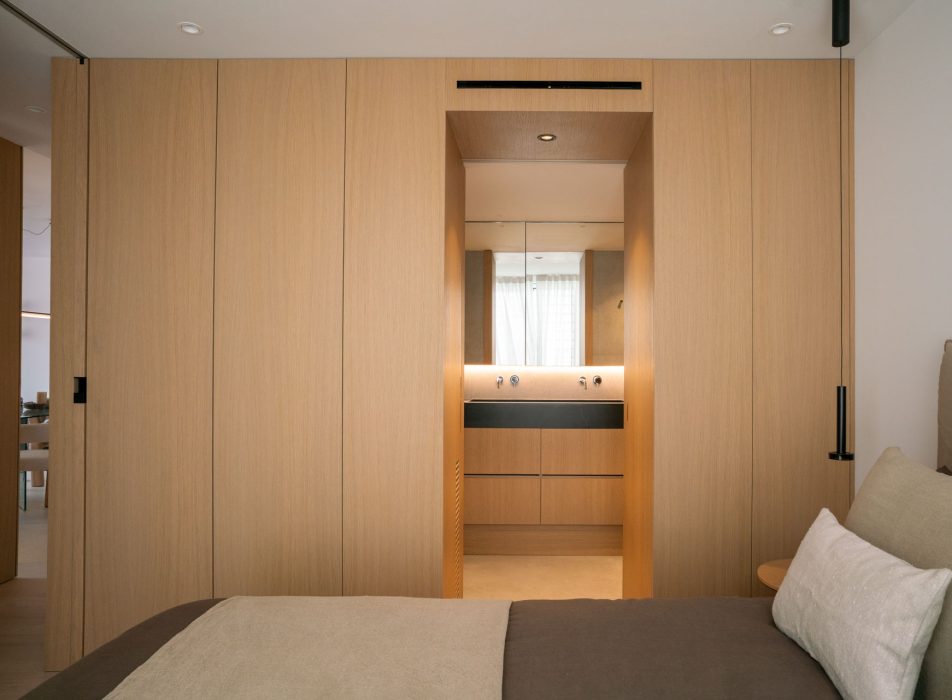
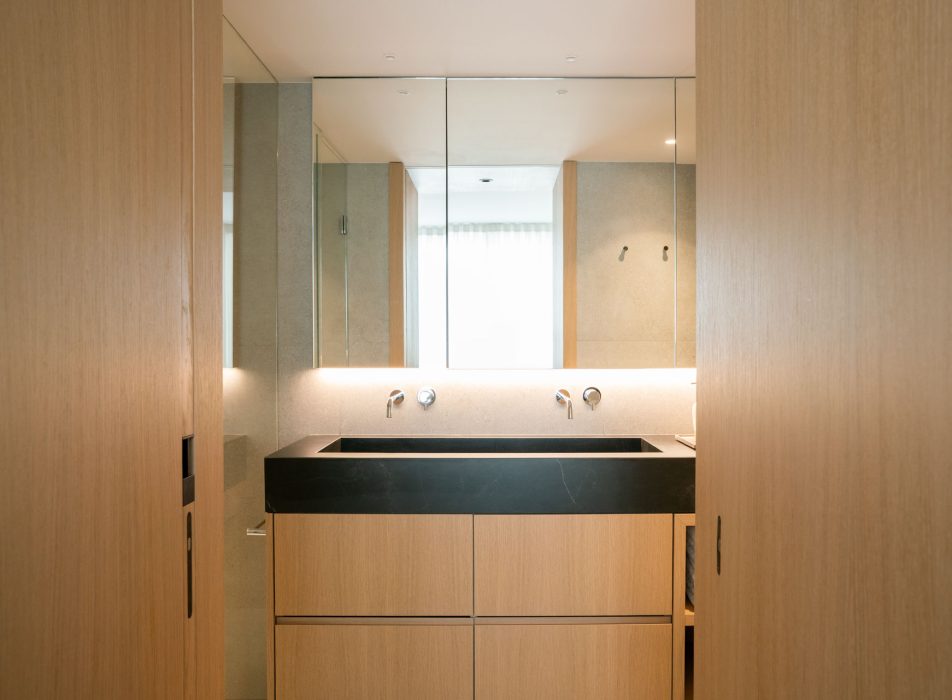
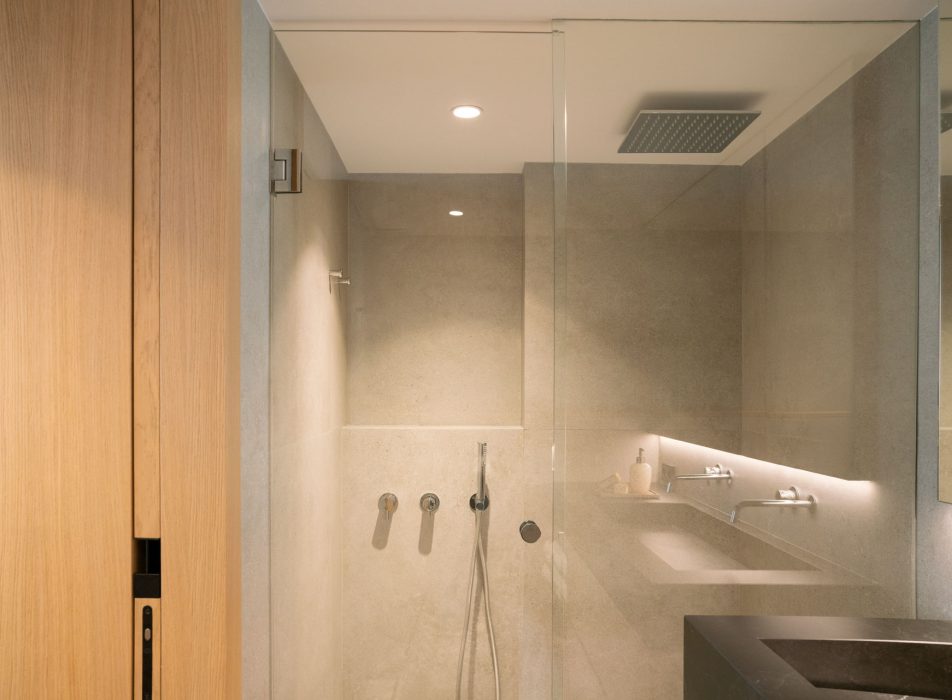
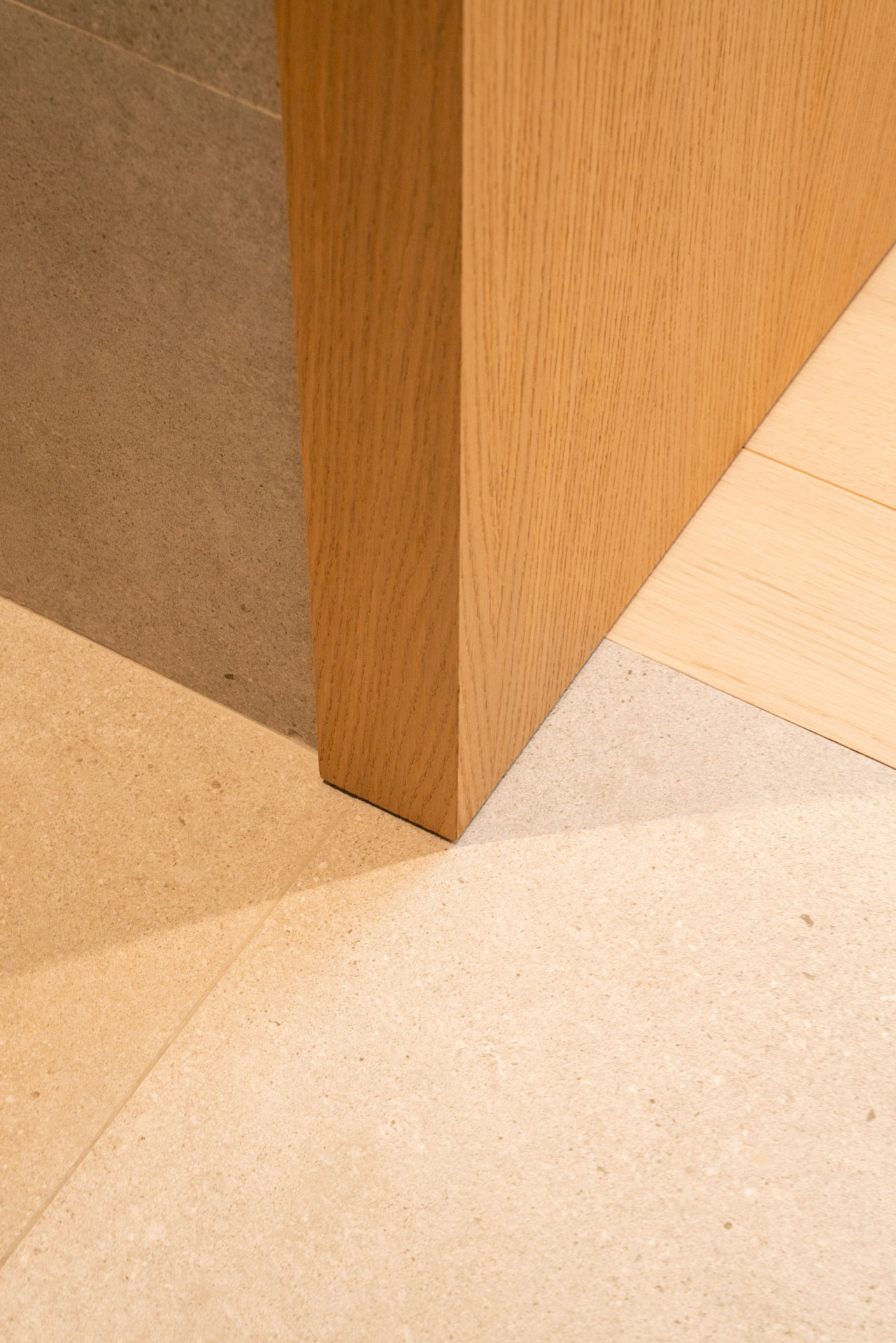
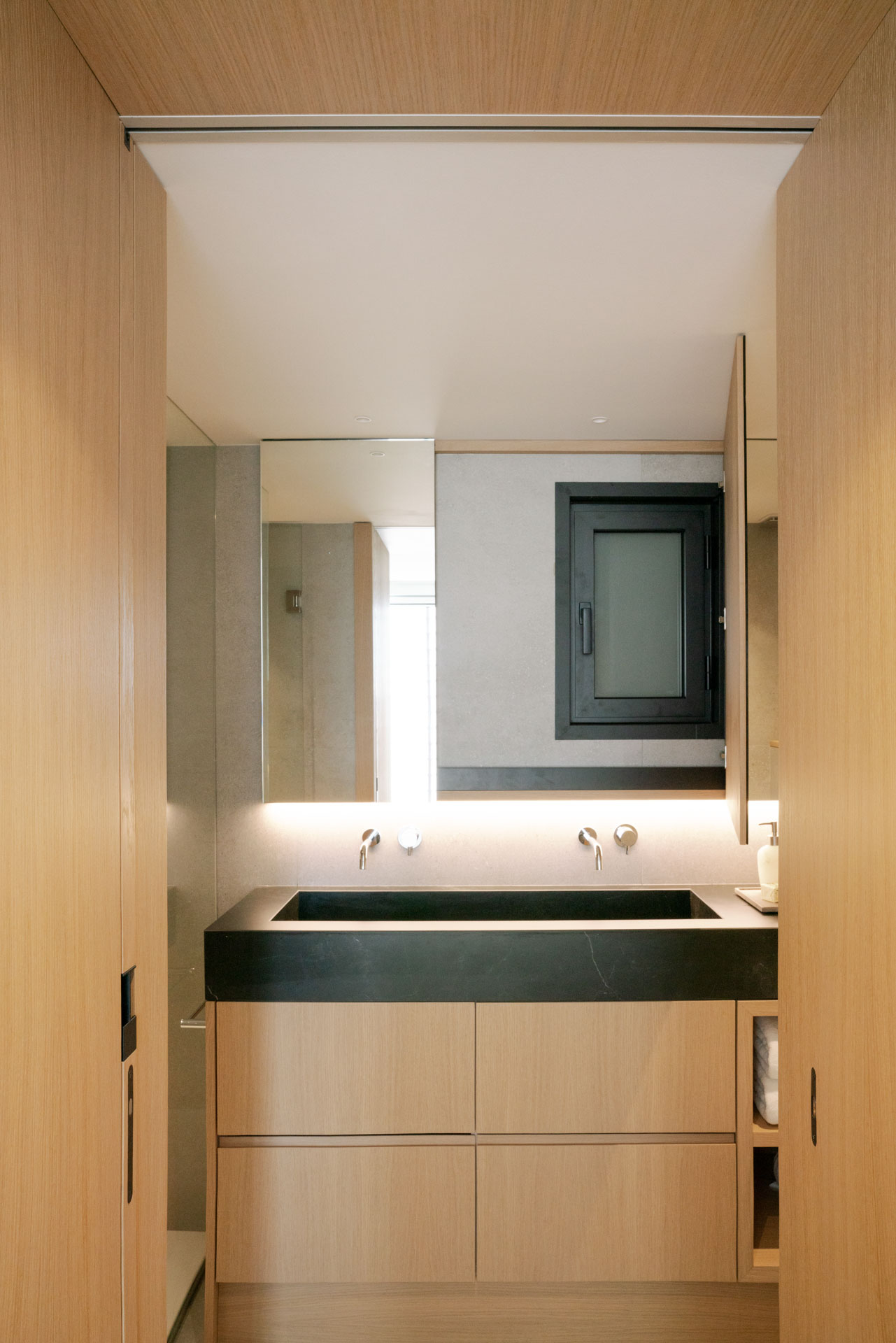
Through the walk-in closet, you access the bathroom. Inside the suite bathroom, floors and walls are finished with large-format gray porcelain. The large sink is custom-designed in black porcelain, and the lower cabinet is also custom-made.
For a uniform reading of the space, the same material is used for the shower finish, the stainless steel faucets, and a large mirror designed to enhance the feeling of spaciousness and brightness. Additionally, as a final detail, one of the mirrored panels works as a door and allows the hidden window to be opened.
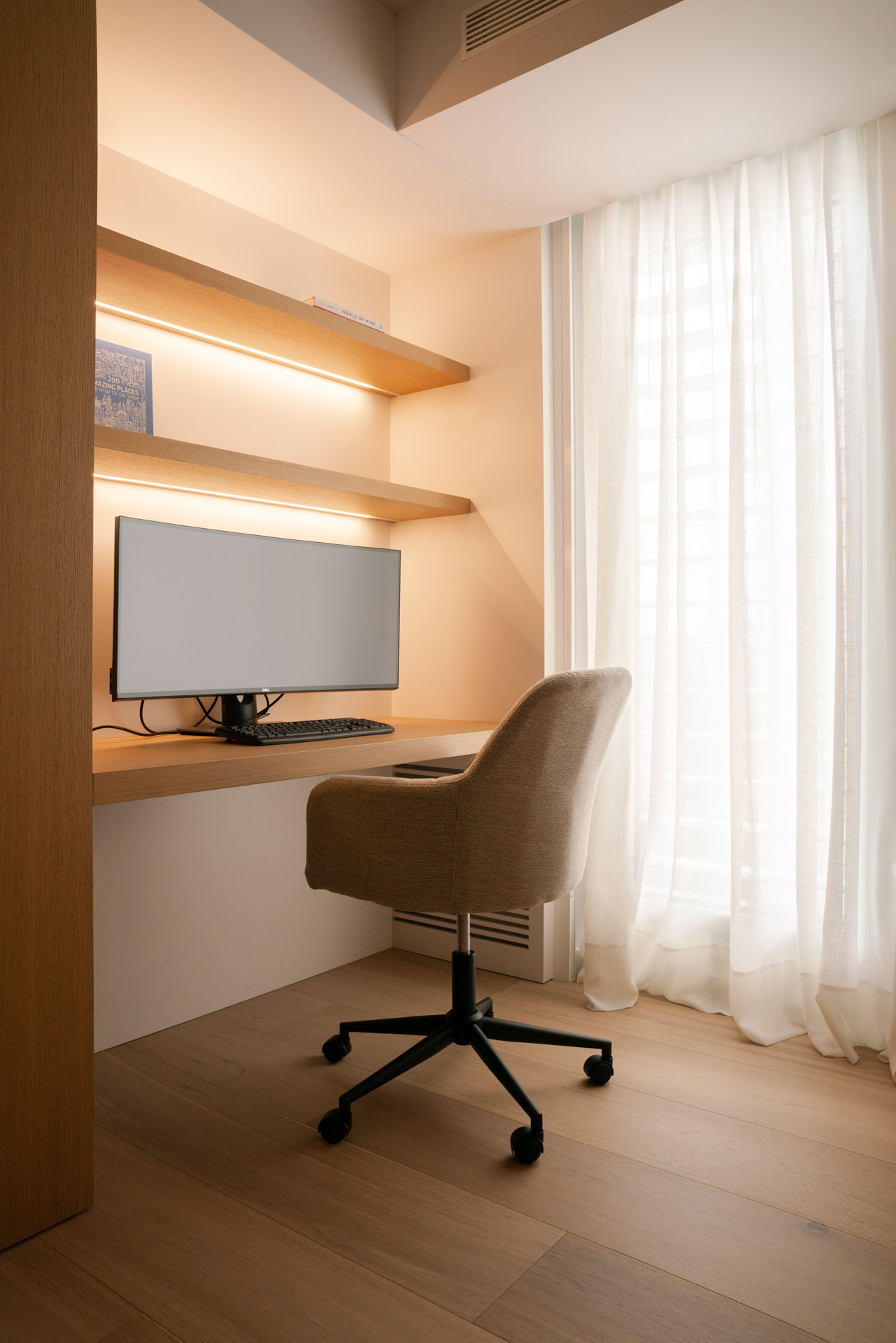
Bedroom/Study: Integrated Desk and Guest Space
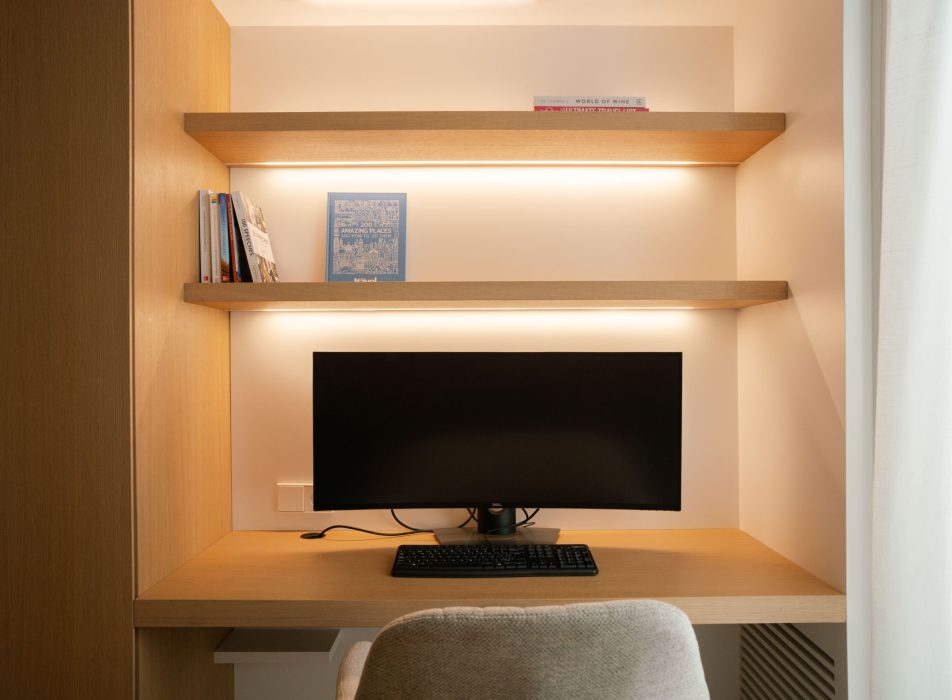
In the bedroom/study, the central volume acts as a storage unit and integrates a custom desk that combines white lacquer and oak wood.
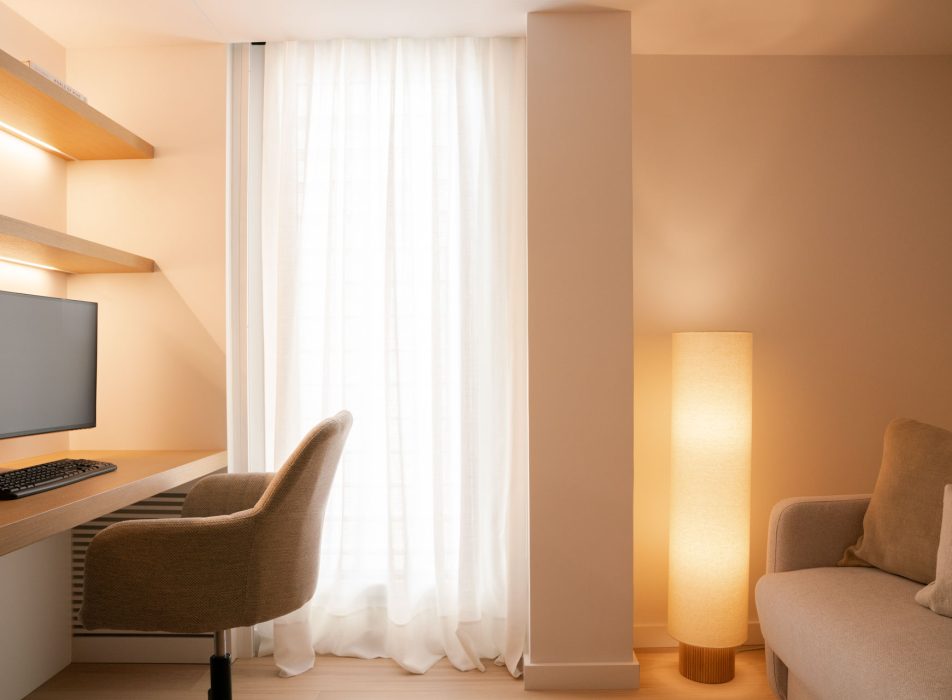
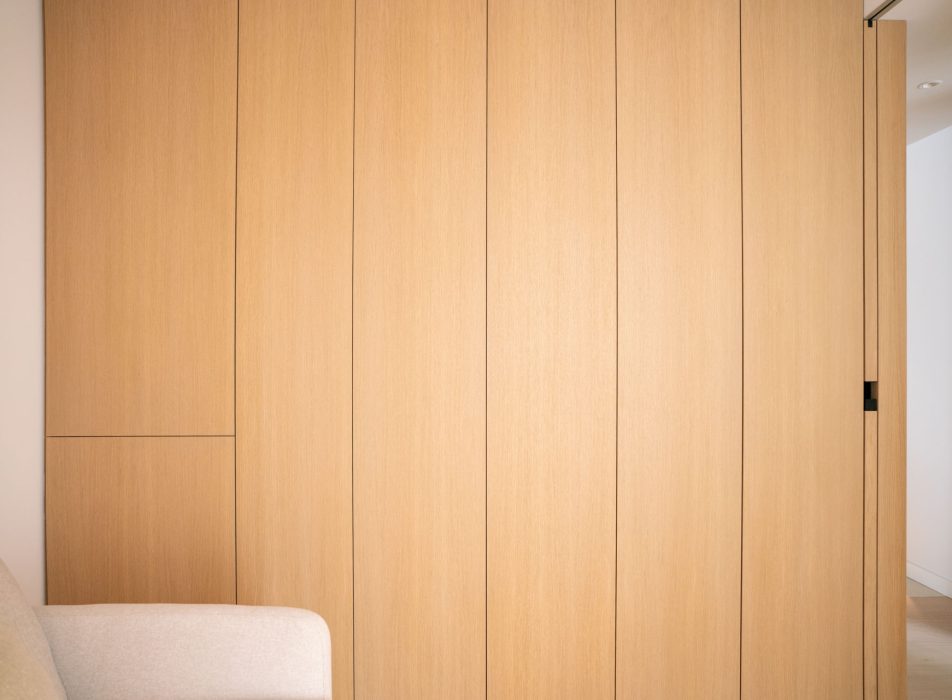
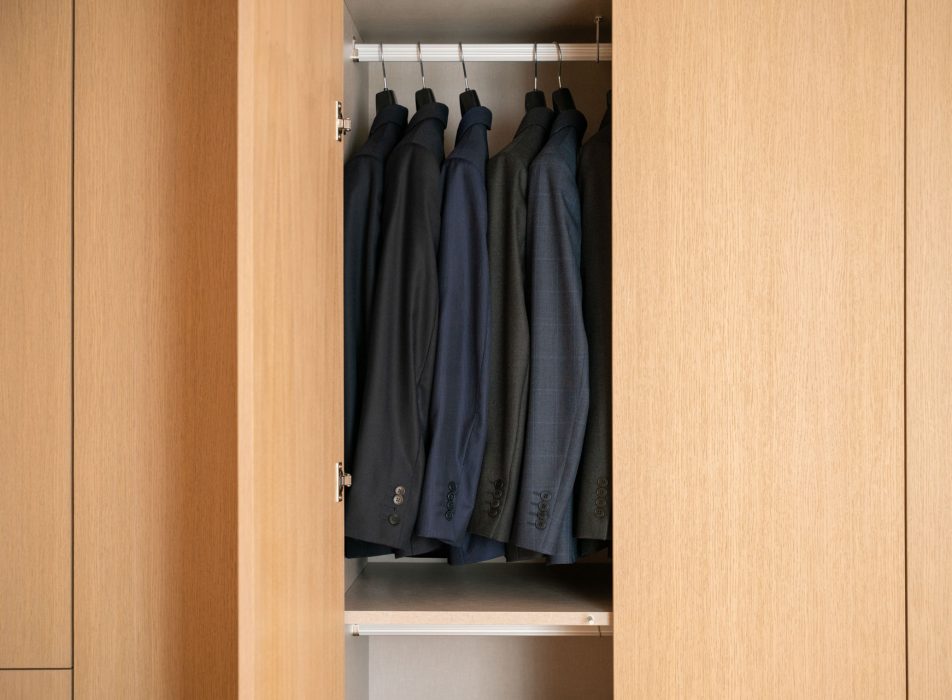
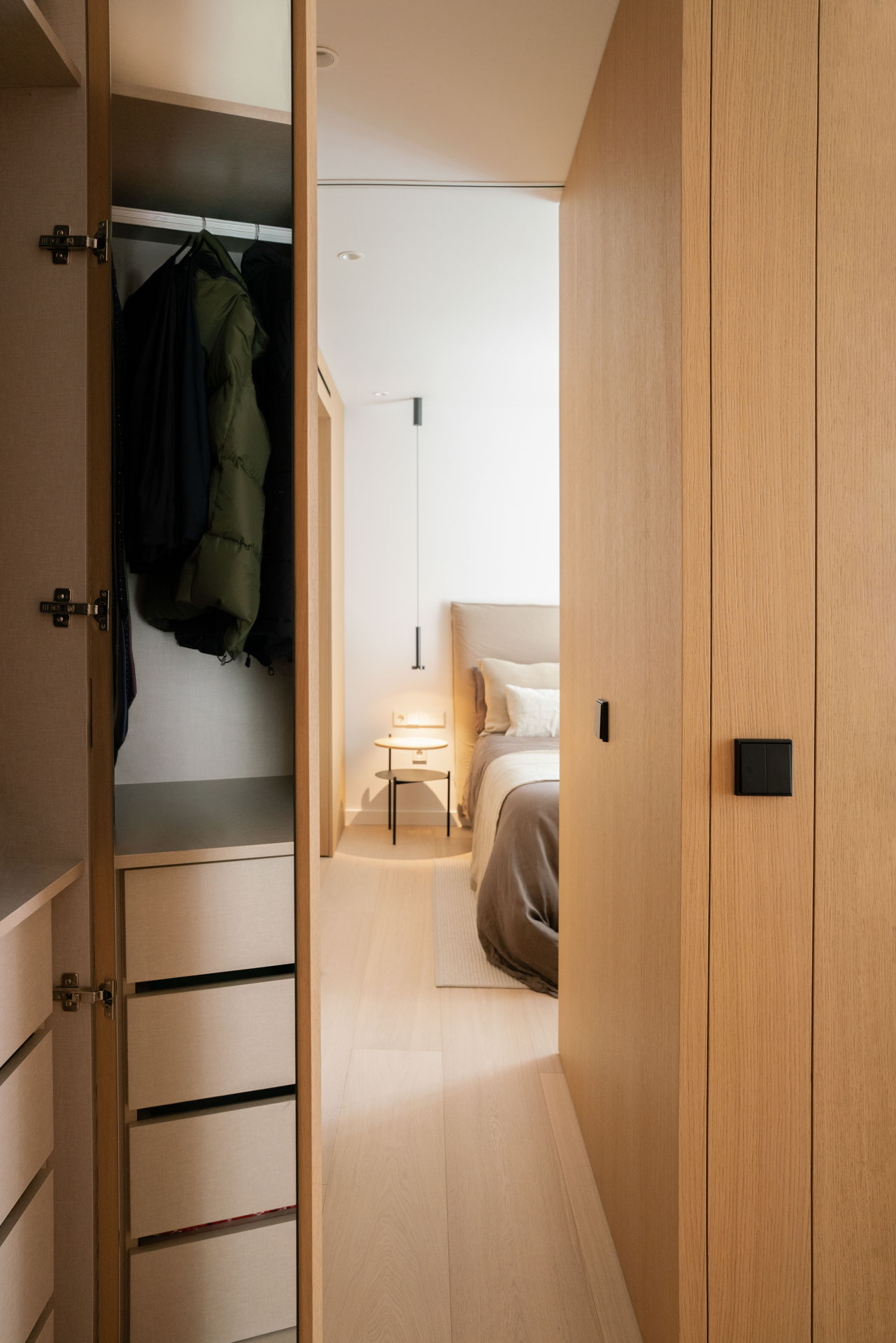
The custom-made wardrobes are arranged so that one continues into the other. So this space can function as a guest bedroom when needed, a sofa bed is included.
Balcony:
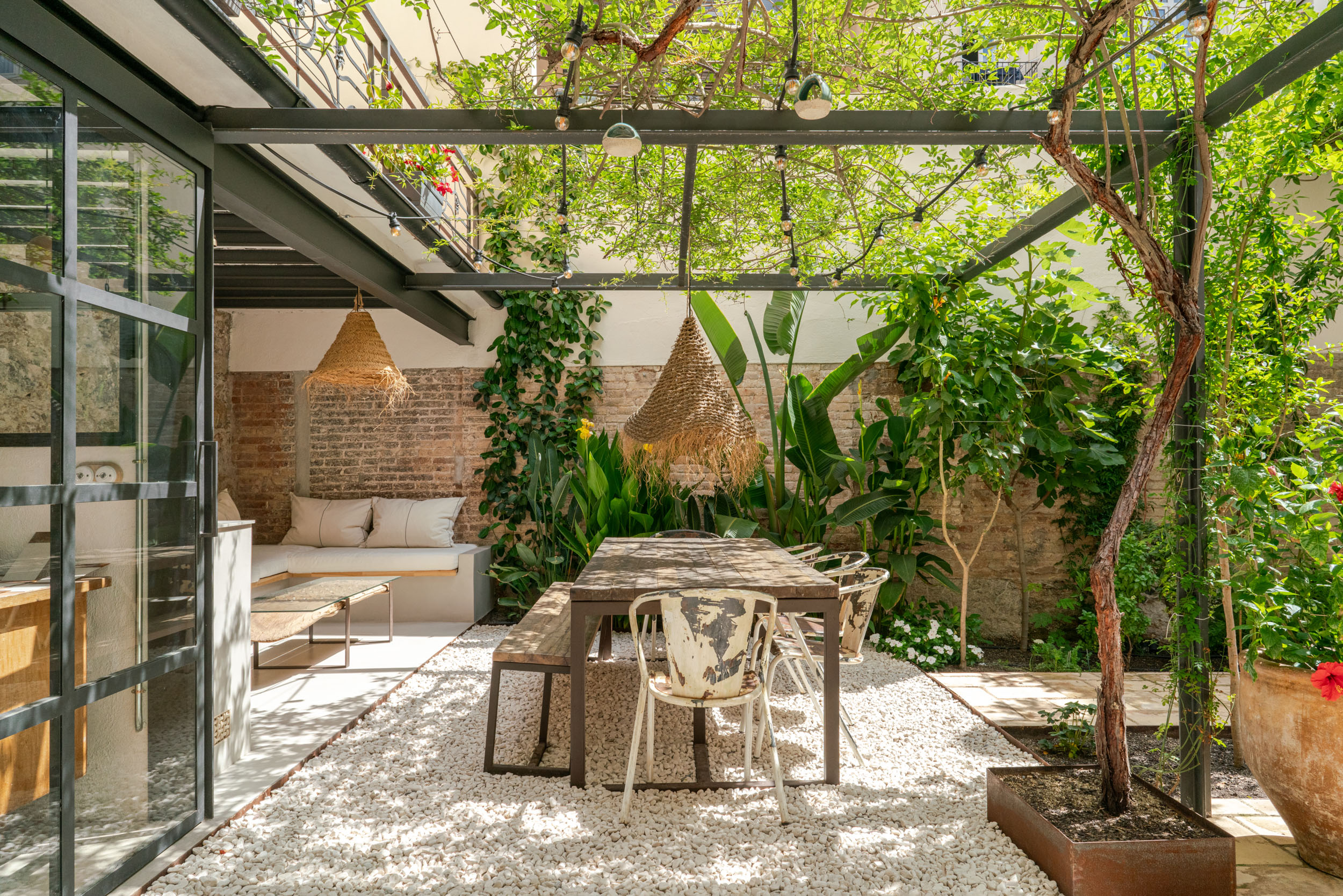
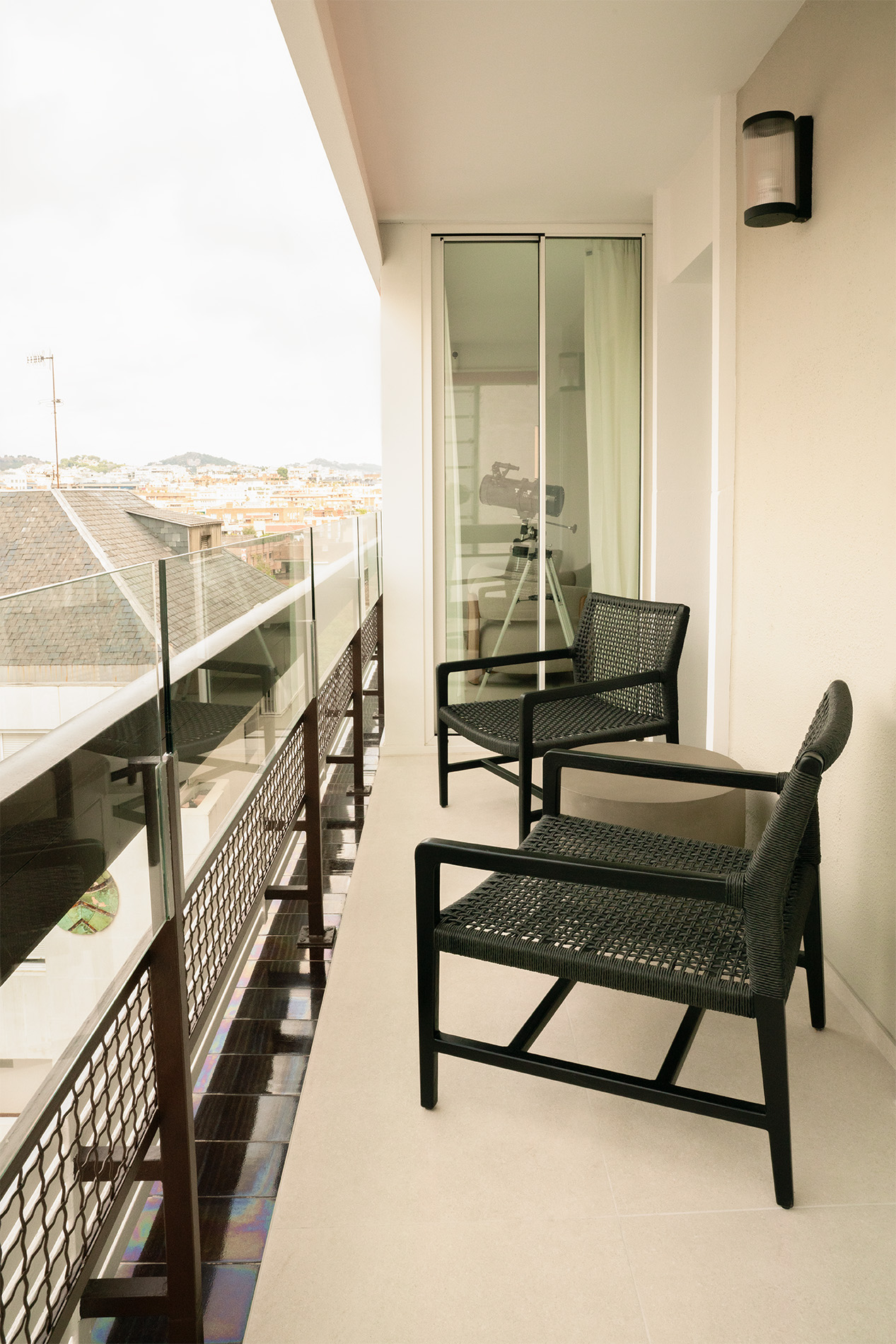
The balcony is conceived as an extension of the interior social area and is furnished with two outdoor armchairs that combine wood with black woven fiber, as well as a low microcement table. This outdoor space is accessible both from the living room and from the kitchen.
In addition, there is a decisive technical intervention: since the original railing was very low, glass panels were added to extend it and increase its height.
The Real Transformation of a Home: From Isolated Spaces to a Connected Living Environment
Photographs by: ©Heidi Cavazos
Distribution plan
How was it before?