Healthy Architecture: How to Design Spaces That Improve Wellbeing
Interior design houses
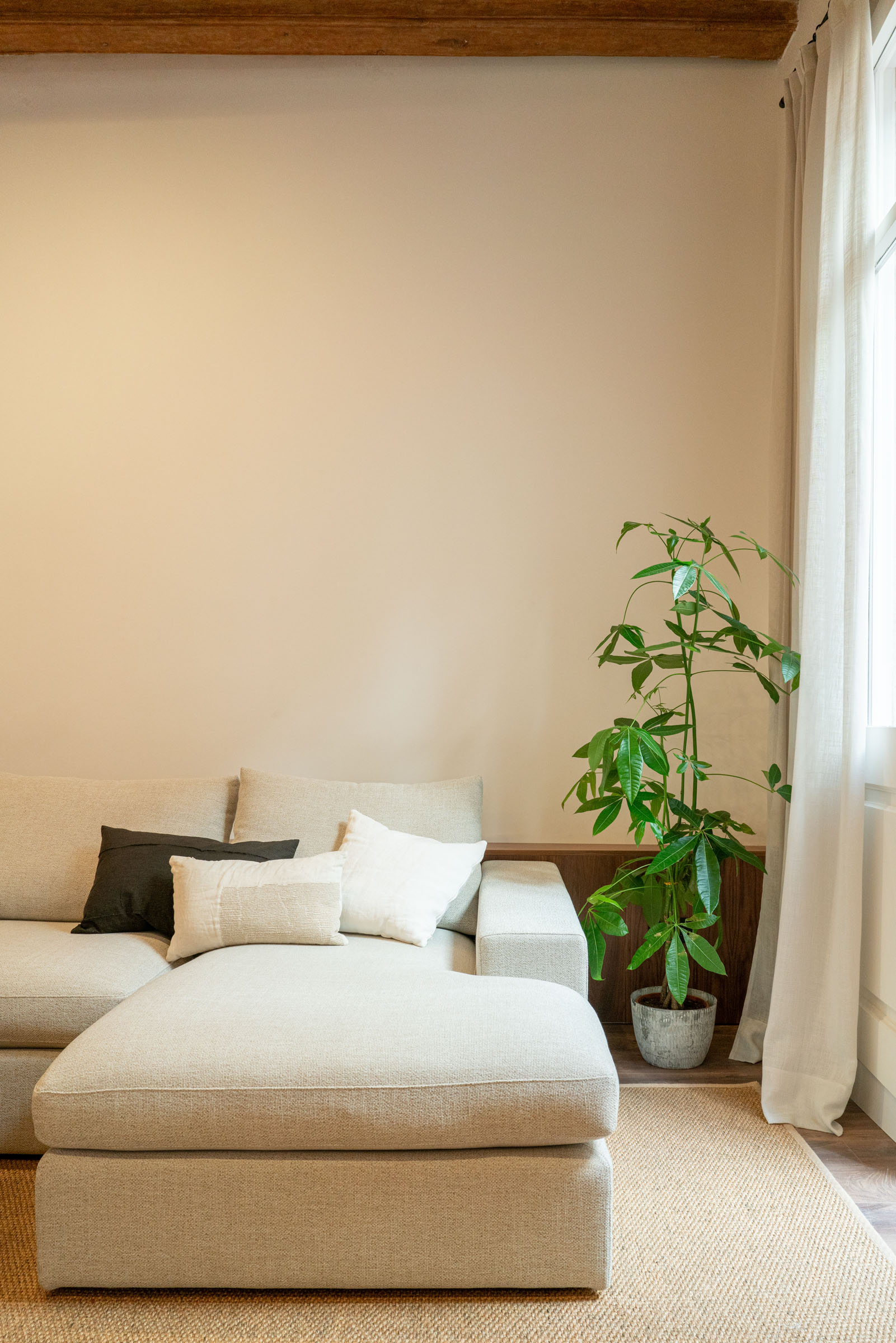
What if the fatigue you carry isn’t only caused by your lifestyle? What if the space where you live and work also plays a role? Stagnant air, poorly planned lighting, constant noise, or abrupt temperature changes can generate fatigue, stress, and poor sleep without you even realizing it. We spend most of our day indoors, which makes our environment a key factor in our wellbeing. At Coblonal, as an interior design studio in Barcelona, we understand healthy architecture as an essential element for designing interiors that respect calm and improve your focus. Keep reading: we’ll explain what it is, how to apply it, and which decisions have the greatest impact on your daily life.
What Healthy Architecture Is and Why It Matters Today
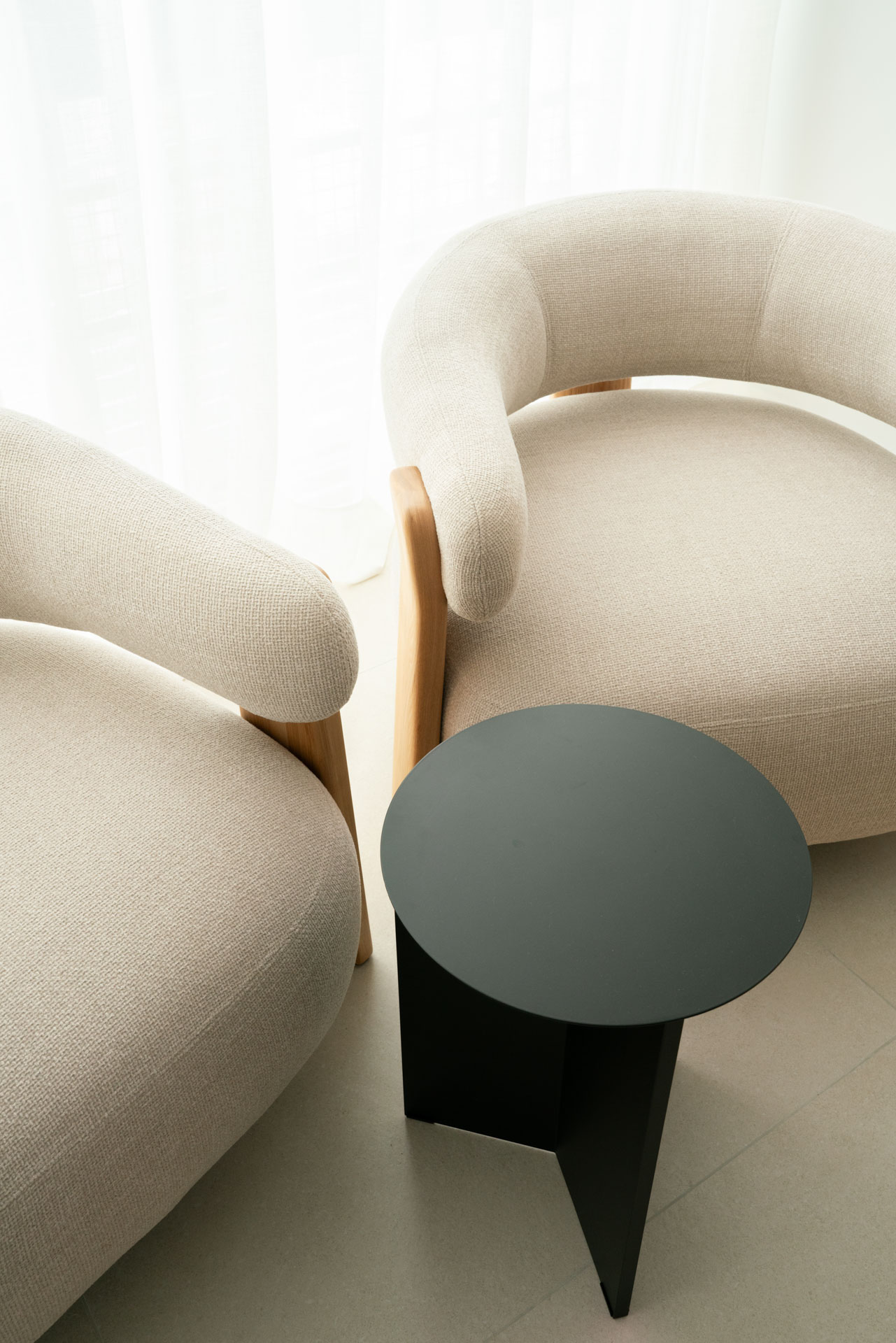
Healthy architecture integrates physical, mental, and emotional wellbeing criteria into the design of buildings and interiors. In a world where we live in enclosed spaces, spatial quality becomes a matter of health.
Principles of Healthy Architecture Applied to Interiors
It is based on four key pillars: clean air, appropriate lighting, responsible materials, and sensory comfort. These principles translate into effective ventilation, conscious selection of finishes, acoustic control, and functional design.
Benefits of Living and Working in Healthy Spaces
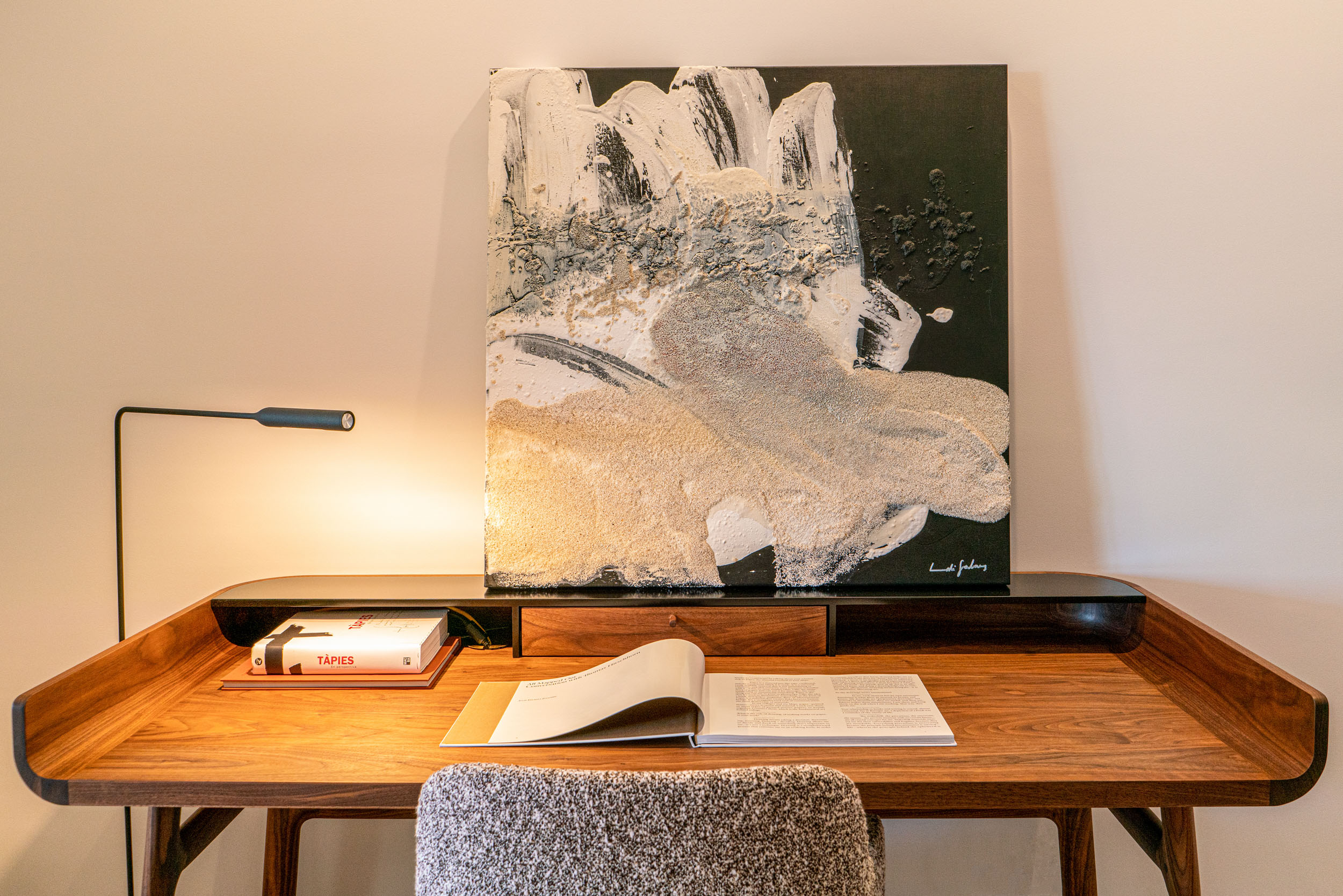
An environment designed through healthy architecture improves concentration, reduces environmental stress, and promotes better rest. The difference is not always visible, but it is felt every day.
Foundations of Healthy Architecture in Homes
Air Quality, Cross Ventilation, and Thermal Comfort: Indoor air can accumulate pollutants when ventilation is insufficient. To prevent this, healthy architecture relies on solutions such as cross ventilation, controlled mechanical air renewal, and good thermal insulation, with the goal of maintaining a stable environment and high-quality air.

Natural Lighting and Circadian-Oriented Design
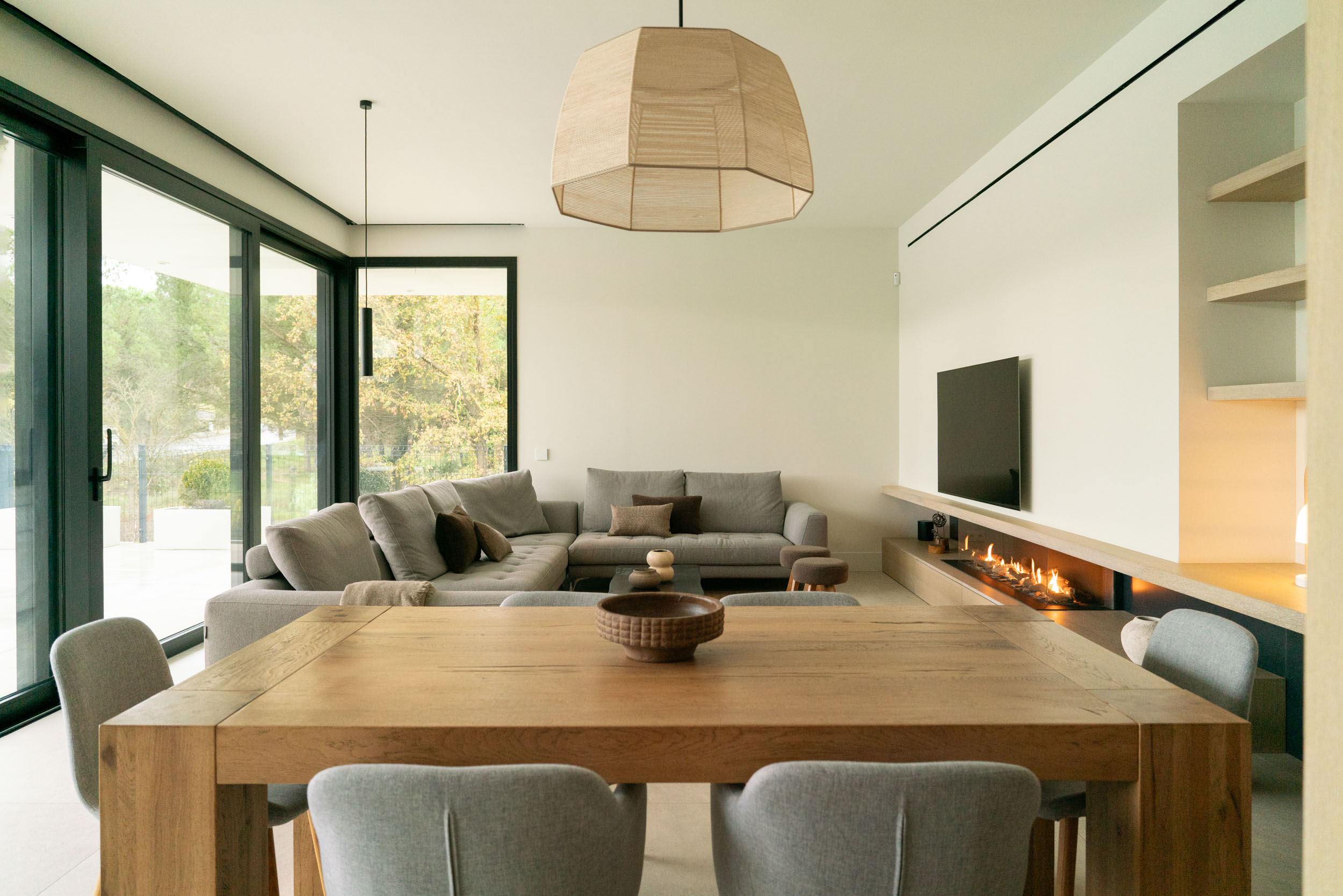
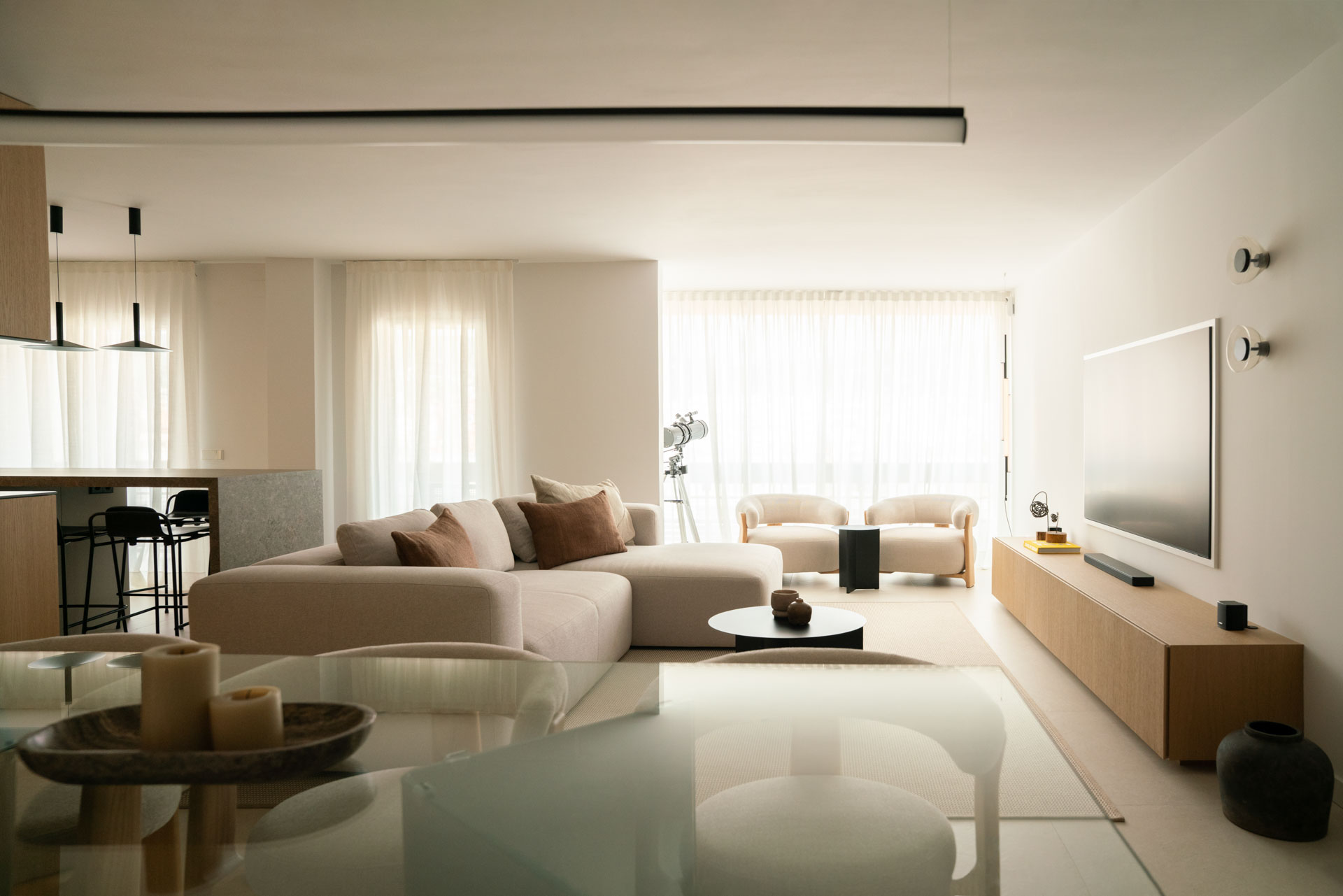
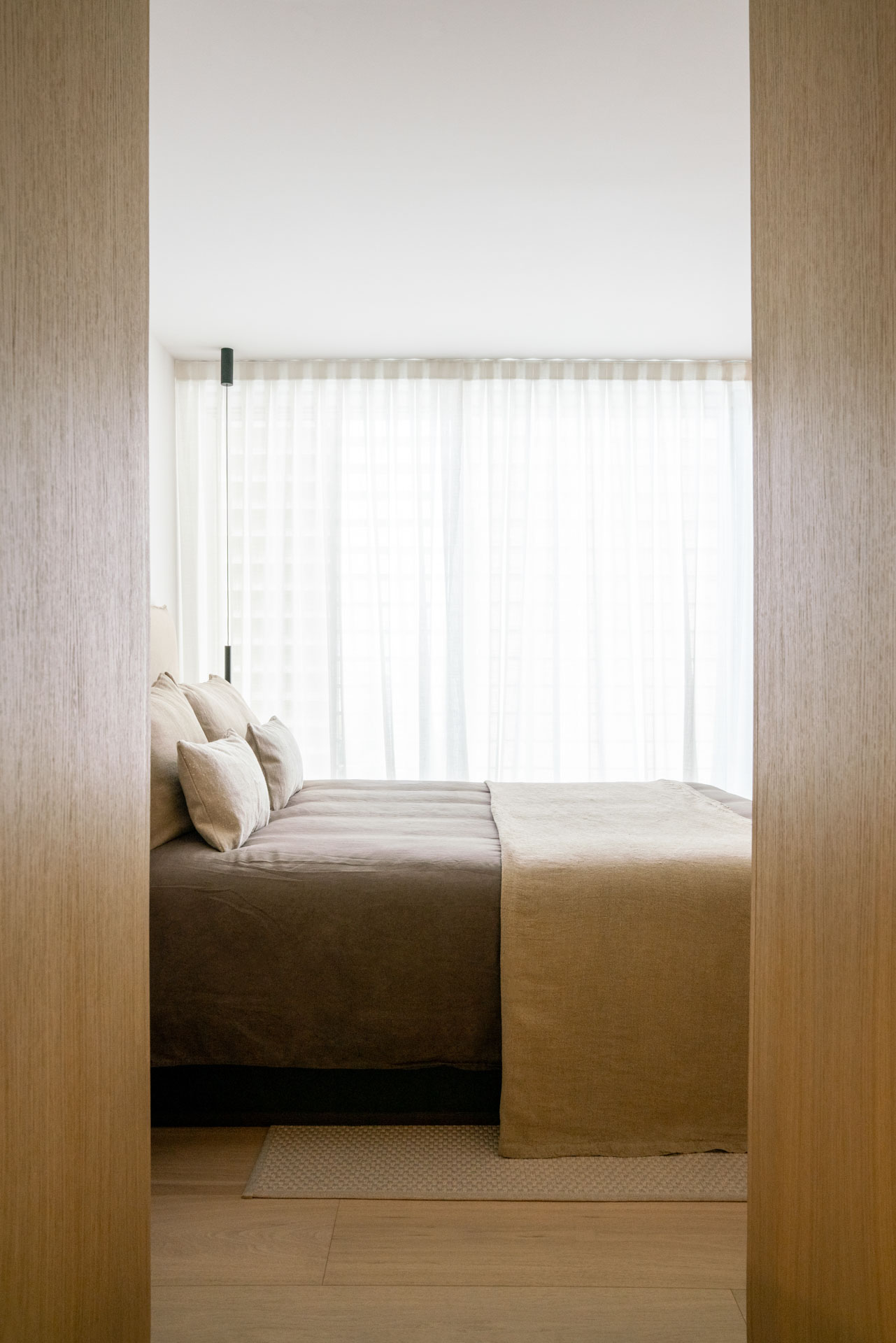
Natural light regulates our biological clock. A healthy design maximizes sunlight, properly orients spaces, and complements artificial lighting with technology that respects the circadian rhythm.
Healthy Materials Free of Toxic Compounds
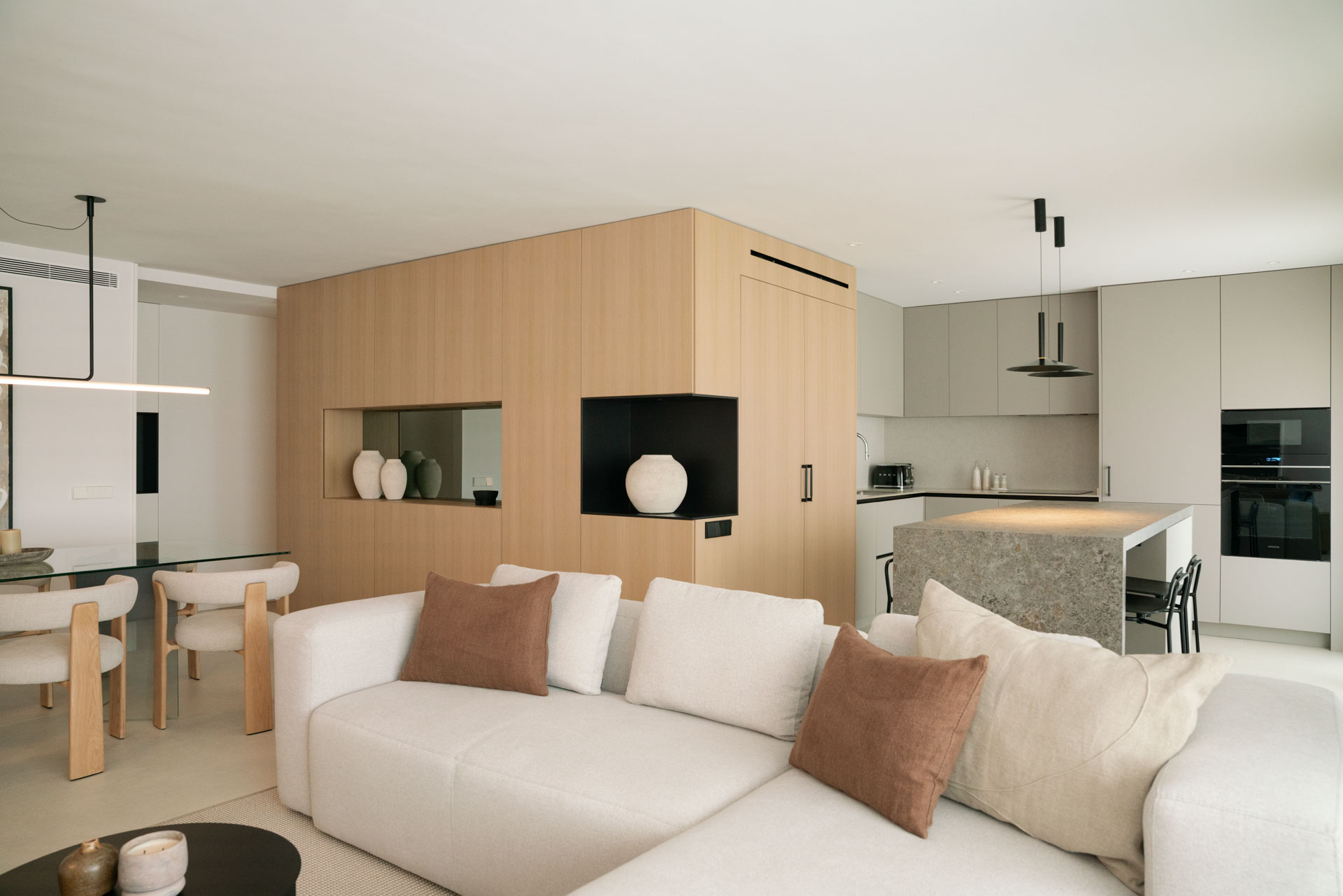
Priority is given to natural and certified materials without volatile organic compounds (VOCs): natural woods, ecological paints, untreated textiles, and coverings with environmental certifications. In many cases, material selection is the most important decision in a project.

How to Apply Healthy Architecture in Interior Design
Space Distribution Focused on Wellbeing and Functionality: A healthy space is also a functional one. Healthy architecture analyzes circulation flows, relationships between rooms, and ergonomics to create intuitive and organized interiors. Overcrowded spaces create tension; clear spaces create stability.
Acoustics, Silence, and Sensory Comfort
Noise directly impacts health. Incorporating acoustic insulation, sound-absorbing materials, and quiet zones is not a luxury—it’s architecture.
Integrating Nature and Biophilic Design
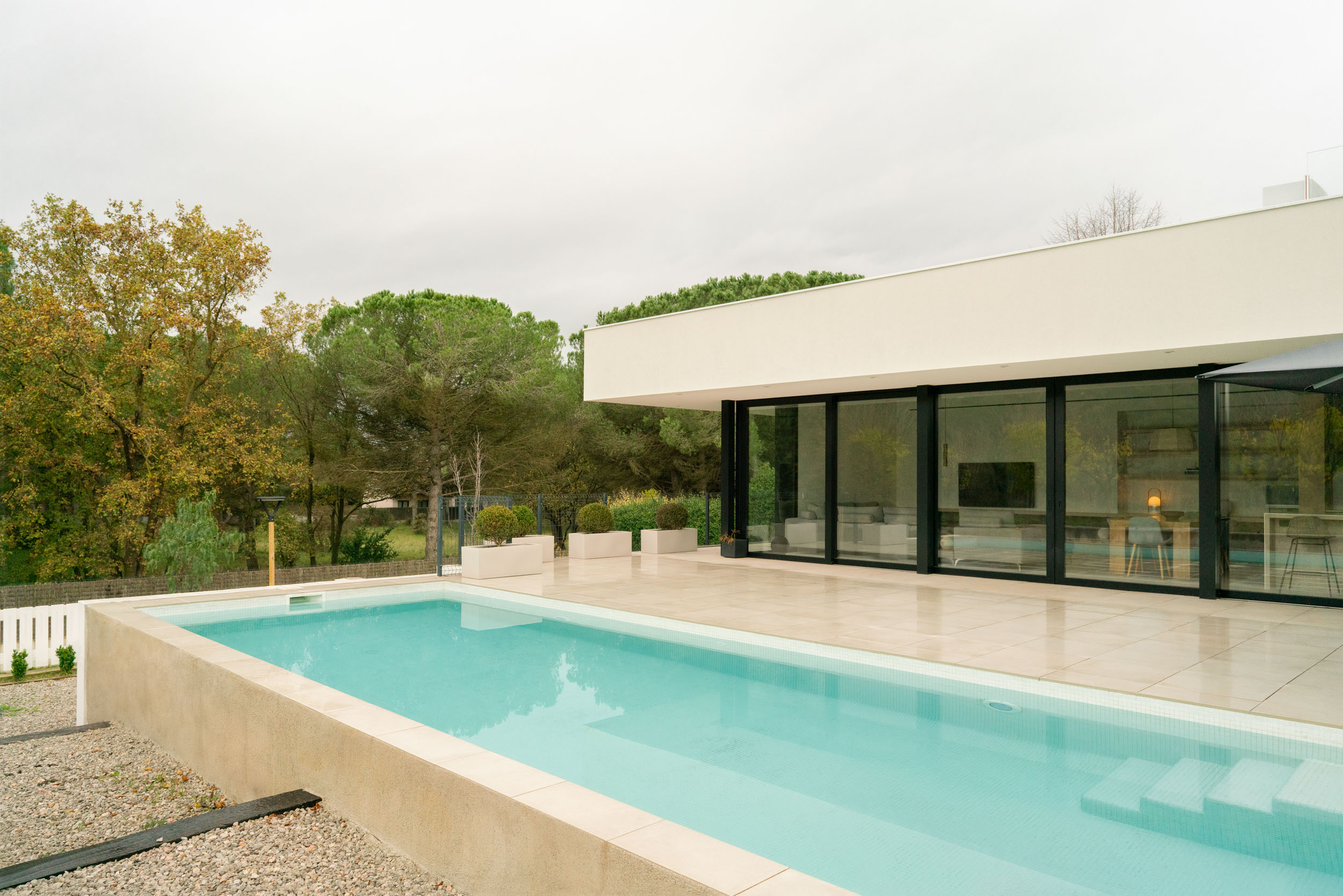
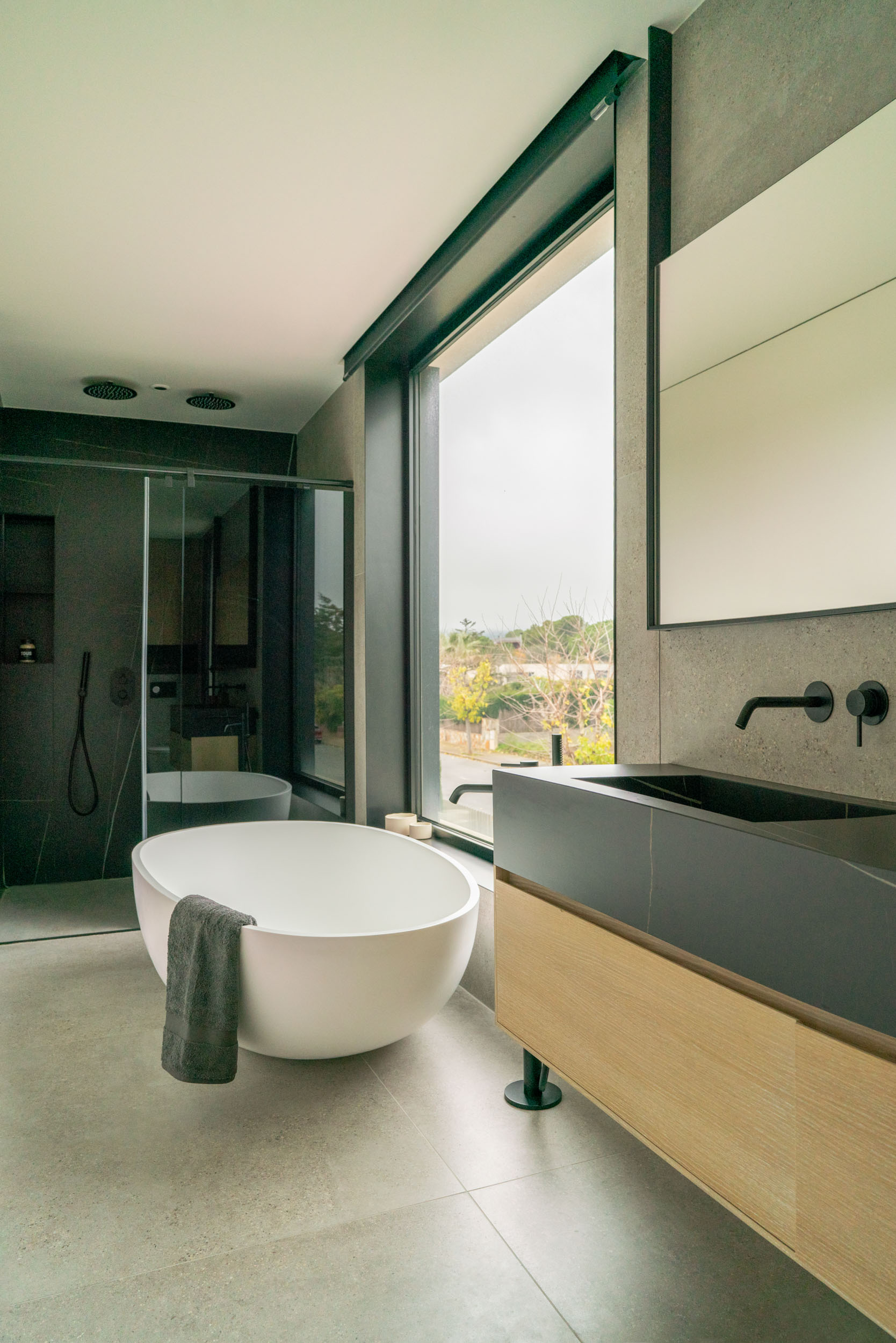
Incorporating plants, water, natural materials, and views of the outdoors reduces stress and improves mood. Connecting interior spaces with nature radically transforms the experience of a place.
Healthy Architecture in Professional Projects
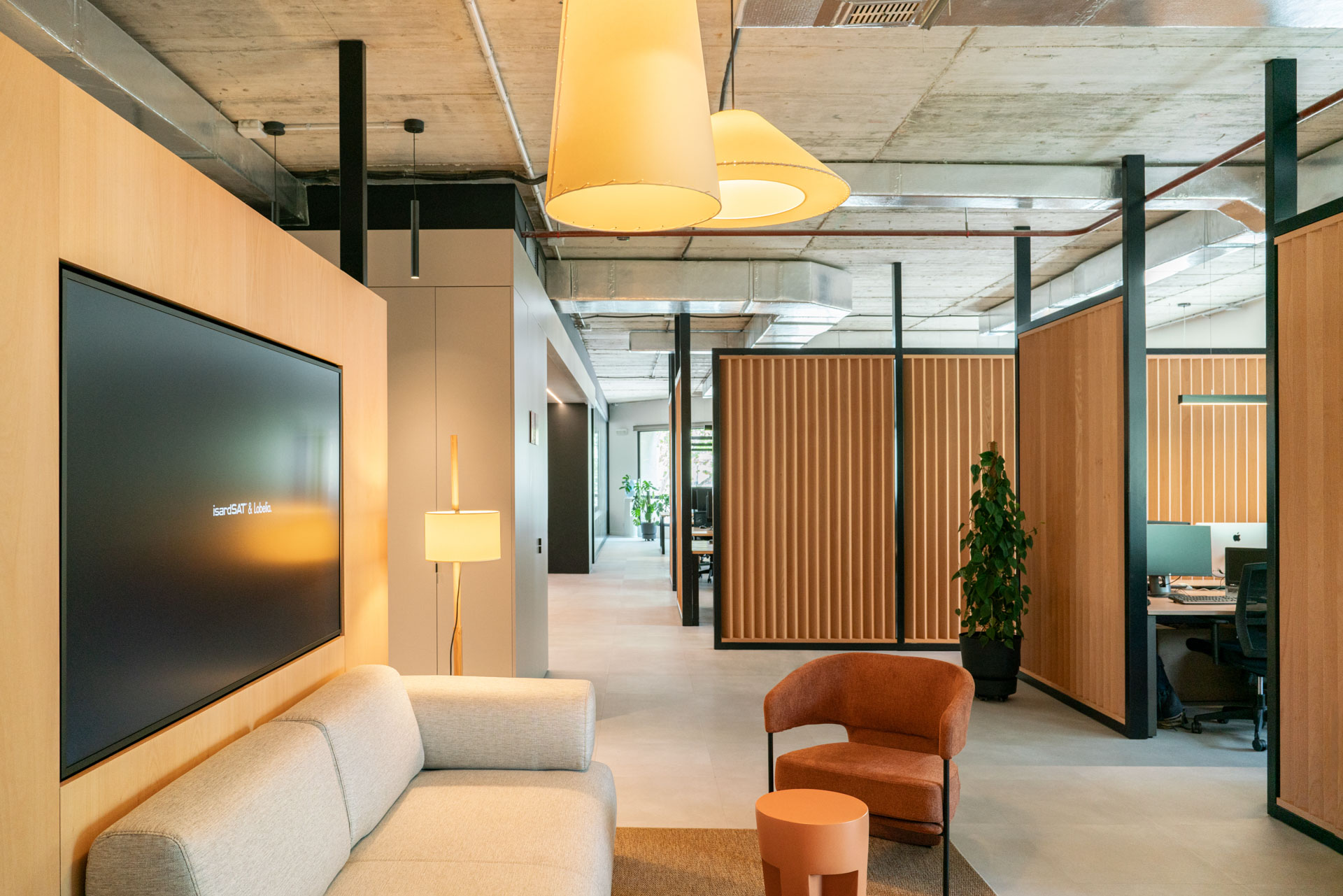
Healthy Offices and People-Centered Design: Balanced lighting, rest areas, and acoustic control improve both performance and wellbeing in work environments.
Educational and Healthcare Spaces Designed for Wellbeing
In schools, universities, clinics, and hospitals, healthy architecture supports learning, accelerates patient recovery, and reduces stress for both users and professionals.
Healthy Architecture in Hotels, Spas, and Hospitality Spaces
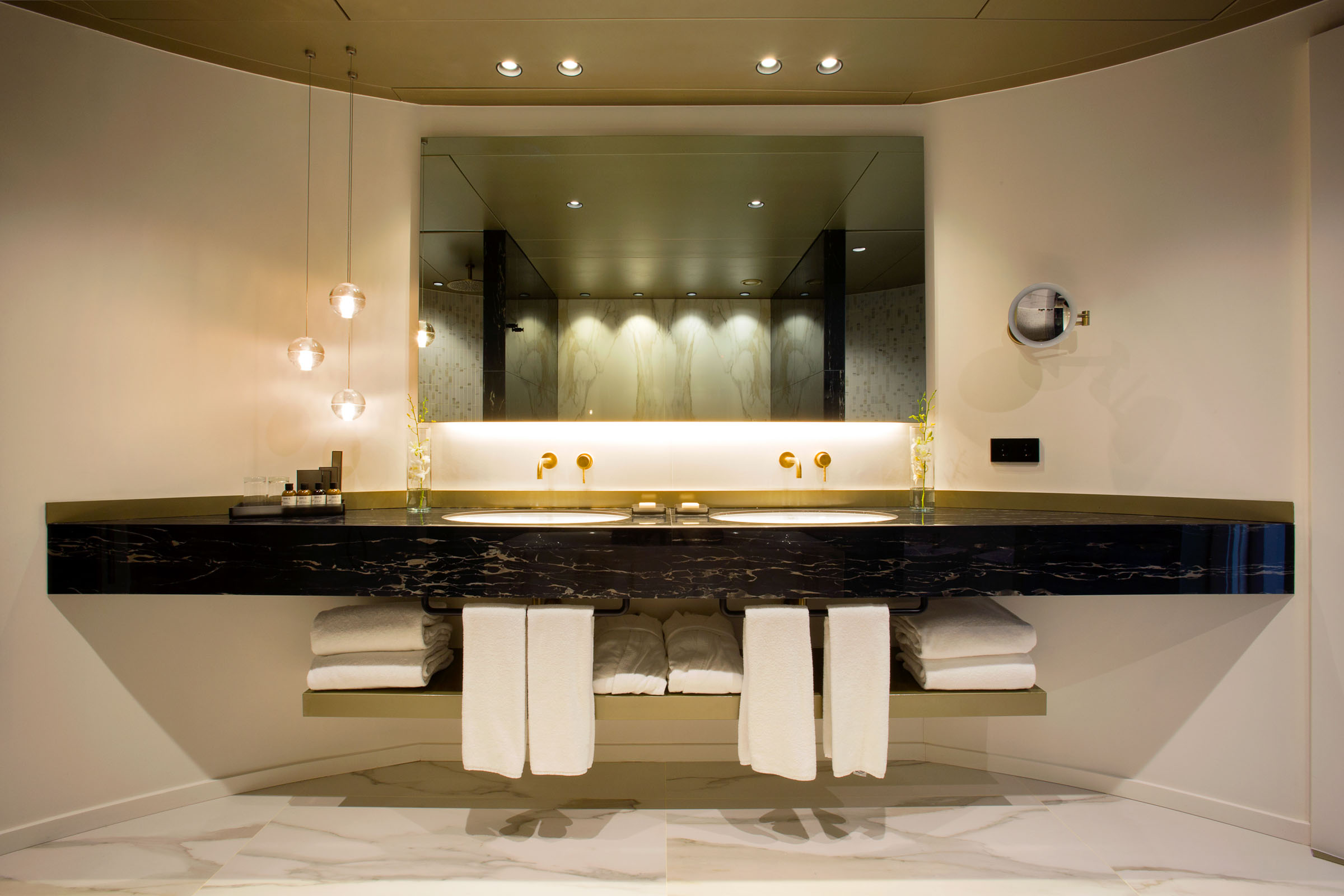
The hospitality sector is leading the integration of wellbeing criteria. Hotels and spas that incorporate them offer distinctive experiences and a premium brand positioning.
How to Plan a Healthy Architecture Project
Initial Analysis: Habits, Lifestyle, and Real Needs: Every project begins with a diagnosis: understanding how the space is used, daily schedules, routines, and the priorities of those who will inhabit it.
Selection of Materials, Systems, and Construction Solutions: A rigorous selection of materials, installations, and systems is required. Certifications such as WELL, LEED, or Passivhaus are key references to guarantee health and sustainability standards.
Common Mistakes When Implementing Healthy Architecture: Confusing natural aesthetics with healthy functionality, ignoring ventilation, or choosing “eco” materials without certification are common mistakes. Healthy architecture requires a technical and holistic approach, not just a decorative one.

Healthy Architecture Projects at Coblonal
The Coblonal Methodology for Creating Healthy Spaces: We approach healthy architecture from a comprehensive perspective: analyzing the environment, users, materials, and systems to deliver projects that truly care for people. We combine technical rigor with aesthetic sensitivity.
How Healthy Architecture Enhances Everyday Life
Our projects are designed to improve daily life. Design at the service of people’s real wellbeing.
Personalized Advice for Applying Healthy Architecture
Every project is unique. Our team offers personalized guidance to apply the principles of healthy architecture in any type of space.
Frequently Asked Questions About Healthy Architecture
Is it expensive to apply healthy architecture in an existing home? Not necessarily. Many improvements related to healthy architecture can be implemented through adjustments in ventilation, lighting, and materials.
Which changes have the greatest impact on a healthy space? Air quality and natural light are usually the factors with the greatest impact in healthy architecture.
How can wellbeing, design, and aesthetics be combined in healthy architecture? Balance is achieved when technical strategy supports the aesthetic proposal. Healthy architecture does not reject design—it grounds it.
In Summary
Healthy architecture is the response contemporary design offers to one of the most important challenges of our time: creating environments that truly care for people.
If you want to apply the principles of healthy architecture in your next project, get in touch with us. At Coblonal, we guide you through every stage of the process with a personalized, technical, and wellbeing-oriented approach.
Follow us on social media for more ideas and inspiration! ✨