Bathrooms with a Wall in the Shower: Functional Design and Contemporary Aesthetics
Bathroom decoration
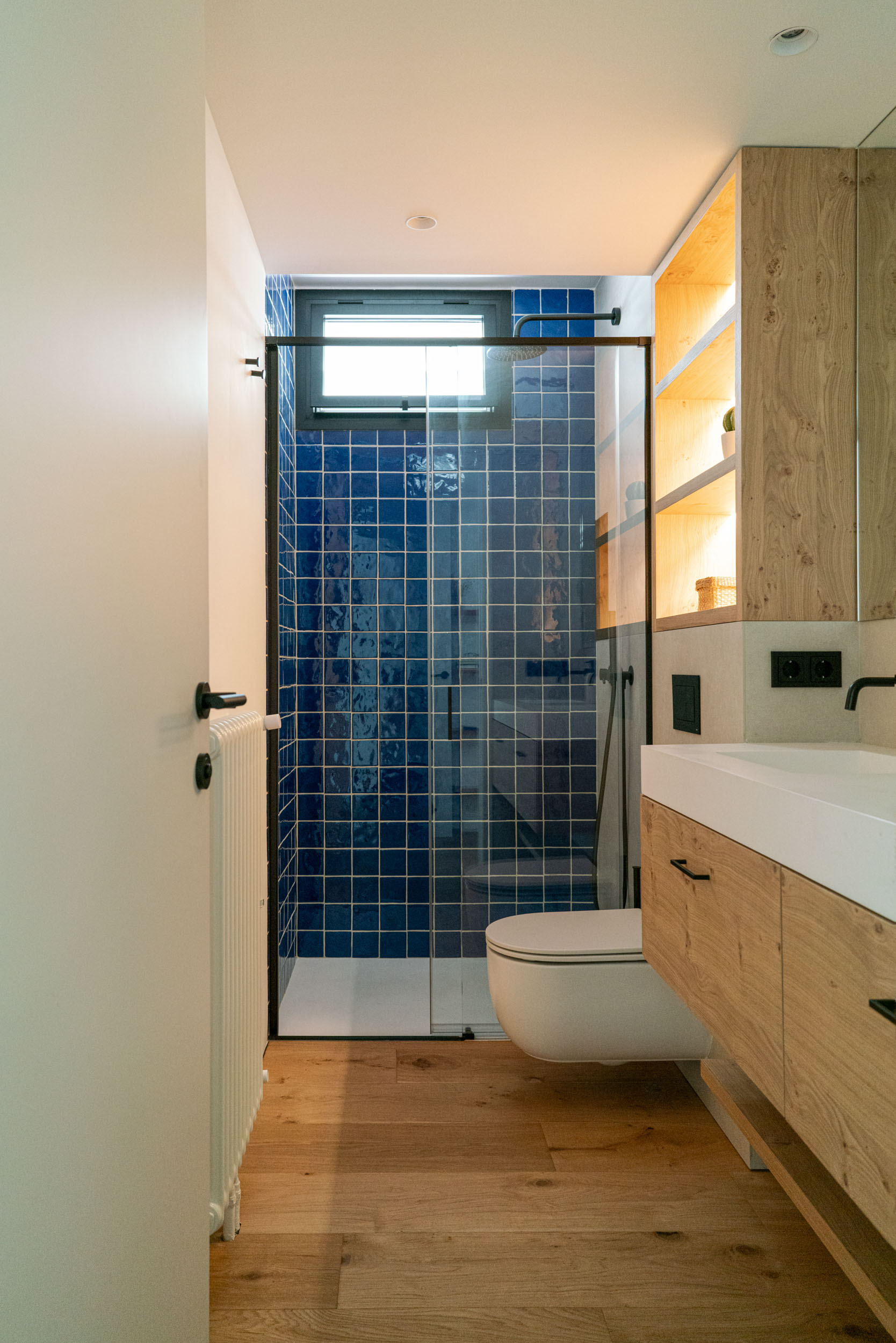
In the search for spaces that go beyond pure functionality to become true sanctuaries of well-being, bathrooms with a wall in the shower emerge as the ultimate architectural solution. Compared to the often demanding and delicate nature of glass shower screens, integrating a built wall into the shower area brings a sense of hierarchy and serenity that only noble materials and well-designed structures can offer. At Coblonal, an interior design studio in Barcelona, we understand that sophistication lies in material coherence. That’s why we embrace this configuration to elevate both the sensory and aesthetic experience at home.
What are bathrooms with a wall in the shower, and when are they a good option?
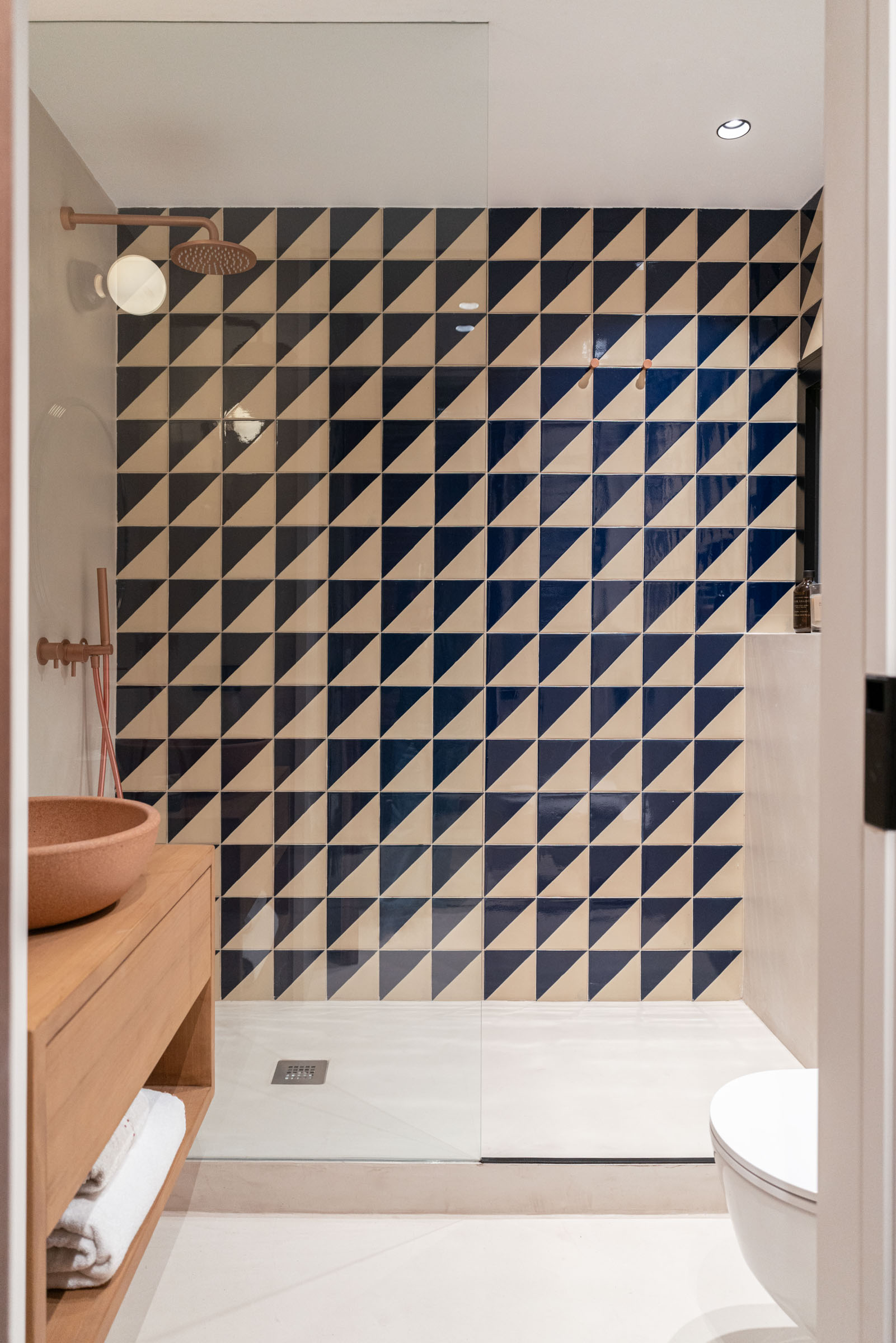
Bathrooms with a wall in the shower replace the traditional shower screen with a structural element—partial or full—that acts as a divider. This approach works especially well in bathrooms where visual continuity and a cleaner spatial reading are desired.
It is also ideal for rectangular layouts or in spaces where the shower can be integrated without breaking up the overall design.
Advantages of a bathroom with a wall in the shower vs. a glass screen
Choosing a bathroom with a wall in the shower is not just about style—it’s also a strategic, functional decision:
- Simplified maintenance: By eliminating large glass surfaces, you avoid limescale stains and harsh cleaning products. A clad wall is as easy to clean as any other wall.
- Total privacy: Unlike fully transparent glass screens, a wall creates a more intimate and enclosed space—especially valued in family homes or shared bathrooms.
- Architectural customization: A wall allows for built-in niches for shampoo and soap, integrated benches, or concealed fixtures for a cleaner look.
- Thermal insulation: A three-sided enclosed shower retains heat more effectively, creating a more comfortable and pleasant shower experience.
Types of shower walls depending on bathroom design
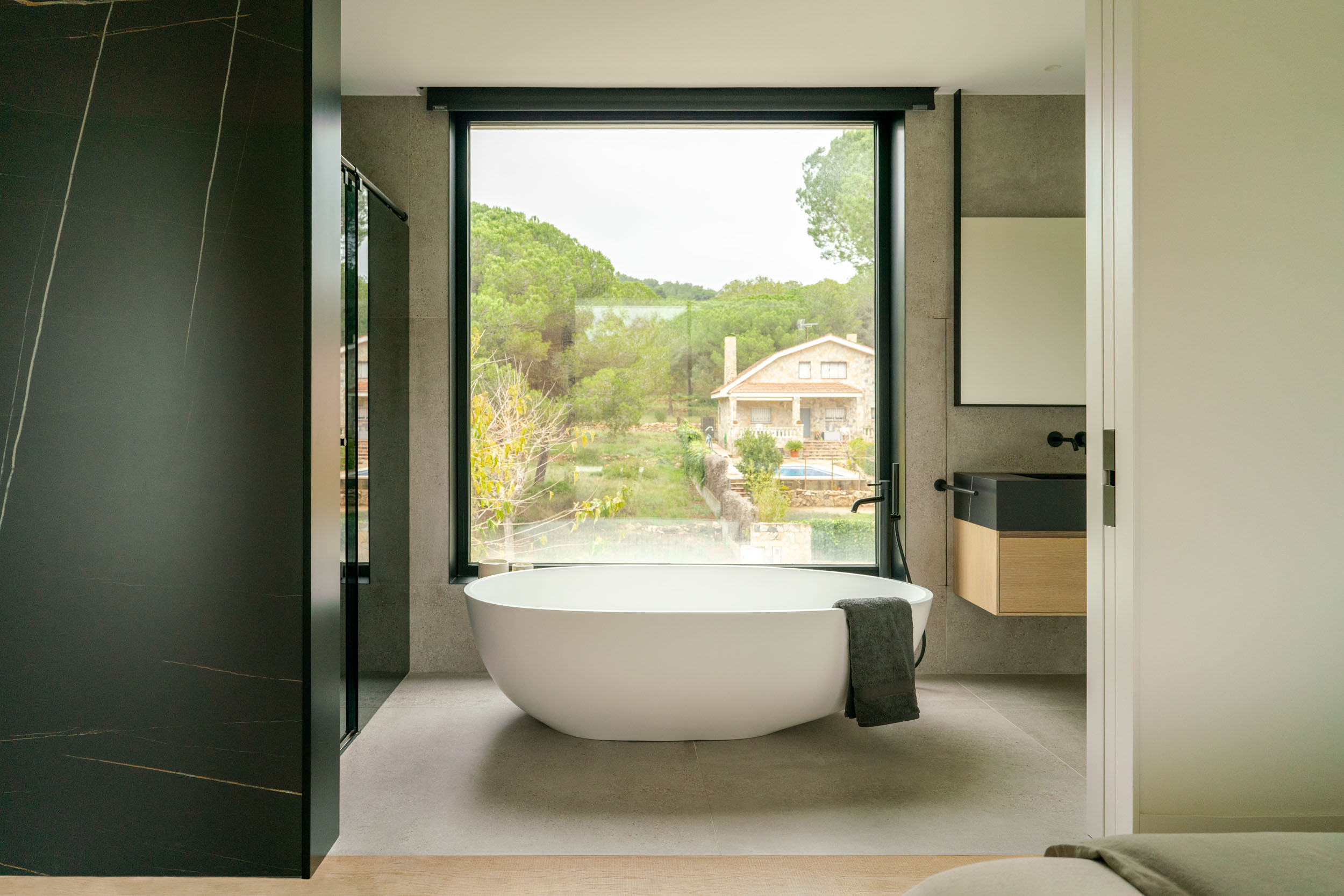
Depending on light and available space, different configurations can be designed:
- Floor-to-ceiling partition: Creates a fully enclosed shower space, ideal for minimalist or industrial styles.
- Half-height wall: A balanced solution—a solid wall up to 110–120 cm, topped with a fixed glass panel to the ceiling. This preserves privacy without sacrificing light.
- Freestanding or “island” wall: In larger bathrooms, the wall can be placed centrally, allowing access from both sides and concealing the shower area from direct view.
Modern bathrooms with a wall in the shower: layout and style ideas
The versatility of this design allows for creative layouts. A growing trend is to use the outer face of the shower wall to install a vanity unit or a heated towel rail—maximizing space, especially in smaller bathrooms.
In terms of style, Mediterranean-inspired designs favor organic shapes and rounded edges, while more urban aesthetics lean toward straight lines and defined angles.
Recommended materials for shower walls
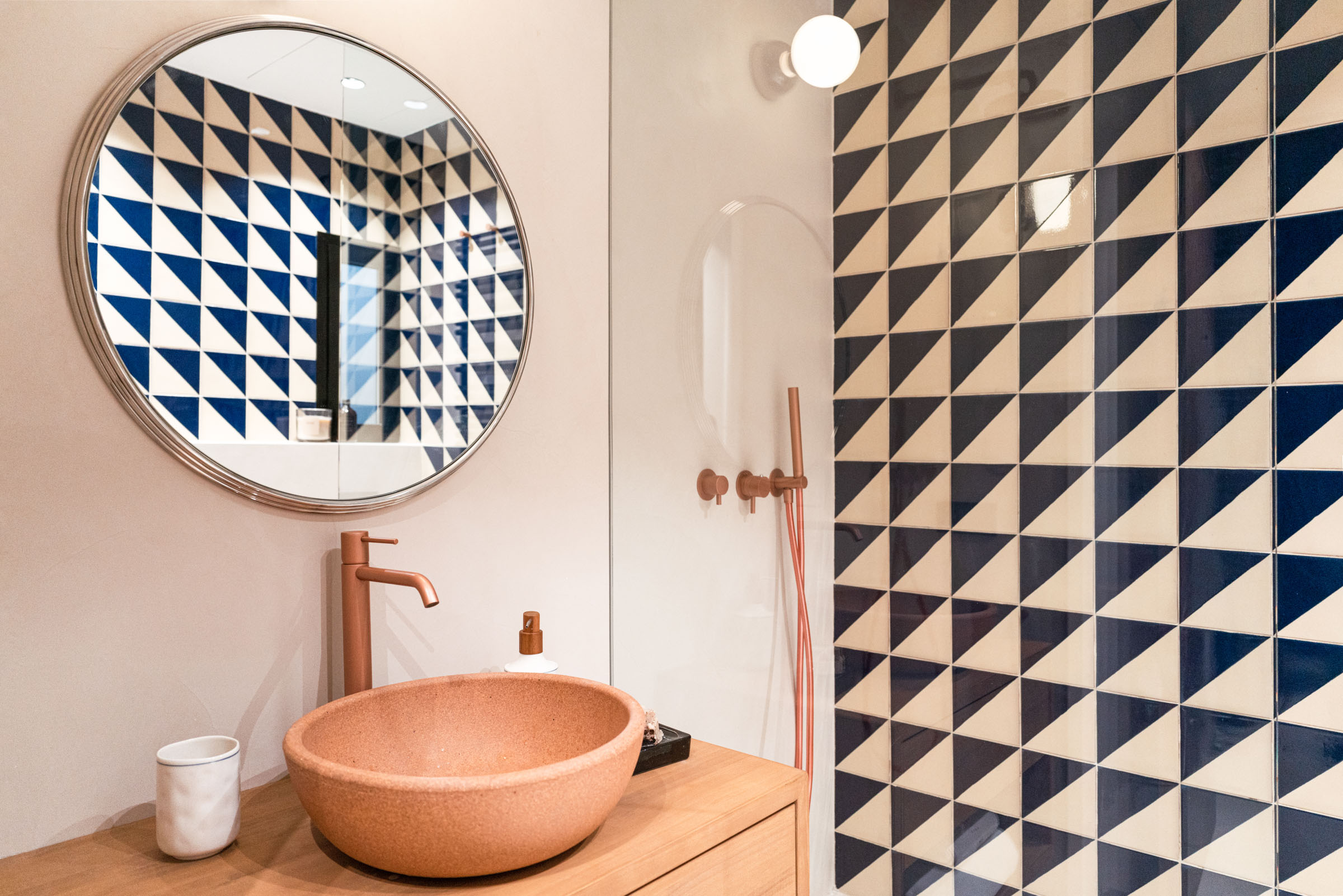
Materials define the character of the space. Common choices include large-format ceramic tiles, microcement, or natural stone. These reduce grout lines and enhance visual continuity.
The wall must also meet technical requirements: water resistance, durability, and ease of maintenance.
Lighting and visual continuity
When adding a wall, there’s a risk the shower becomes a dark “cave.” To avoid this, we recommend installing perimeter LED strips in the ceiling or illuminating the shower niche to create a relaxing ambient light.
To maintain a sense of spaciousness, use the same material on both the floor and the shower wall. This visual continuity makes the space appear larger.

Common mistakes when designing these bathrooms
A frequent mistake is oversizing the wall, unnecessarily reducing usable space. Poor planning of water drainage or floor slope is another common issue.
Breaking material continuity can also disrupt the design—every decision should follow a coherent spatial logic.
Designing a bathroom with a wall in the shower with an interior design studio
Carrying out this type of renovation requires full control over installations and architectural elements. By working with an interior design studio like Coblonal, you ensure that your bathroom is not just visually appealing, but also a long-lasting, functional solution.