Rectangular Living Room: Two Key Zones to Organize the Space with Balance
Interior design houses
Making a long, narrow room feel cozy rather than like a tunnel is one of the most common challenges in contemporary home design. The key to transforming these square meters into a functional home lies in knowing how to design a rectangular living room with two zones that respects circulation and enhances natural light. At Coblonal, as a Barcelona-based interior design studio, we approach this concept from an interior architecture perspective: spatial reading, visual axes, and materiality. The goal is to create two clearly defined areas—living and dining—that work together as a cohesive whole. In this case, we explore how to find the perfect balance between aesthetics and practicality.
What is a rectangular living room with two zones and when does it work best?
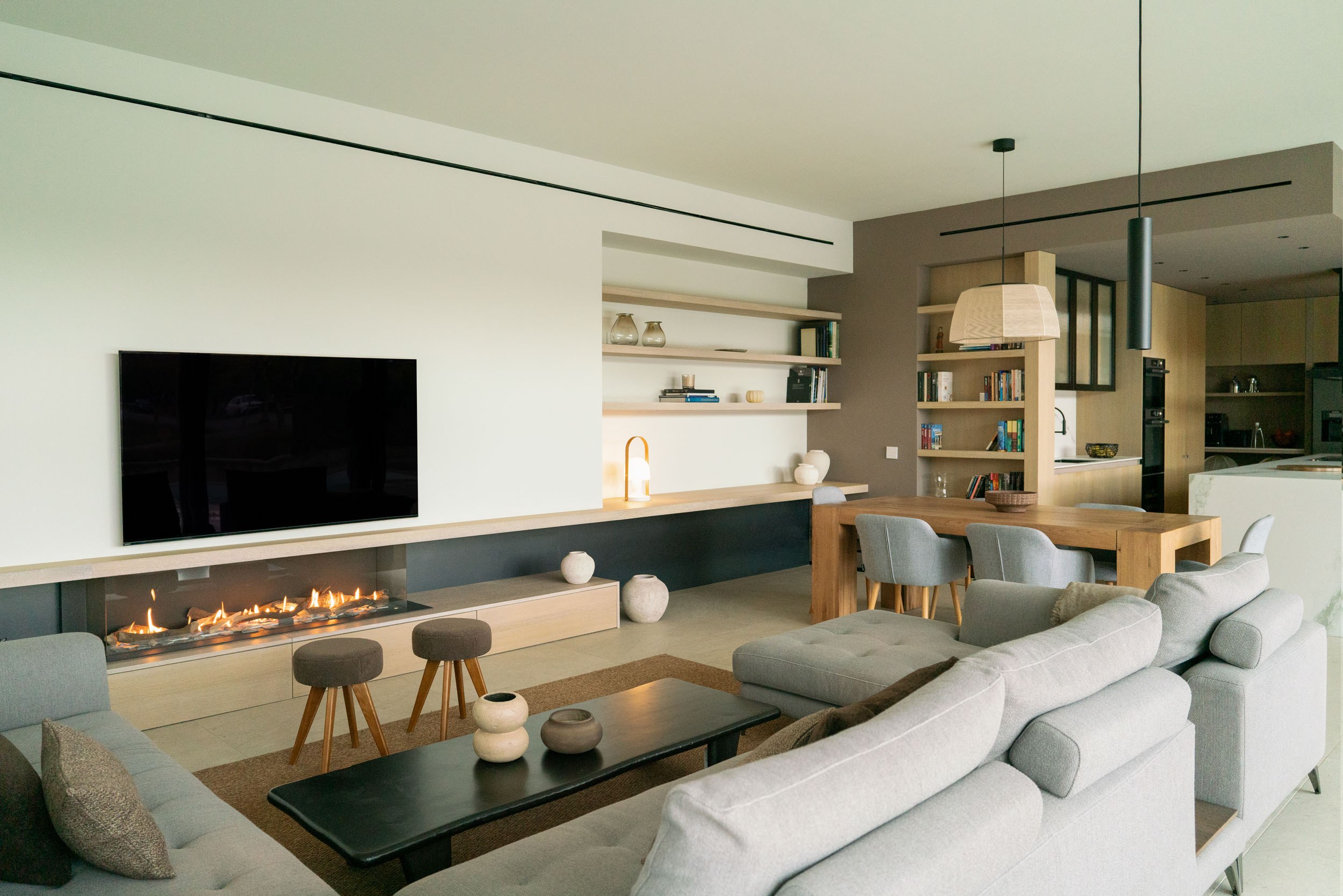
A rectangular living room with two zones is an architectural and interior design solution that consists of dividing a longitudinal space into two areas with different uses, typically the living area and the dining area.
It works especially well when there is good natural light entering from one or both ends, or when circulation can be resolved along one side. In these cases, this layout allows for functional distribution without fragmenting the space.

Advantages of dividing a rectangular living room into two zones
Designing a rectangular living room with two zones offers benefits beyond aesthetics:
- Optimized flow: Clear pathways prevent foot traffic from interfering with those relaxing on the sofa.
- Sense of order: Defining where one activity ends and another begins significantly reduces visual clutter.
- Lighting versatility: Different lighting scenarios can be created depending on the time of day or activity.
- Real estate value: A well-distributed and efficiently used space is always perceived as more spacious and valuable.

How to properly arrange a rectangular living room with two zones
Layout is the soul of the project. In this type of space, the secret is not to overload the central axis.
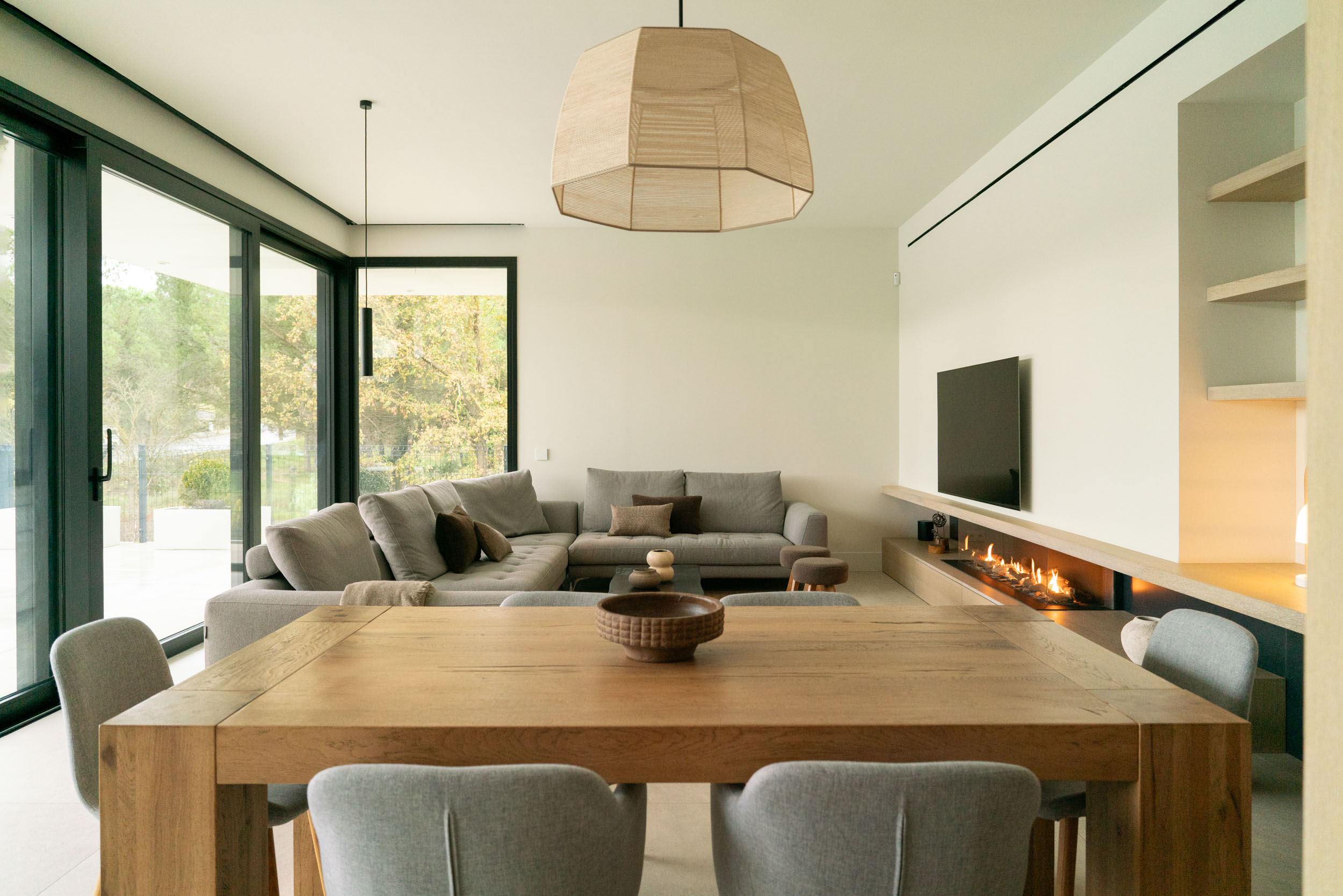
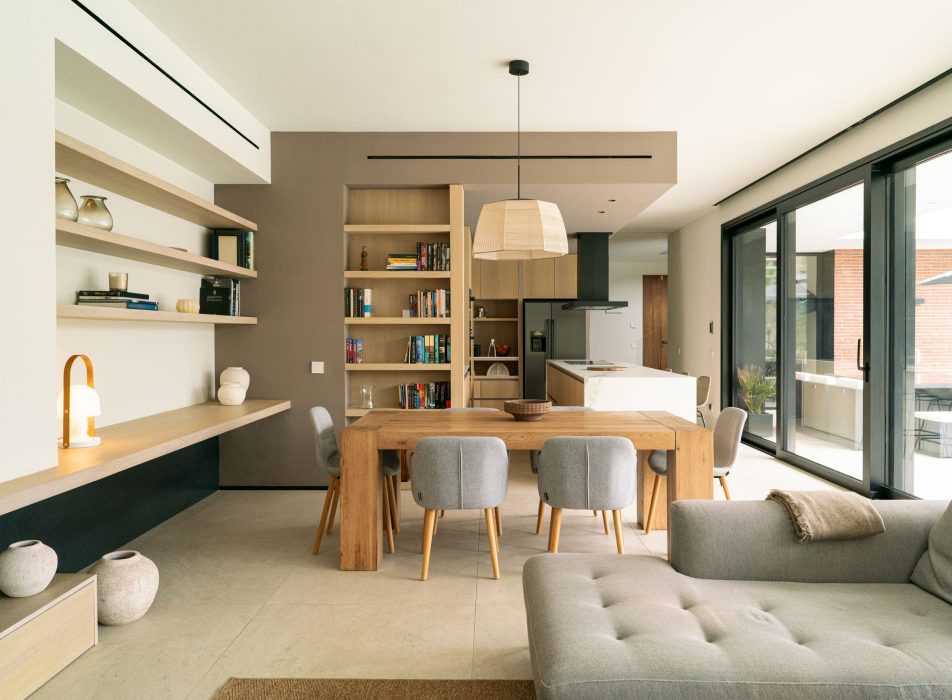
Living area and dining area: The most common approach is to place the living area near the main source of natural light (balcony or large window), reserving the more interior area for the dining space. This is because the living area is typically where most daytime activity occurs.
It’s essential to maintain a passage of at least 80–90 cm to ensure smooth movement between both zones.
Visual separation without losing openness
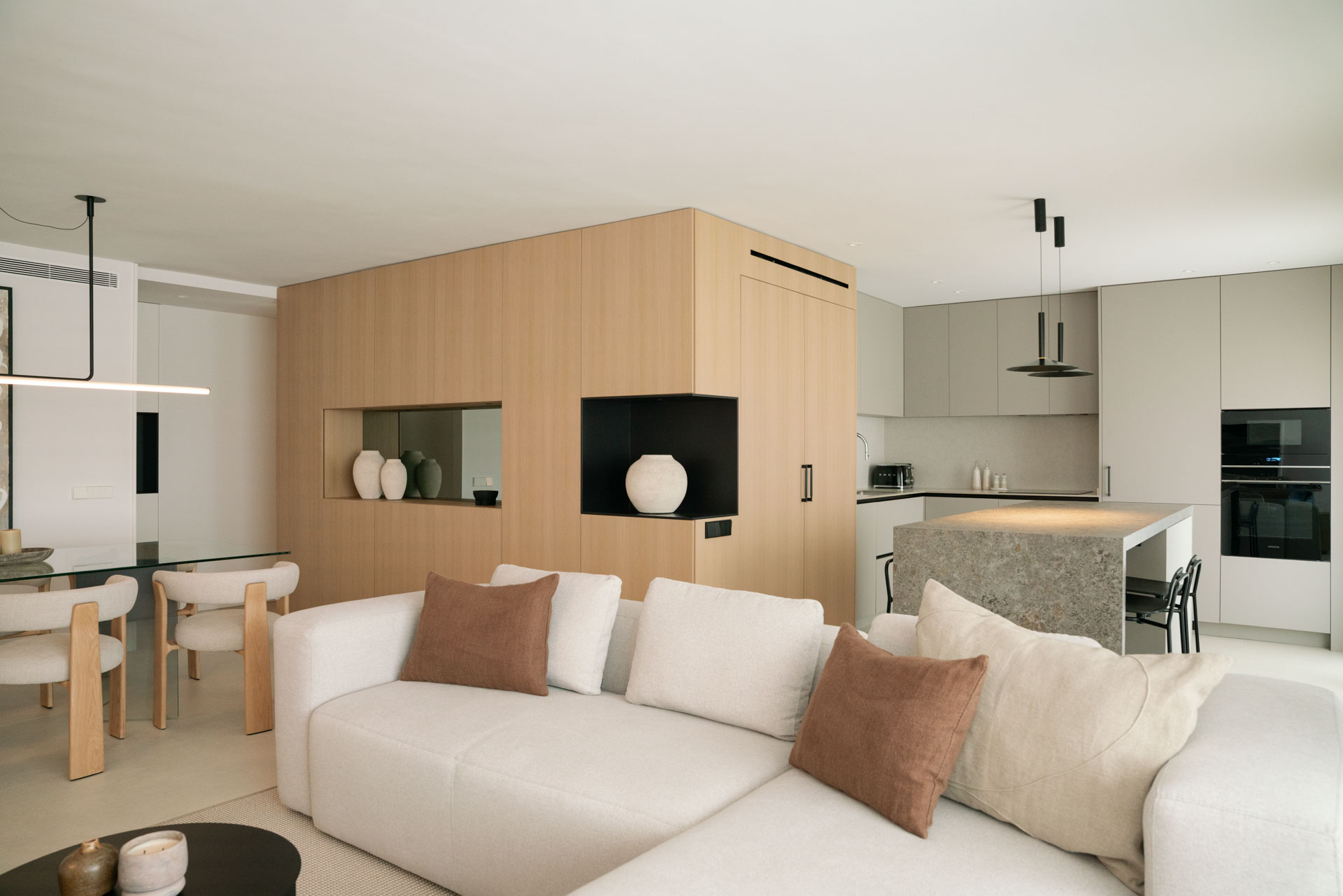
To keep the space feeling integrated, avoid solid partitions. Instead, use glass enclosures with metal frames, half-height walls, or even changes in ceiling levels. These solutions allow the eye to travel across the entire space, creating boundaries without interrupting visual continuity.
Key elements to differentiate zones in a rectangular living room
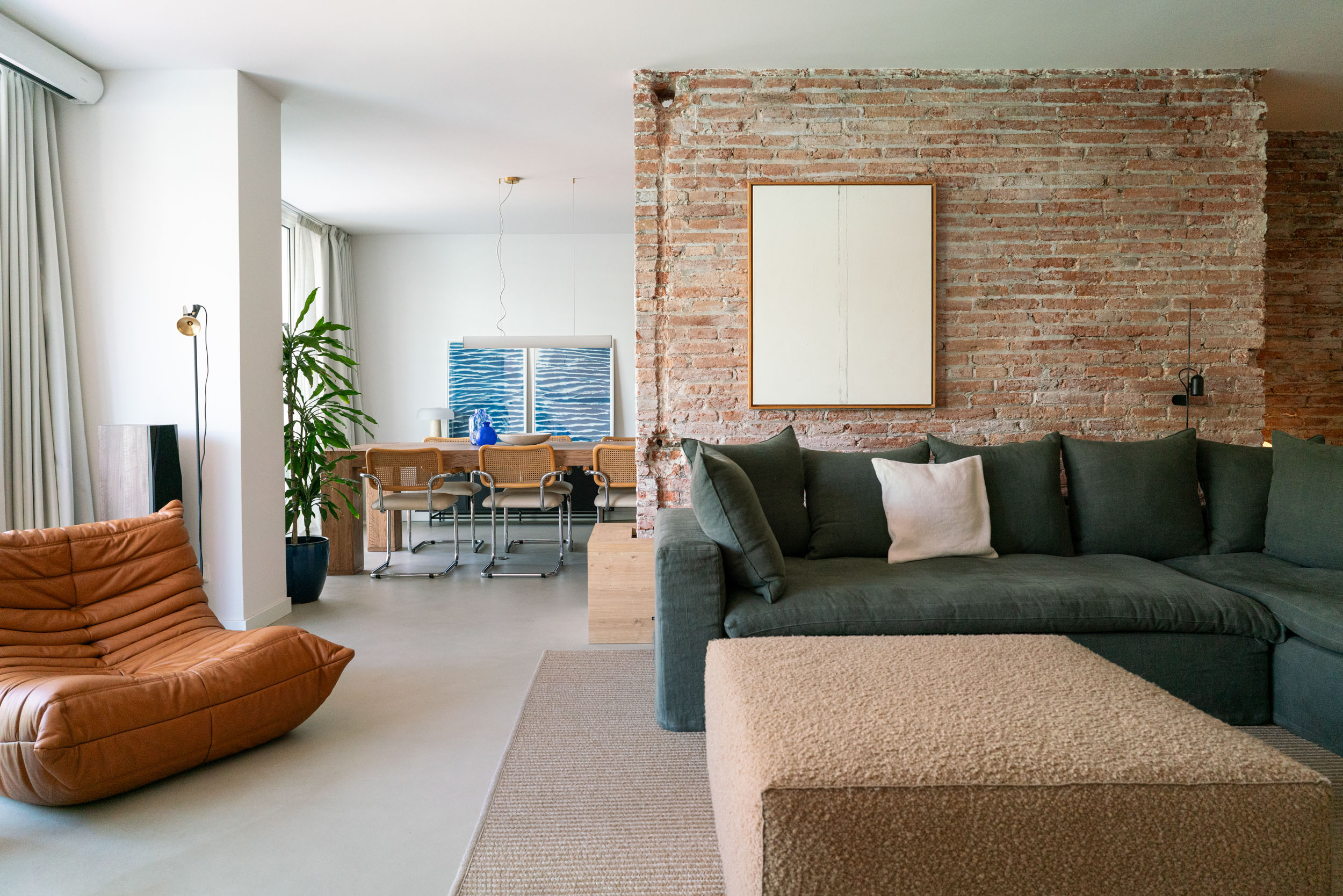
Furniture as a divider: Furniture plays a crucial role in organizing the space. A sofa placed perpendicular to the room’s length can define the living area. A low console or an open shelving unit can act as a light visual filter between zones. These pieces function as transitional elements.
Rugs, lighting, and color
Rugs are highly effective for “framing” each area. A large rug under the sofa and another under the dining table create two distinct visual islands.
Lighting is equally important: a pendant light above the dining table and soft ambient lighting in the living area help define the character of each zone.
Recommended colors and materials for rectangular living rooms
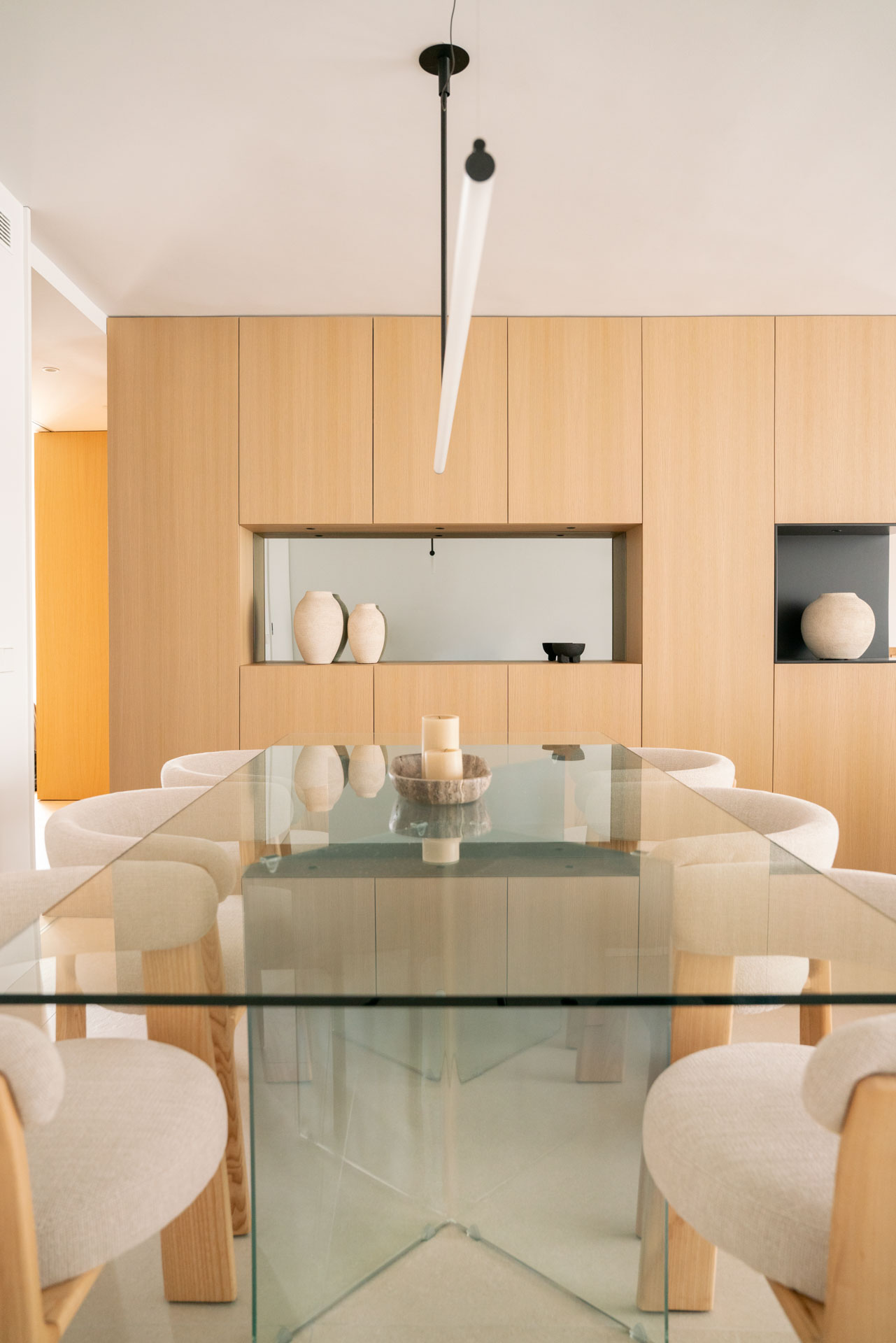
Neutral palettes and visual continuity: Neutral tones enhance the perception of space. A light base—off-whites, beiges, warm greys—promotes continuity. Natural materials such as wood, organic textiles, and soft stone add texture without overwhelming the space.
Maintaining a consistent material palette across both zones reinforces unity.
If you’re looking for expert advice, get in touch with us—our Coblonal team will help you select the right materials for your home.
Common mistakes when designing a rectangular living room with two zones
A frequent mistake is placing all furniture against the walls, leaving the center empty—this emphasizes the “corridor effect.” Another is adding too many dividing elements, which fragments the space.
It’s also best to avoid abrupt changes in colors or materials between zones, as they disrupt visual continuity.

Designing a rectangular living room with two zones with an interior design studio
Creating a balanced layout requires a technical vision that combines architecture and interior design. A professional knows how to work around structural elements, make use of awkward corners, and design custom furniture that fits the space perfectly.
Working with experts like the Coblonal team ensures that every piece contributes to the overall harmony, transforming a challenging layout into a magazine-worthy space where functionality never compromises design.
Conclusion: a functional and well-proportioned rectangular living room
Ultimately, organizing a rectangular living room with two zones is an exercise in proportion and common sense. With a smart layout, strategic furniture placement, and a cohesive color palette, any elongated space can become the warm and sophisticated heart of your home.