Bedroom with an Integrated Bathroom: Modern and Functional Design
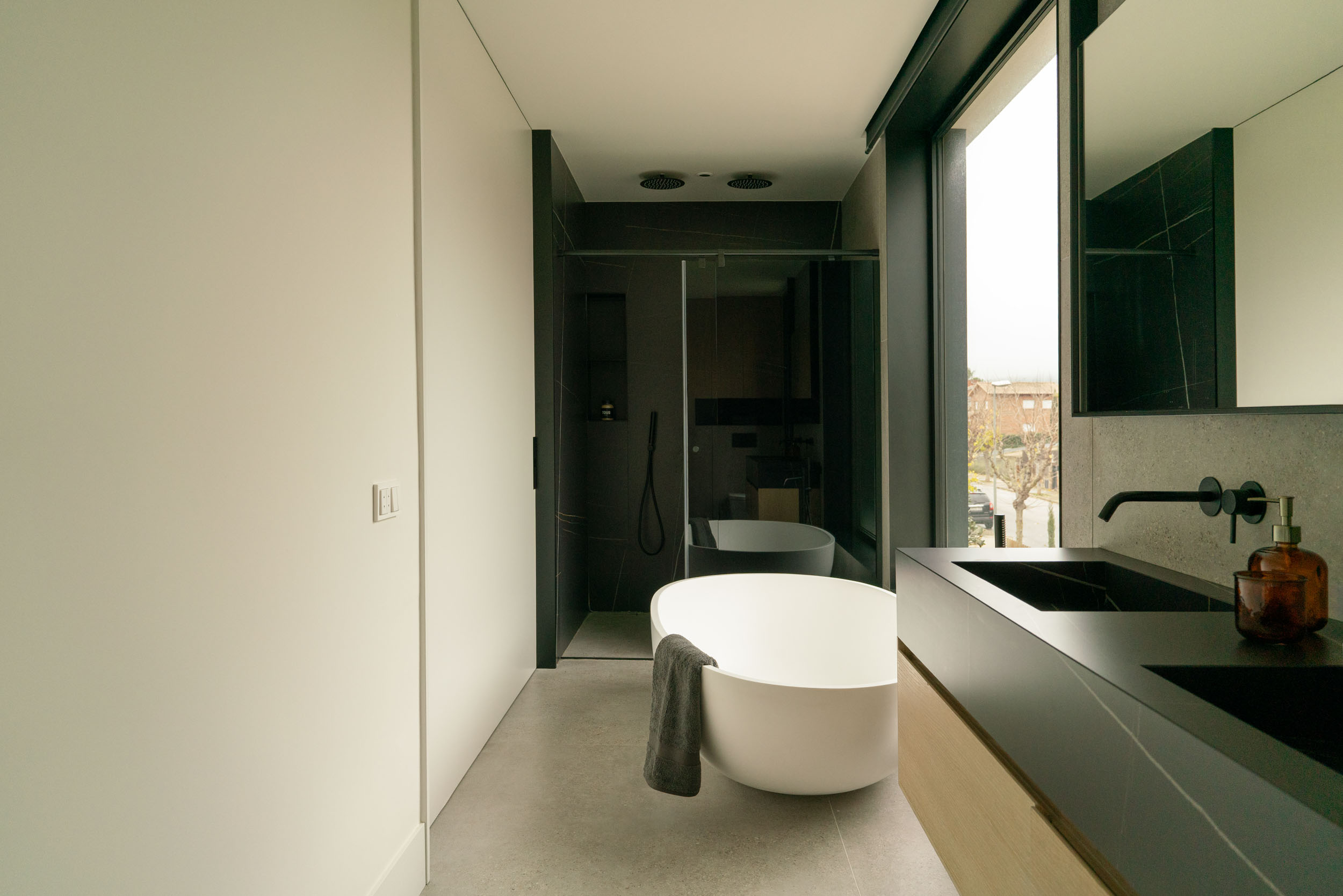
Bathroom decoration
The relationship between the bedroom and bathroom is no longer seen as a strict separation, but rather as a carefully designed continuity. The bedroom with an integrated bathroom reflects this evolution: more fluid spaces, better use of available area, and layouts adapted to real living. Integrating both environments is no longer exclusive to luxury hotel suites—it has become one of the most sought-after solutions today. At Coblonal, as an interior design studio in Barcelona, we approach the bedroom with an integrated bathroom from an architectural perspective, aiming to balance privacy, functionality, and spatial perception.
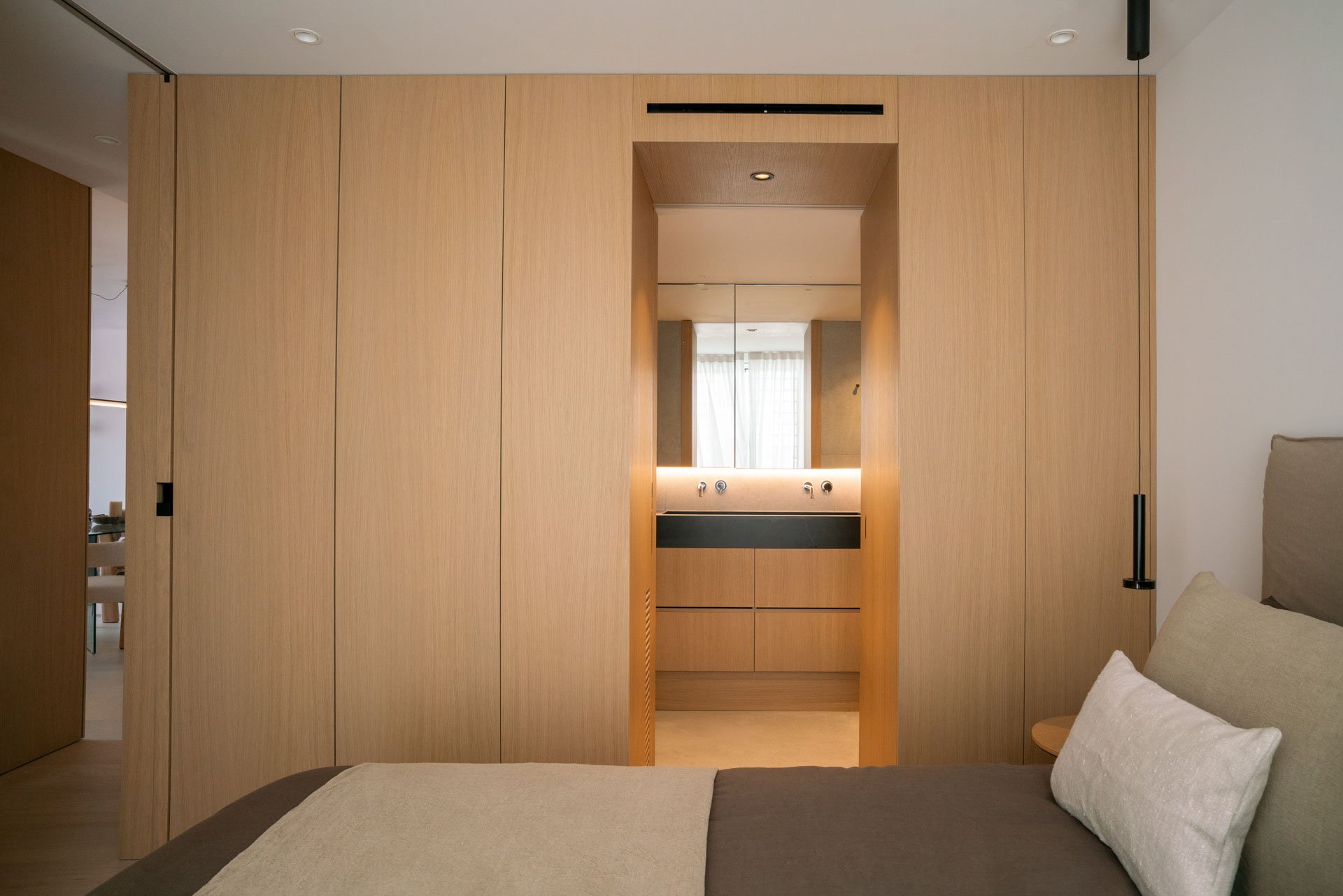
What is a bedroom with an integrated bathroom and why is it trending?
A bedroom with an integrated bathroom is an architectural concept that removes, either fully or partially, the physical barriers (walls or partitions) between the sleeping area and the bathroom.
This approach reflects a shift in residential design, where rigid compartmentalization gives way to more open and flexible layouts. The goal is to create spaces that feel larger, are better lit, and more suited to everyday life.
Designing bedrooms with integrated bathrooms allows for optimized use of space and an enhanced user experience.
Advantages of integrating the bathroom into the bedroom
Choosing this layout offers several benefits beyond aesthetics:
- Spatial openness: removing walls makes the space feel much larger than it actually is.
- Increased natural light: daylight from bedroom windows can reach the bathroom, which is often windowless in traditional layouts.
- Comfort and flow: it creates a more natural morning and evening routine, improving circulation between the shower, dressing area, and sleeping zone.
- Property value: bedrooms with integrated bathrooms are seen as modern features that significantly increase a home’s value.

Small bedrooms with integrated bathrooms: how to optimize space
In smaller spaces, precision is key. Every element must serve a clear purpose. Removing unnecessary items helps free up space and improve the overall perception.
Using built-in furniture, concealed storage, and continuous materials visually expands the space. In these cases, design should focus on proportion and simplicity.
Designing bedrooms with integrated bathrooms: layout principles
Success lies in smart zoning. Designing a bedroom with an integrated bathroom requires clearly defining where one function ends and another begins—without disrupting the overall harmony.
A common layout places the sink area more exposed or integrated, while more private elements (toilet and shower) are tucked behind frosted glass or low partitions.
It’s essential to maintain a fluid layout and ensure that sanitary elements don’t obstruct circulation or the visual connection to the bed or windows.

Separation systems between bedroom and bathroom
Partial walls and partitions: these help define areas without fully enclosing them. In integrated layouts, they can hide the shower or toilet while preserving spatial continuity.
Glass enclosures and lightweight solutions:
Glass separates spaces without blocking light. These solutions maintain visual connection between both areas.
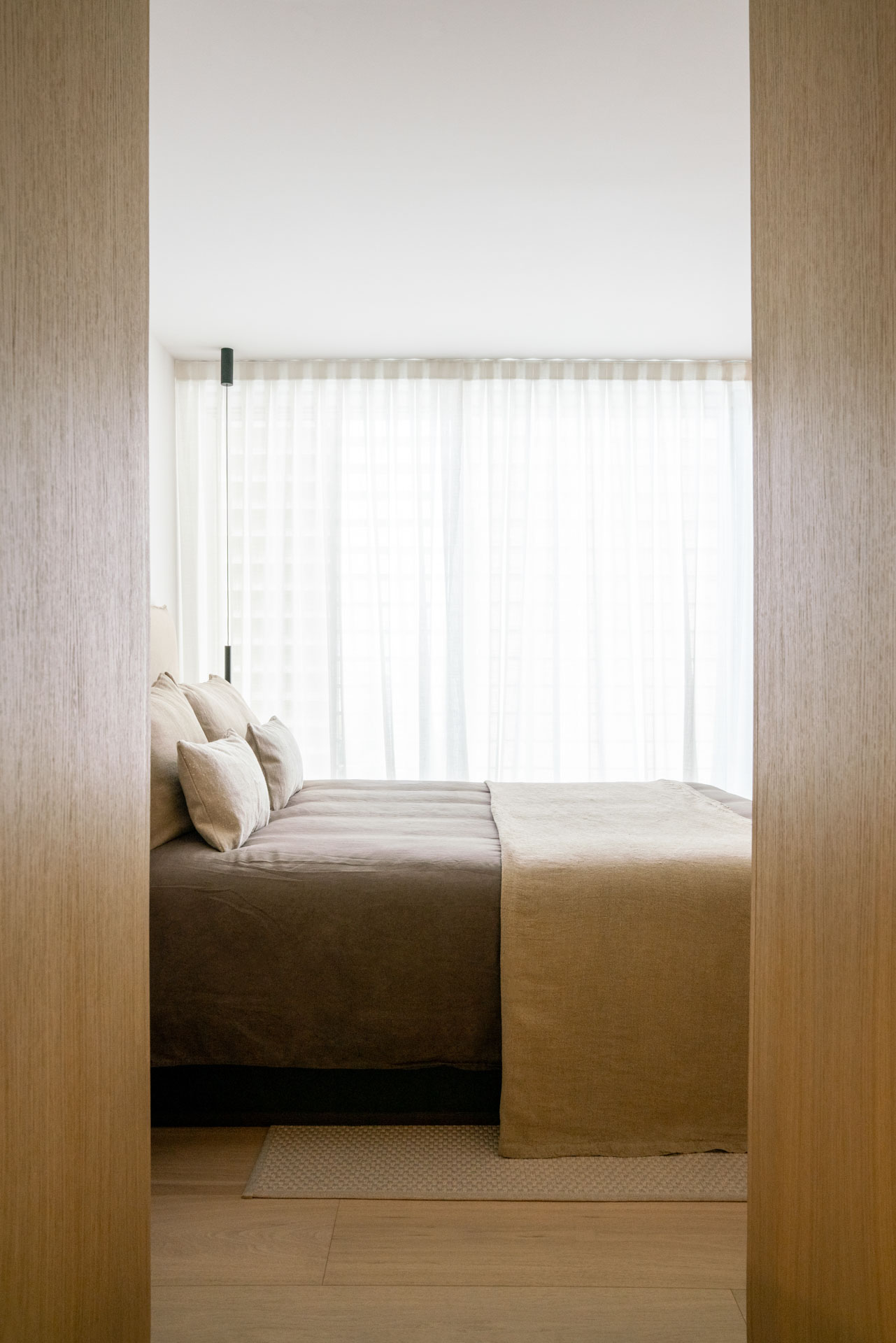
Materials and finishes for a bedroom with an integrated bathroom
Materials play a key role in making the space feel unified. Abrupt changes can visually fragment the environment.
A continuous palette that connects both areas is recommended. Sudden contrasts—such as different flooring or strong color shifts—can disrupt the visual flow.
Maintaining similar tones, materials, or soft transitions ensures a natural and pleasant connection between bedroom and bathroom. Materials like wood, stone, or microcement help achieve this cohesive effect.
Lighting and ventilation in integrated bedrooms
Lighting should respond to each function. General lighting in the bedroom is complemented by targeted lighting in the bathroom area.
Ventilation is essential to prevent moisture issues. Proper air circulation must be considered from the early stages of the design process.
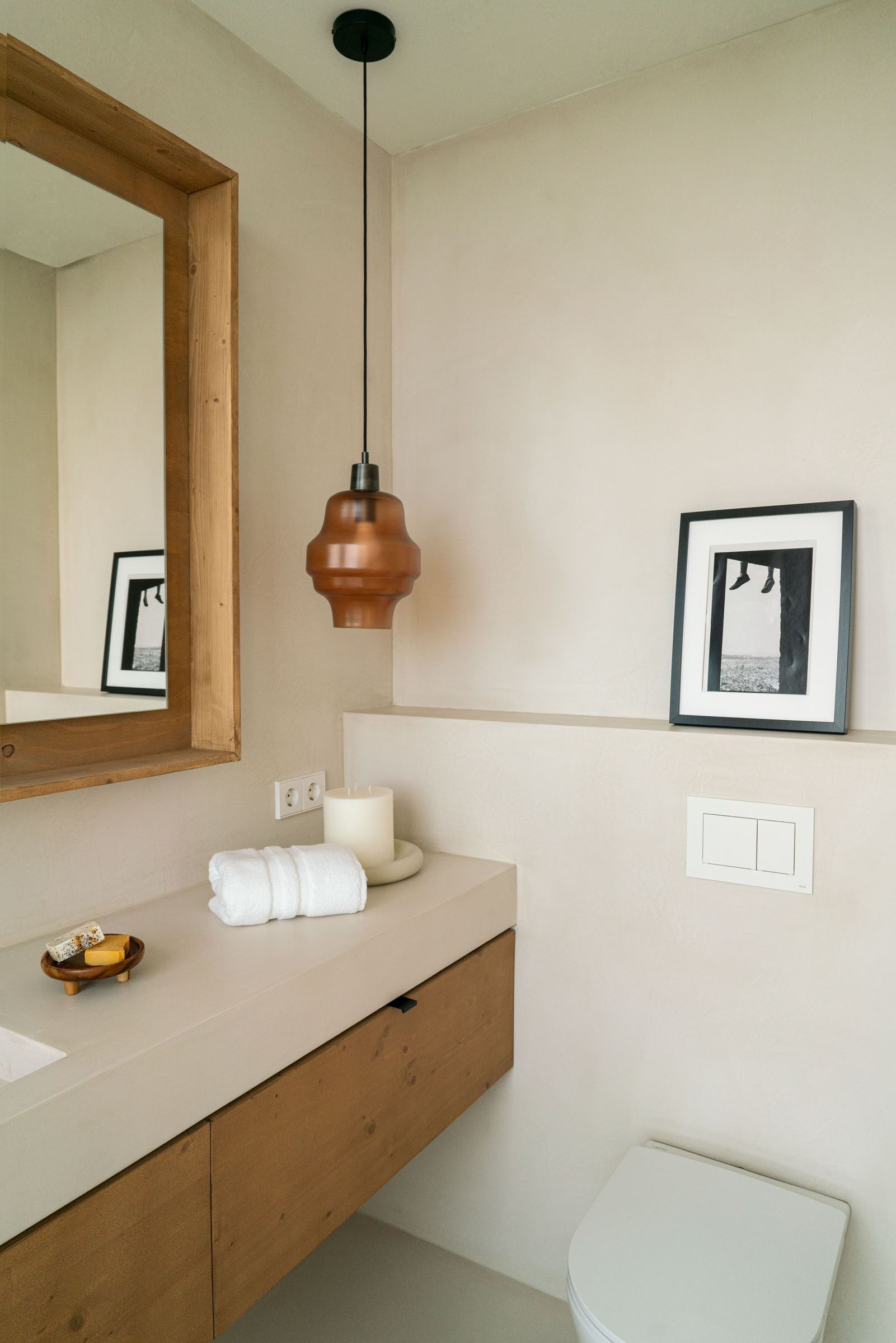
Common mistakes in integrated bedroom-bathroom design
- Overexposed toilet: failing to properly define the relationship between spaces can create visual discomfort. Ideally, the toilet should be in a separate cabin or at least hidden behind a partition.
- Poor moisture management: neglecting ventilation or choosing unsuitable materials can lead to long-term issues.
- Lack of storage: since everything is visible, clutter becomes more noticeable. Integrated storage solutions are essential.
Designing a bedroom with an integrated bathroom with an interior design studio
Designing this type of space requires coordinating layout, installations, and materials. At Coblonal, we approach each project based on its real geometry and everyday use.
There is no one-size-fits-all solution—each space requires a tailored response.

Conclusion: a continuous and balanced living space
The bedroom with an integrated bathroom redefines how we experience private space. Continuity, light, and materiality come together to create a functional and harmonious environment.